Accessible Temporary Housing for Longer Stays: Checklist for Access and Layout
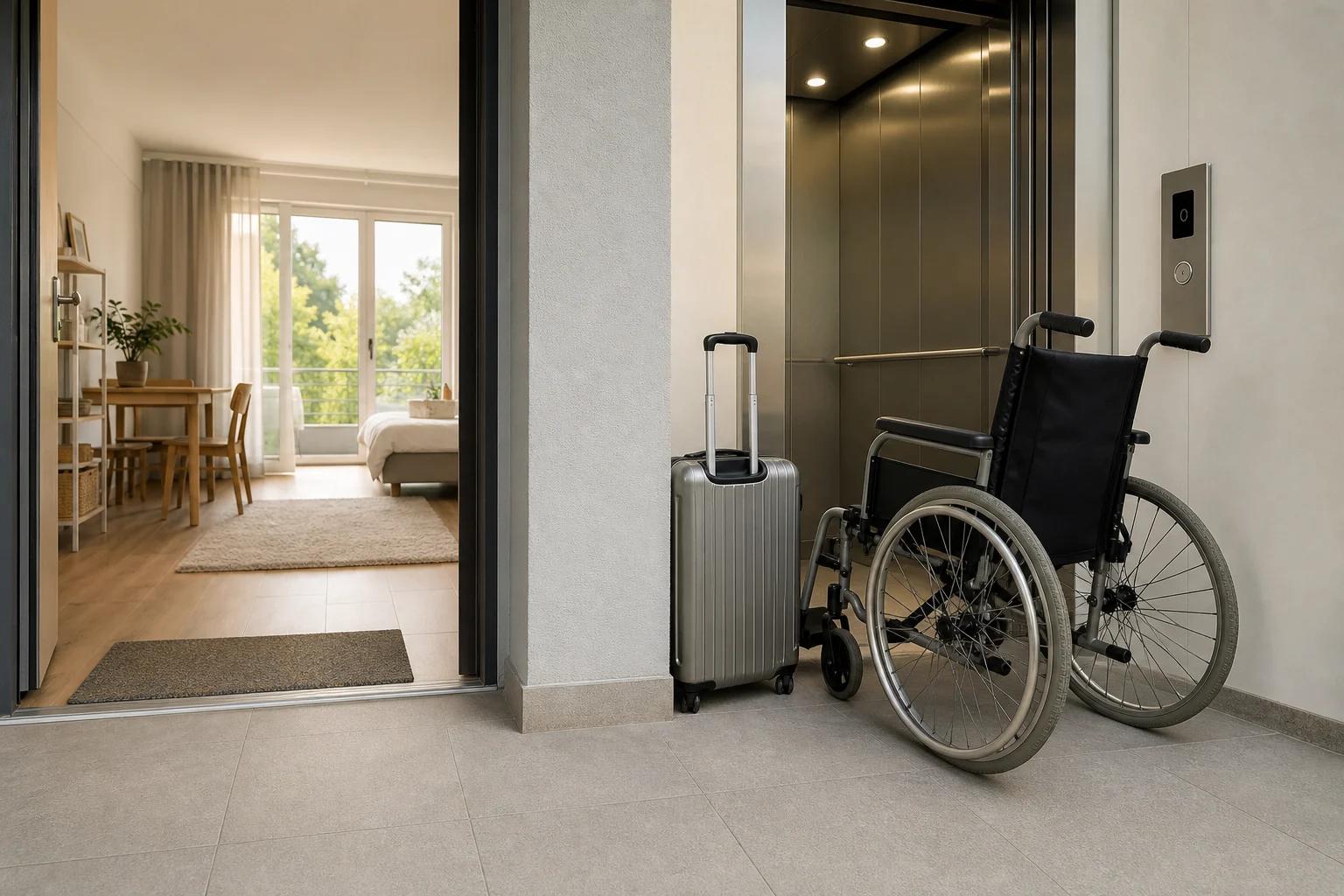
What does barrier-friendly really mean in everyday life?
If you are looking for accessible temporary housing for longer stays, you should not stop at the headline of a listing. What matters is not whether an offer sounds generally welcoming, but whether you can use the accommodation in everyday life without unnecessary barriers. That includes the entire route: from arriving at the building, through access to the unit, to the rooms where you sleep, work, cook, and move around.
Especially during longer stays, small barriers come up again and again. A single step, a narrow door, or a badly placed piece of furniture does not matter just once, but every day. That is why a simple check helps: Is the access clearly described, and can the most important routes inside be used without detours or narrow spots?
A step-free access or temporary accommodation with elevator can be helpful. But that alone is not enough for practical use. Only when the layout, bathroom, kitchen, and routes in the surrounding area also fit does a good description become accommodation that works in everyday life.
Which questions should you clarify one by one before booking?
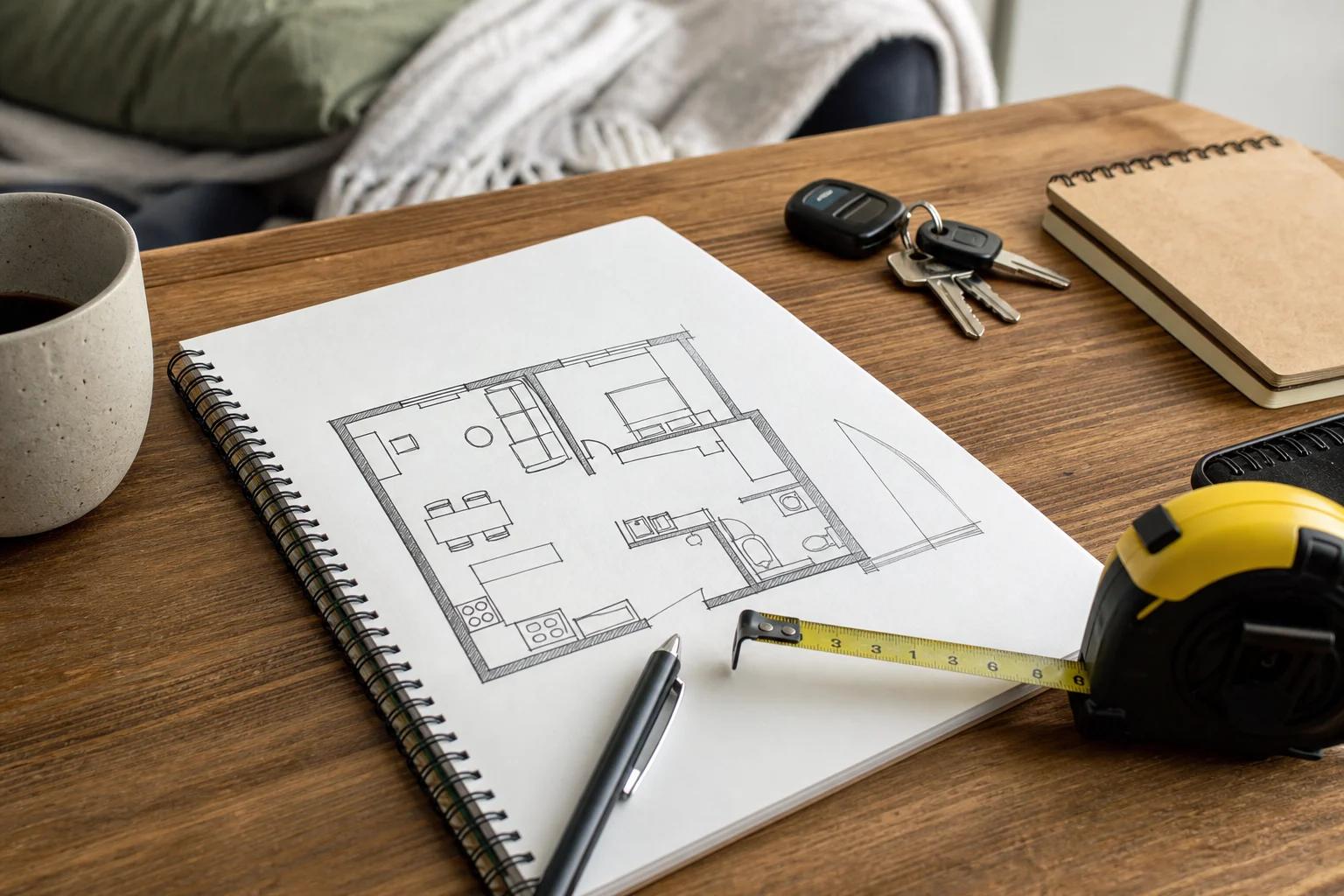
Do not ask the key questions as a general collection of details, but along your daily routine. That way, you can see more quickly whether an offer really suits your needs.
How does the route from outside to the door work?
Ask about the entire route from the street, the entrance, or the parking area to the accommodation. Are there steps, thresholds, heavy doors, or longer distances without assistance? Access can only be assessed properly when not just the entrance itself, but the complete route is described.
Is an elevator enough for your situation?
An elevator is helpful if it reaches the floor you need and the route to it remains practical. So also clarify whether there are any further obstacles between the entrance, the elevator, and the apartment. The important question is not only whether a lift exists, but whether it actually covers the decisive part of your route.
Is the layout logically designed for everyday life?
For longer stays, usability often matters more than the pure size of the space. Ask yourself: Can you move freely between the bed, table, wardrobe, and bathroom? Are there sensible routes without narrow passages or awkward dead ends? A clear layout makes everyday life easier than a larger area that is poorly designed.
How well can the bathroom be used?
The bathroom often shows very quickly whether an accommodation is only theoretically accessible or truly suitable for everyday life. That is why it is worth asking about door width, movement space, and the arrangement of the main fixtures. If the room is technically there but only usable with many turns or tight routes, that becomes noticeable during a stay of several weeks or months.
Does the kitchen or kitchenette fit your daily routine?
If you stay longer, you will usually use the kitchen or kitchenette regularly. So ask not only about the equipment, but also about how easy it is to reach work surfaces, appliances, and storage space. If you often cook for yourself or prepare meals, it is important that you can use the area safely and without unnecessary effort.
Which routes outside the accommodation matter?
Accessibility does not end at the apartment door. For longer stays, it also matters how you reach the places you need regularly: work, medical appointments, shopping, or public transport stops. An accommodation can be easy to use inside and still become cumbersome in everyday life if the surroundings do not fit your daily routes.
Which information should you still clarify in writing before booking?

After the first comparison, written follow-up questions help avoid uncertainties. This step is especially useful if a listing sounds positive but still contains too few concrete details.
Which proof or photos should you request?
Ask for pictures or documents covering the points that matter most to you: entrance, route to the unit, elevator, bathroom, kitchen, and, if applicable, the exact floor plan. Photos are especially helpful when they show the whole route and not just a few attractive details. If possible, also have it confirmed which rooms belong to the booked unit.
Which questions should you phrase precisely in a message?
Instead of asking generally about “accessibility,” specific questions are more useful. For example:
- Are there steps or thresholds on the way from outside to the door?
- Are there any further obstacles between the entrance and the accommodation?
- Is the elevator usable on the correct floor?
- How wide are the relevant doors or passages?
- Are the bathroom and kitchen described for daily use, or only mentioned in general terms?
The clearer the question, the more reliable the answer. That is especially important if you are staying for several weeks or months and do not want surprises on site.
Which information should you prioritize in advance?
Not everyone needs the same details. If you know what matters most to you, you can weight your follow-up questions sensibly. For some guests, step-free access is decisive; for others, it is the internal movement space in the room; for others, the location in relation to appointments or shopping. Before booking, write down the three points that are non-negotiable. That way, you can sort offers more quickly.
How do you recognize a reliable description?
Clear statements that stay specific are helpful. If a provider describes access, floor, room layout, and the main routes in a comprehensible way, the accommodation is easier to assess. If several central points remain open, you should ask targeted questions before booking instead of making assumptions.
How do you compare an apartment, serviced apartment, and hotel objectively?
Serviced apartments, apartment hotels, and hotels can be suitable for longer stays, just like an apartment. The right choice does not depend on the category alone, but on the specific combination of access, layout, services, and location.
So compare the same criteria for every offer:
- How well is access to the building and the unit solved?
- How suitable is the layout for everyday life?
- Which services are included, and which routines do you handle yourself?
- How well does the location fit the routes you make regularly?
- Are the details specific enough for you to assess everyday life realistically?
Transparency of the overall situation is also important. An accommodation with clear services can make sense if you want to simplify certain routines on site. Another accommodation may be a better fit if you want more independence. The right decision therefore comes from the relationship between equipment, service, location, and understandable information.
How myroom24 helps in the search in concrete terms
myroom24 is an online booking platform where commercial accommodation providers offer accommodations for private and business users. The offer includes rooms, apartments, and houses in commercial accommodation facilities such as hotels, hostels, serviced apartments, and vacation rentals. For searching for a barrier-free apartment or another type of easily accessible long-term accommodation, it is especially helpful that the destination and length of stay can be specified.
Available long-term accommodations can also be filtered by criteria such as price, location, and equipment. This is useful if you do not just want to compare one type of accommodation, but need to check several requirements at once. That way, you can first narrow down the offers and then read the details on access, elevator, room layout, and location more closely.
For longer stays, the covered range is important: the long-term stays offered via myroom24 cover 28 to 179 nights. This means the search is aimed at periods in which the everyday usability of an accommodation matters especially.
If an accommodation is marked as instant booking, it can be booked without prior approval from the host if available. Even then, it still makes sense to check the barrier-friendly features carefully before booking.
What you should sort out before the final comparison
Before deciding, it is worth making a brief check of your priorities. Ask yourself:
- Is access more important to me than the size of the room?
- Do I need a truly clear layout, or mainly short routes in the surrounding area?
- Is the kitchen essential for my everyday life, or only an addition?
- Does the accommodation itself need to function as simply as possible, or are additional services more important to me?
- Do the location and daily routes fit my stay?
This order helps when several offers seem similar. Then the decision is not made by the most attractive description, but by the better fit for your everyday life.
What you can do next
If you are now comparing offers, first focus on the details that cannot easily be changed later: access, elevator, layout, and location. Then check the written information and ask targeted questions about anything missing. For a structured start, you can look at the available myroom24 accommodation and narrow your selection to the planned stay period.
Frequently asked questions
Which proof should I request if a listing only generally says barrier-friendly?
Ask for photos or documents about access, elevator, bathroom, kitchen, and floor plan. That way, you can see whether the description really reflects everyday life.
How should I proceed if the entrance sounds step-free but the route to the unit remains unclear?
Ask about the complete route from outside to the door: steps, thresholds, doors, and possible detours. Without this information, access is difficult to assess reliably.
What should I look at first for a long stay: access or location?
Prioritize the feature that affects your everyday life most. If you are regularly out and about, you need not only good access, but also short and understandable routes to the places you need every day.
When is a serviced apartment or apartment hotel a sensible alternative to an apartment?
When you see access, layout, services, and location combined more well there than in other offers. The decisive factor is the specific suitability, not the type of accommodation alone.