Blog tag: Guides

Temporary Living for Project Teams with Staggered Arrivals and Separate Units
When project teams arrive at different times, accommodation planning needs clear responsibilities. This article shows how separate units, handovers, and billing paths can be organized cleanly.
Temporary Accommodation for Families with Two Rooms and a Home Office Option: Long-Stay Checklist
Families need clear zones for sleeping, working, and spending time together during a transition. This article shows which layout and furnishings matter in everyday long-stay life.
Serviced Apartment as a Temporary Solution When a Permanent Apartment Is Delayed: How to Keep Your Start Predictable
If the permanent apartment is not ready yet, you need a reliable interim solution. This article shows which amenities matter, how to structure the time, and what counts before booking.
Expense Reporting for Longstay Accommodation: Which Documents HR and Finance Need
For longer stays from 28 nights, companies need a clean document trail. This guide shows which documents matter for expense reporting and how HR and Finance can organize them pragmatically.
Onboarding International Specialists with Accommodation: Plan the First 14 to 90 Days Properly
How companies structure the start of international specialists with suitable accommodation, clear contacts and a reliable timeline.
Furnished Accommodation for Project Staff with Changing Locations: Organizing Bookings Efficiently
For project teams with changing locations, it is not only the accommodation itself that matters, but above all a clean process. This article shows how recurring bookings, central responsibilities, and suitable features work together.
Temporary Housing for a Staged Move with Interim Storage
When moving out, storage, and moving into the new home are not timed back to back, only a clear sequence helps. What matters is a well-thought-out packing logic, suitable storage reserves, and temporary housing that really works in everyday life.
Temporary Housing for Workation with a Reliable Workday
For a workation, more than a nice desk matters: reliable Wi-Fi, quiet, a work area, a kitchen, location, and a routine that holds up for several weeks are key.
Temporary housing for business travelers with recurring assignments: compare fixed solutions
When business trips regularly lead to the same destination, clear criteria for accommodation, location, services, and approvals help with planning.
Temporary Housing for Families Starting School During the Transition Phase: How to Keep Everyday Life Planable
When the school start is approaching and the move into the permanent home is still not complete, the interim solution needs clear routines. This guide shows which location, room layout, and kitchen setup really matter for families.
Temporary Living for Commuters with Irregular Trips Home: How a Second Home Stays Flexible
If you switch irregularly between workplace and home, you need accommodation that handles arrival, return, and luggage changes without constant reorganizing.by myroom24 editorial team
04.11.2026

Temporary Housing for Companies with Consolidated Invoicing and Multiple Cost Centers: Data, Roles, Approvals
When multiple teams, projects, or locations are involved, booking long-stay accommodation depends above all on clean data and clear responsibilities. This guide shows which details should be available for consolidated invoicing and cost center allocation.
Temporary Housing for Medical Professionals on Rotation: Quiet, Close to the Clinic, and a Kitchen
Rotating shifts and changing schedules place special demands on accommodation. This guide shows what medical professionals should look for in terms of location, quiet, kitchen, and booking.
Temporary accommodation for external trainers with block schedules: how to keep lodging manageable
External trainers and seminar leads need accommodation for block schedules that clearly reflects work rhythm, arrival, and coordination. This guide shows what matters for must-have criteria, changes, and choosing the right type of accommodation.
Temporary Housing for Families with School Start and Two Bedrooms
When children move in for the start of school, other details matter than for a solo trip: two bedrooms, clear routes, storage, kitchen, and space to retreat.
Temporary Housing for Project Teams with Separate Apartments and Shared Booking: Planning, Responsibilities, Costs
When project teams work at one location, location is not the only factor in choosing accommodation; booking, responsibilities, and arrival logistics also matter. This guide helps decide between a team apartment and separate apartments.
Temporary accommodation for companies with individual project bookings at changing locations
When companies only need individual project bookings at changing locations, a clear process helps with request, selection, and billing. This article shows which details are needed in advance and how the workflow can be standardized.
Temporary Housing for International Professionals Without an Immediate Permanent Home: How to Start Successfully in Germany
Anyone arriving in Germany without an immediate permanent home needs accommodation that makes arrival, starting work, and the first administrative steps manageable. This article shows which criteria really matter in the first weeks.
Plan long-term stays starting at 28 nights: what changes at 28, 60, 90, and 179 nights
A guide for 28, 60, 90, and 179 nights: which questions change with the length of stay and how to structure move-in, extension, departure, and responsibilities clearly.by myroom24 editorial team
03.11.2026

Temporary Housing with Transparent Total Cost Control: Compare the Final Price Fairly
If you are planning temporary housing, do not only check the nightly rate. The key is which cost items are included in the final price and how offers can be compared fairly.
The Best Platforms for Temporary Housing in Germany: A Comparison of Providers, Portals, and Hybrids
Anyone comparing platforms for temporary housing in Germany needs more than a list of listings: the key factors are platform type, transparency, booking process, and the right framework for longer stays.
Serviced Apartments for Business Travel with Longer Project Phases: What Teams Should Consider for 28 to 179 Nights
Longer project phases place different demands than a classic business trip. This guide shows how teams and solo travelers can compare accommodation types objectively.
Temporary Housing for Families with Two Rooms and a Retreat Space: Planning Everyday Life Wisely
For families in a move, renovation, or new-build phase, the layout matters most in temporary housing: eating together, sleeping separately, working, learning, and storing things. This article shows when two rooms with a retreat space help and what to check in services and booking.
Temporary housing for weekly commuters with regular trips home
Anyone working somewhere else during the week and going home at weekends needs a clear routine for arrival, laundry, work, and return. This guide structures the commuter week step by step and shows which equipment and routines really help.
Temporary accommodation for students in practical and research settings: quiet, flexible, close to the place of work
Practical and research phases need different criteria than the classic start of term. This guide shows what students should look for in terms of peace, workspace, kitchen, transport connections, and booking duration.
Check a Furnished Place with Kitchen, Washing Machine, and Workspace
This checklist helps you review furnished accommodations before booking for everyday needs: cooking, laundry, workspace, storage, internet, and privacy.
Temporary Housing for Long-Term Guests with Flexible Extension and Service Package: What Matters Before the End
If you are staying longer, check before the first term ends whether extension, service scope, and your needs still match.
Compare temporary accommodation with mid-stay cleaning and linen changes: how to check service in long stays
Mid-stay cleaning, linen changes and basic cleaning sound similar, but they matter differently in everyday use. This guide shows what to look for when comparing temporary accommodation.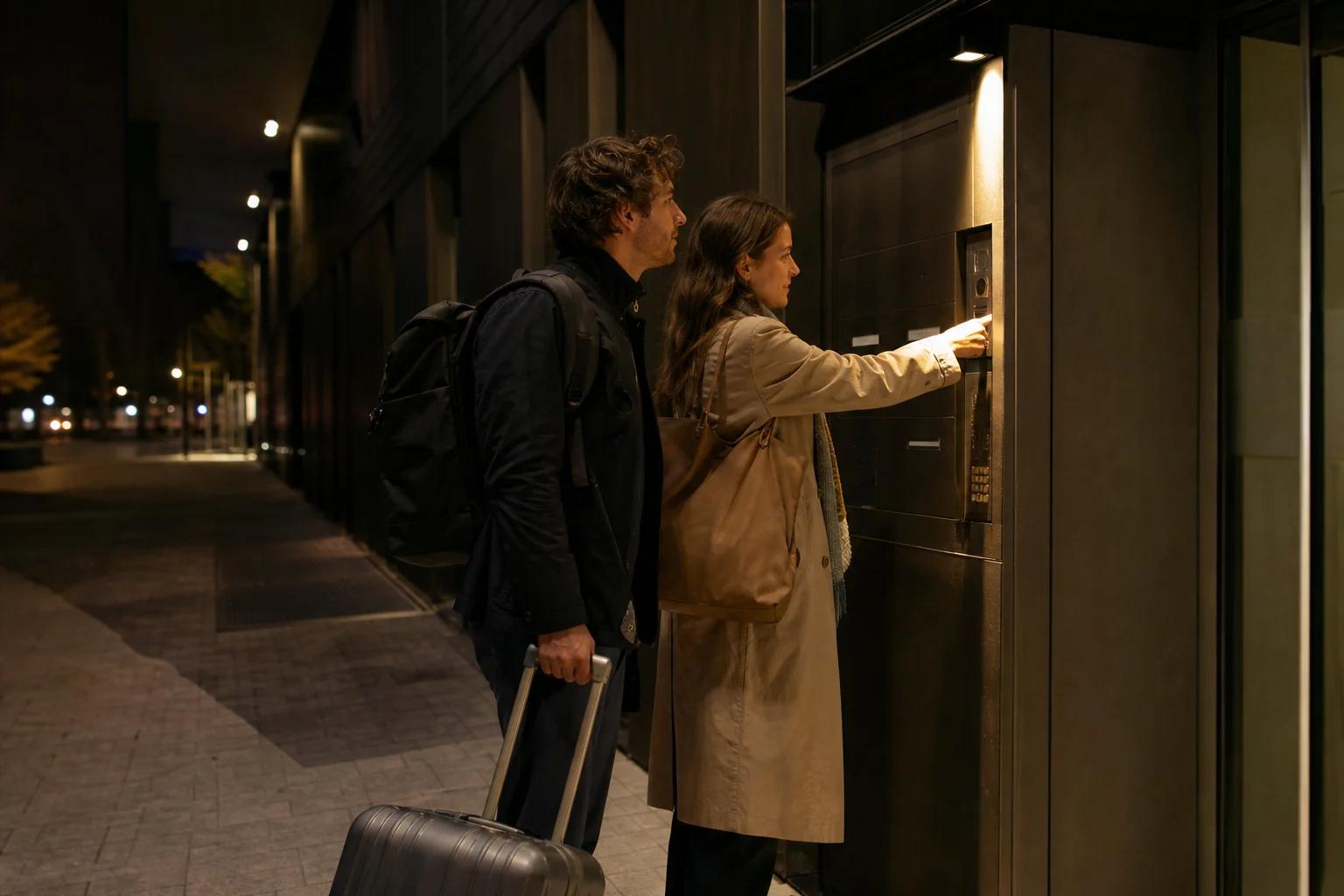
Temporary Housing with Self-Check-in for Late Arrival: Move-in After Office Hours
Anyone arriving late should clarify access, contact person, and the first night in advance. That way, move-in remains manageable even after office hours.by myroom24 editorial team
01.11.2026

Temporary Housing for Team Trips with Multiple Arrival Times: How to Organize Arrival, Handover, and Coordination
When a team does not arrive together, a clear process is needed for requests, approval, communication, and move-in. This keeps responsibilities, handover, and late arrivals organized.
Temporary Accommodation for Service and Field Service Teams with Parking and Washing Machine: What Matters in Everyday Operations
For service and field service teams, it matters whether accommodation, parking, laundry, routes, and quiet fit the deployment schedule. This guide shows the key checkpoints for companies and team leads.
Temporary Living for Weekly Commuters with Baggage Storage: How to Keep Moving Between Two Homes Stress-Free
If you commute weekly between two homes, you need more than a bed: storage space, connections, access, laundry options, and clear routines matter.
Temporary housing for business travelers with recurring stays: how to compare the options
For recurring business trips, it is not just the first booking that matters. What counts is whether location, process, facilities and invoicing still fit the next assignment.
Temporary housing for project teams with changing assignments: standardize planning
This guide shows how companies organize accommodation for project teams with changing assignments using fixed criteria, clear roles, and a clean extension logic.
Temporary Housing for Families with Two Bedrooms and Retreat Space
Two bedrooms, a separate living area, and a kitchen are often decisive for families in transition phases. The article shows how to concretely assess room layout, retreat options, and everyday practicality for stays from 28 nights.
Temporary Housing for Airport and Trade Fair Assignments with Self Check-in
For late arrivals, trade fair assignments, and staggered team arrivals, access, parking, and amenities matter more than distance alone. This guide shows the key checkpoints for long stays and team planning.
Temporary Housing for Commuters with Weekend Trips Home and Luggage Storage: Practical Check
For weekly commuters, it is not just the place to sleep that matters, but the entire flow between arrival, the workweek, and the weekend trip home. This practical check shows what really matters when it comes to location, storage, laundry, and total costs.
Temporary Living in Mannheim for Longer Stays with Family or Team: Which Amenities Make Everyday Life Easier
If you are staying in Mannheim with family or a team for a longer period, you need more than a place to sleep: layout, kitchen, laundry options, workspace and a location that keeps daily life manageable are key.
Temporary housing in Frankfurt for longer assignments with a central location and workspace
For longer business assignments in Frankfurt, location, workspace, accommodation type, and term matter. This article shows how to assess suitable options objectively.
Temporary housing in Stuttgart for longer project phases with kitchen and retreat: how teams and solo guests choose correctly
A guide for project staff, consultants, and small teams who want to align location, kitchen, and retreat in Stuttgart over several weeks.
Temporary Housing for Teams with Staggered Arrivals and Handover: Process from Inquiry to Move-In
With staggered arrivals, team housing needs clear responsibilities, a defined handover chain, and clean invoicing logic. This guide shows how to keep the process stable from inquiry to the last arrival.
Comparing temporary living with cleaning, laundry service, and a washing machine: Which services really matter for long-stay stays
Anyone staying longer should compare cleaning, laundry service, and a washing machine not by buzzwords, but by everyday use, privacy, and clearly listed costs.
Temporary housing for a start in Germany without complicated booking – checklist for the first weeks
International specialists and relocation teams learn which details matter before booking, how approvals can be organized clearly, and what matters in a practical temporary solution.
Temporary Living with a Home-Office-Friendly Workspace and Stable Wi-Fi
If you work remotely for several weeks, don’t just check the accommodation before booking—also check whether it works for everyday work: Wi-Fi, desk, lighting, quiet, outlets, and suitable services.
Temporary Housing in Hamburg for Longer Assignments with Washing Machine and Self-Service: A Decision Guide
For a long stay in Hamburg, what matters is whether routes, laundry, quiet, and self-organization really fit together in everyday life. This guide helps with the choice.
Temporary Living with Storage and Space for Luggage: How to Check Everyday Usability
If you stay for several weeks or months, you should not just think about storage, but check it specifically. Wardrobe space, shelves, suitcase space, and the room layout are decisive.by myroom24 editorial team
29.10.2026

Temporary housing in Regensburg for longer stays with kitchen and service: which solution fits?
Anyone staying longer in Regensburg needs more than just a bed. What matters is ready-to-move-in furnishings, a usable kitchen, suitable quiet, and a length of stay that matches the actual stay.
Temporary Housing for Commuters with Weekend Trips Home and Flexible Extensions
For commuters with weekend trips home, it is not just the accommodation itself that matters, but also the location, access, and the logic for extensions. This article shows which criteria really support the weekly rhythm.
Temporary accommodation for installers and service technicians with parking and washing machine: practical check
For longer assignments, arrival, parking, laundry, kitchen, location, and a room layout that fits the team and work rhythm all matter.
Temporary Housing for Starting a New Job After a Job Change: Planning the First Few Weeks
If you are starting over after a job change, you often need a temporary housing solution with little organizational effort. This article shows which location, furnishings, and duration matter in the first few weeks.
Temporary Living for Cleaning and Laundry Service in Long Stay: Services and Effort Compared
In a long stay, it is not only the accommodation that matters, but also how much cleaning and laundry you need to organize yourself. This article shows which service profiles differ and which questions are important before booking.
Temporary Housing for Small Teams with a Shared Address and Separate Bedrooms
For small project teams, long-stay housing is mainly about the right mix of a shared address, separate bedrooms, enough work space, and clear on-site organization. This guide shows when a connected unit makes sense and what to look for when choosing one.
Temporary Housing for Families with School and Daycare Changes After Moving: How to Keep Everyday Life Predictable
A school or daycare change after moving requires clear routines in family life. This guide shows what parents should look for in a furnished interim home.
Living temporarily with a pet during longer stays: check rules, cleaning, and location
For longer stays with a pet, clear rules matter more than the accommodation label alone. This guide shows what to check before booking.by myroom24 editorial team
28.10.2026

Temporary Housing for Staged Moves: The Transition Between Moving Out and Moving In
When moving out and moving in do not line up seamlessly, you need a clear interim solution. This article shows how to check term, furnishings, handover, and booking for a staged move.
Temporary Housing for International Professionals with Children Starting School: What Families Should Look For
When international professionals move to Germany with their families, the interim solution often determines how well the first weeks with school start, work start, and orientation go.
Temporary Housing in Berlin-Adlershof for Research and Technology: Which Accommodation Works for Project Teams?
For research, development, and technical projects in Adlershof, the key factor in temporary housing is whether the accommodation reliably supports daily work, rest, and the full project period.
Temporary accommodation for project teams with separate apartments: booking decision guide
For project teams, location is not the only deciding factor. It also matters whether a shared team apartment or several separate apartments better fit working hours, need for quiet, and billing.
Temporary Housing for Remote Workers with a Quiet Work Environment: Check Workspace, Wi-Fi, and Everyday Living
Living remotely for several weeks means checking the workspace, quiet, Wi-Fi, light, routes, and service so everyday life remains manageable.
Temporary Housing for Stays with Late Key Handover: Arrival, Access, and the First Night
If you are arriving late, access, check-in, orientation, and backup routes should be clarified in advance. This article shows what matters in a hotel, apartment, and long-stay setting.
Temporary Housing for International Teams with Staggered Late Arrivals: Planning Check-in and Handover
The article shows how international teams with multiple arrival windows per person, wave, and handover can be organized in a structured way.
Temporary Accommodation for Relatives During Multi-Week Rehab or Follow-Up Care
When rehab or follow-up care lasts several weeks, the accompanying person needs more than one overnight stay: proximity to the clinic, peace and quiet, a kitchen, and a reliable retreat are important.
Temporary accommodation for business guests with parking and charging infrastructure – what to consider when arriving and choosing a location
Anyone staying temporarily for work should assess parking, charging, road access and public transport together. This helps align the accommodation with the actual work location.
Temporary Housing for Families in New Builds or Renovation Overruns
When a new build is not finished yet or a renovation takes longer, a family needs accommodation that realistically reflects everyday life with children. What matters is not only the number and size of rooms, but also sleep separation, a kitchen, laundry facilities, storage space, and a location with reliable routes.
Temporary Housing for Students on a Practical Semester with Lab or Clinic Proximity: What Matters for 28+ Nights
During a practical semester, short distances, quiet, self-catering, and a stay that covers the entire block all matter. This guide shows what students should look for in accommodation.
Temporary housing for project teams with separate retreat spaces: team apartment or individual apartments?
When project teams live at the work site, more than the number of beds matters. What counts is the distribution of sleeping and working areas, quiet for shifts, data privacy, shared use, and the organizational effort for booking and billing. This guide shows when a team apartment fits and when separate units are more sensible.
Planning temporary housing for weekly commuters who go home on weekends
If you live near your workplace during the week and go home on weekends, you need accommodation that supports travel, arrival and amenities on a weekly cycle. This guide shows how to assess location, transport links, costs and booking step by step.
Temporary living for remote workers with frequent location changes: how to keep working on the move manageable
Anyone working in different places for several weeks needs accommodation that supports work rhythm, arrival, and location changes. This guide shows what matters when choosing.
Temporary Housing for Teams with Staggered Arrivals and Separate Move-In Times: Process, Roles, and Handoffs
With staggered arrivals, the process determines whether the start is calm. This article shows how companies clearly separate roles, handoffs, and room allocation for each move-in and which accommodation features really matter.
Temporary housing for remote apartment hunting: planning the first few weeks
If you are searching for an apartment from abroad or from another city, you often need a furnished temporary solution. This article shows what matters for 28+ nights.
Temporary housing for student parents with a child and the start of the semester: how to organize everyday life
Anyone starting the semester with a child needs accommodation that brings studying, cooking, and family life together. The key factors are the layout, a usable kitchen area, quiet, and short distances to campus.
Temporary housing for project managers with short-notice extensions: What needs to be clarified in the final weeks
When a project is extended shortly before it ends, the period, room, approval, and communication all need to fit together. This article shows how project managers can make structured decisions in the final phase.
Temporary accommodation for companies with individual project bookings across changing locations
How companies can standardize individual project bookings across changing locations: from request to approvals and billing, through to extension.by myroom24 editorial team
25.10.2026

Temporary Housing for International Professionals with Later Family Reunification: Planning the Transition Period
When the job in Germany starts but the family follows later, you need accommodation with clear planning for move-in, work, and extension.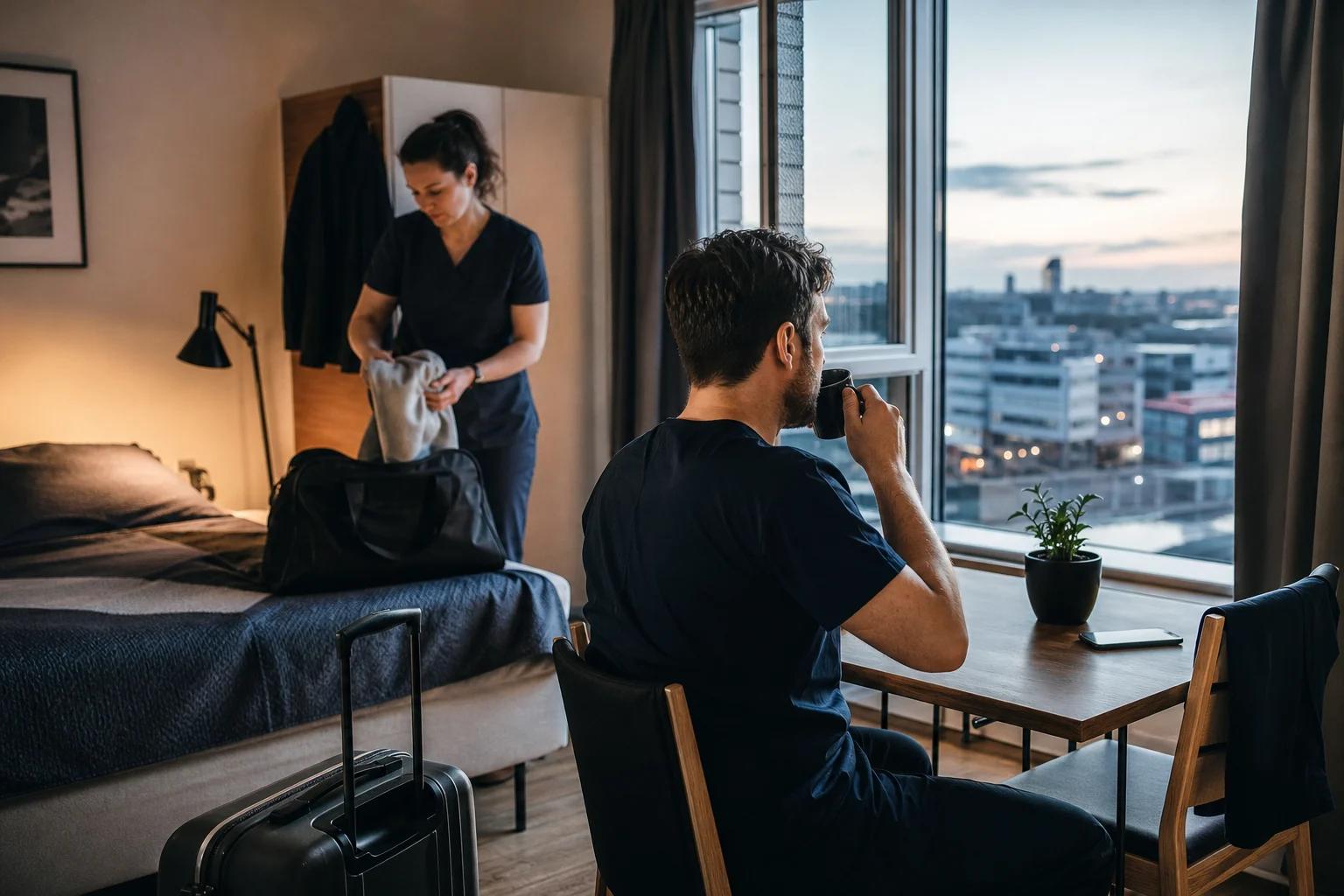
Temporary housing for shift workers with changing rest periods
This guide shows which criteria really matter for early, late, and night shifts when looking for temporary housing: quiet, location, access, amenities, and organization.
Temporary Housing for Returnees from Abroad Searching for an Apartment Remotely: Arrival and Choosing
If you are returning from abroad and are still looking for a permanent home from afar, what matters most is a clear sequence for arrival, first errands, and making the decision on site.
Temporary Housing for Families with Home Office and the Start of Daycare or School
When home office, children’s routines, and a new daycare or school start all have to be organized at once, the everyday usability of the accommodation decides everything. This guide shows what families really need to look for in temporary housing.
Temporary Housing for Project Teams with Staggered Arrivals: Process, Roles, and Check-in
Practical processes for staggered project arrivals: roles, check-in, and the right apartment layout for team accommodation.
Temporary Housing in Mainz for University Medicine and Translational Research: A Guide for Professionals
For assignments in university medicine and translational research, what matters is accommodation that combines peace, travel routes, and self-catering within a fixed period.
Temporary Accommodation in Erlangen for Clinical Research and Medical Technology: Which Option Works for Longer Assignments
For clinical research and medical technology in Erlangen, the right accommodation has to fit the work rhythm. This guide shows what to look for in location, facilities, and booking.
Temporary Housing in Dresden for Microelectronics and Medical Technology Teams
Project teams in Dresden need more than beds: team setup, working quiet, travel times, and a clear comparison of housing type are what matter.
Temporary Accommodation in Leipzig for Research and Clinic Stays – Location and Amenities
For research and clinic appointments in Leipzig, routes, daily rhythm, and amenities matter together—not just the distance on the map.
Temporary Living for Families During Renovation and New-Build Transitions: How to Keep Everyday Life with Children Predictable
When a home is temporarily unusable, a family needs more than just a temporary address. This article shows which room layout, amenities, and conditions really work during a transition with children.
Temporary housing for medical professionals in rotation and research settings: peace, proximity to the clinic, and a kitchen
For medical professionals, temporary housing is mainly about peace, good accessibility, practical furnishings, and flexible lengths of stay. This guide shows what really matters in rotations, research, and night shifts.
Temporary Housing for Students During Practical and Research Phases: What Matters for 1 Semester or 28+ Nights
Internship, lab phase, or research stay: how students choose furnished housing that sensibly combines study routine, work, and travel to university or the lab.
Temporary housing for international professionals in the arrival phase: criteria for 28 to 179 nights
International professionals need accommodation that is immediately usable during the arrival phase. This guide shows how to assess furnishings, check-in, location, costs, and extension objectively.
Temporary Housing for Digital Project Work with Changing Work Locations: How Teams Plan Flexible Weeks in Germany
For digital project work with changing work locations, more than a bed matters: stable Wi‑Fi, a usable workspace, flexible processes, and a location with good transport links are key. This guide shows how to choose accommodation from 28 nights onward in a sensible way—for individuals and teams.
Temporary housing for trade fair and event teams with long production phases – guide
Multi-week production phases need more than just an available place to stay: this guide shows how teams plan arrival, room allocation, extensions, and invoicing.
Temporary Living in Germany for Digital Project Work Across Changing Locations: How to Keep Working on the Move Planned
If you work from place to place in Germany, you need more than a bed: a reliable workspace, stable Wi-Fi, a quiet location, self-catering, and accommodation that fits the project schedule are what matter.
Temporary Accommodation in Grünheide for Employees and Suppliers: Location, Travel and Self-Catering
For employees, suppliers, and project teams in Grünheide, accommodation is about more than a bed: what matters is the commute, shift times, luggage, self-catering, and the right type of accommodation for stays of weeks to months.
Temporary Housing for Students with a Practical Phase and Lab Block: Which Accommodation Fits Everyday Life?
When a practical phase and a lab block shape the weekly rhythm, travel time, quiet, kitchen, laundry, and a functional room layout matter more than the first impression.
Temporary Housing for Families During a Home Sale and Transition Period
When the move-out date during a home sale is fixed but the move into the new apartment has not yet been scheduled, a clear interim solution is needed. This guide shows how families can structure the transition period.
Temporary Housing for Service Technicians on Shift and On-Call Duty: Practical Criteria
For service technicians on shift and on-call duty, it is not the type of accommodation alone that matters, but how well it fits late arrivals, changing hours, and clear processes. This article shows what dispatchers should look for in rest, access, team occupancy, and invoicing.
Temporary Housing for Project Staff with Changing Work Locations: Planning with a System
When project staff work at changing locations, accommodation planning has to map arrival, duration, and site changes clearly. This article shows how teams can organize bookings, documents, and extensions in a structured way.
Temporary housing for maintenance and upkeep teams: Which accommodation really makes longer assignments easier
For maintenance and upkeep teams, short distances, predictable travel, parking options, laundry, self-catering and a clean billing process matter most during longer assignments. This article shows what HR, dispatch and team leads should look for.
Temporary Housing for Couples with Two Residences and Home Office Days
If you switch between two residences as a couple and work from home on some days, a pure place to sleep is often not enough. The key factors are layout, quiet, kitchen, storage, transport links, and a clear comparison of overall use.
Temporary Housing for Medical Professionals with a Long Commute to the Clinic
If you travel a long way to the clinic, you need more than just a nearby address. This checklist shows which housing features really make everyday life easier during shifts and early duty starts.
Temporary Housing for Families with School Changes and Staggered Moves
When school, daycare, and a move in stages happen at the same time, the temporary solution needs clear criteria. This article shows what families should look for in the first weeks.
Temporary Living for Returnees After an Assignment Abroad and a New Start in Germany: Checklist for the First Few Weeks
After an assignment abroad, the first priority is accommodation that brings arrival, appointments, and the search for a permanent home together. This article explains which documents, location criteria, and furnishings really matter.
Temporary Housing for Audit and Quality Assurance Teams: Planning for Longer Review Phases
For audit and quality assurance teams, a cleanly coordinated process matters most during multi-week on-site assignments. This article shows which accommodation types, location criteria, and organizational points are truly relevant during longer review phases.
Temporary housing for interim executives in transformation projects: decision guide
Temporary executives in transformation projects need more than accommodation: what matters is ability to work, peace and quiet, accessibility, and a transparent booking framework. This article outlines the key criteria to check.
Temporary Accommodation for Store Openings and Rollout Teams: Planning for Project Teams
Store openings and rollouts need accommodation that supports team size, changing locations, and clear workflows. This guide shows what companies should pay attention to.
Temporary Housing for Students During Internships and Lab Phases: What Matters
Internships and lab phases place different demands than a normal student room. This guide helps you systematically check accommodation, location, and amenities for several weeks.
Temporary Housing in Bad Lippspringe for Clinic-Adjacent Stays: Calm, Routes, Everyday Life
For companions, relatives, and professionals, a reliable everyday routine matters most when staying temporarily. This article shows how to check the type of accommodation, routes, and organization in a sensible way.by myroom24 editorial team
18.10.2026

Temporary Housing in Viernheim for Commuters and Rhine-Neckar Projects: Routes, Location, and Accommodation Types
Viernheim can be a practical base if your assignments in the region require multiple locations, clear routines, and the right type of accommodation.by myroom24 editorial team
18.10.2026

Temporary Accommodation in Augsburg for Business Travelers and Project Teams
A longer work assignment in Augsburg needs accommodation that fits the workplace, schedule, and team structure. Location, amenities, booking duration, and clear coordination are decisive.
Temporary Living with Direct Online Booking: When Instant Booking Makes Sense
This article shows when direct booking makes sense for temporary living, which details should be ready, and what to check before clicking.by myroom24 editorial team
18.10.2026

Temporary Living with Separate Living and Sleeping Areas: Why Layout Matters in Long-Stay Rentals
Separate living and sleeping areas often make longer stays more manageable. This article shows how to recognize the layout and which questions help before booking.by myroom24 editorial team
18.10.2026

Temporary Living with a Crib and High Chair: Which Extras Families Should Really Check
Families need more than just furnished accommodation for temporary living. The key factors are the right extras, a functional layout, and clear questions before booking.by myroom24 editorial team
17.10.2026

Temporary Housing in Bielefeld for Project Teams and Longer Assignments: Choosing by the Day-to-Day Work Rhythm
For project teams and temporarily deployed specialists, temporary housing in Bielefeld is mainly about how well accommodation, work rhythm, and organization fit together. This guide sorts the key selection criteria for longer assignments.
Temporary Accommodation in Stuttgart-Vaihingen for Study, Internship, and Project Work
For a longer stay in Stuttgart-Vaihingen, the deciding factor is not the type of accommodation alone, but whether routes, room layout, and daily routine fit together. This article shows how students, interns, and project staff can compare options sensibly.
Temporary Living with Two Bedrooms: When the Layout Really Works
Two bedrooms create more structure when several people live, work, or travel together for an extended period. What matters is not only the beds, but also the separation of private and shared areas, bathroom, kitchen, and storage.by myroom24 editorial team
17.10.2026

Temporary living with a private bathroom: When privacy in long-stay truly pays off
A private bathroom can make all the difference in long-stay accommodation. This article shows which types of accommodation may be suitable and which details you should check before booking.by myroom24 editorial team
17.10.2026

Temporary Housing for Trade Fair and Event Teams with Multiple Units
When exhibition build, technical work, and production are all on site at the same time, accommodation planning needs more than just beds. This guide shows how companies can coordinate multiple units sensibly.
Temporary accommodation for companies with irregular staffing needs: clear processes for purchasing and HR
When accommodation is regularly organized for individual specialists, longer business trips or changing project teams, a clear standard is needed. This article shows how companies can standardize requests, compare accommodation types objectively and document repeat bookings cleanly.
Temporary Housing for Small Project Teams with Individual Apartments: When Separate Units Make Sense
For small project teams, a team apartment is not automatically the best setup. This guide shows when multiple individual apartments are the better choice and what B2B decision-makers should check regarding location, booking and project planning.
Temporary accommodation for employees with staggered arrivals: process, responsibilities and accommodation comparison
When employees start on different days, each person needs a clear assignment, fixed responsibilities and a clean version of the booking data.
Temporary Living for Couples with Separate Work Areas: Longstay Checklist
When 2 people work in parallel during a longer stay, a nice floor plan alone is not enough. This checklist helps you choose between a studio, a 1-room apartment and a 2-room apartment.
Temporary Living for Commuters Who Go Home on Weekends: How to Choose the Right Long-Stay Accommodation
If you live at your job site during the week and go home on weekends, you need more than just a room. This guide shows which location, facilities and accommodation type really matter in commuter life.by myroom24 editorial team
16.10.2026

Temporary Housing for the Transition Between Two Jobs: A Checklist for the First Weeks
Between two jobs, what matters most is that the accommodation supports the transition in a practical way: move in right away, work, cook, and use the location sensibly in everyday life. This guide shows what really matters in the first weeks.by myroom24 editorial team
16.10.2026

Temporary Housing for Doctors in Rotation and Deployment Programs: Quiet, Commutes, and Planning
Rotation assignments, cover shifts, and temporary clinic programs place special demands on temporary housing. What matters is quiet, accessibility, self-catering, and a process that fits the duty roster.
Temporary Housing for Returnees from Abroad with Transition Planning: Checklist for Arrival and Search
After a stay abroad, arrival, starting a job, and the apartment search often happen at the same time. This guide shows how to plan the transition period and documents sensibly.
Temporary Housing for Families with Teenagers and Private Retreat Space: A Decision Guide
Families with teenagers need more than an extra room in long stays: what matters is privacy, clear routines, and a housing setup that allows daily life to function in parallel.
Temporary housing in Ingolstadt for project and business travelers: which accommodation offers more everyday practicality
A compact guide for work stays in Ingolstadt: which accommodation type suits projects, teams, or shift work, how to assess location and amenities, and which questions should be clarified before booking.
Temporary Housing in Freiburg for Clinical and Research Assignments: Location, Quiet, and Everyday Life
Anyone staying in Freiburg temporarily for clinical work, research, or project work should assess routes, quiet, layout, and self-catering together.
Temporary housing for a move with storage: planning without gaps
When move-out, storage and move-in dates do not line up, a clear sequence helps. This guide shows what should be clarified first and what should stay within reach.
Temporary Living in Aachen with a Focus on Accommodation Tax and Central Location
Especially for longer stays in Aachen, it is worth taking a close look at location, cost structure, local charges, and the right type of accommodation.
Temporary Housing for Seniors After Selling a Home or Downsizing: What Matters Now
After selling a home or downsizing, a transitional solution needs clear everyday benefits. The key factors are layout, access, storage, and a period that fits the transition.
Temporary Housing in Ulm for Project Teams and Commuters: Compare location, routes, and amenities
For business stays in Ulm, the daily route, the right transport links, and amenities that make workdays predictable are what matter most.
Temporary Living with Digital Check-in for Late Arrivals: Which Processes Make the Arrival Day Easier
If arrival happens late, clear documents, an agreed contact channel, and a realistic schedule help. This guide shows what should be clarified in advance.
Temporary housing in Karlsruhe for commuters with S-Bahn access: location, route and amenities
For commuters, the route to the S-Bahn is the key factor in temporary housing in Karlsruhe. This is how you compare location, accommodation type and amenities sensibly.
Comparing long-term stays with a balcony or terrace: when outdoor space really pays off for long stays
Outdoor space matters for long stays above all when it is actually used in everyday life. This article shows how to compare balconies and terraces by usefulness, quiet, suitability for work, and relaxation value.
Accessible Temporary Housing for Longer Stays: Checklist for Access and Layout
Accessible temporary housing is truly suitable for everyday life only when access, rooms, and routes work together. This article shows which questions matter before longer stays.
Temporary Housing for Employees on Probation with an Unclear Place to Live — Decide Clearly
When the job starts but the city is not yet confirmed as the new home base, a temporary stay needs the right location, a clear time frame, and a sensible extension option. This article shows what employees and HR should look for in interim housing.
Temporary Housing for International Professionals with Delayed Family Reunification
When international professionals arrive alone first, the initial accommodation needs a clear term, clear responsibilities, and a predictable next step.
Temporary Housing After a Notice of Termination for Owner Occupancy: Plan the Transition Sensibly
After a notice of termination for owner occupancy, you need a solution that realistically covers the transition. This article shows how to align furniture, length of stay, and accommodation type sensibly.
Temporary living between purchase contract and key handover: Which accommodation is right?
Between the purchase contract and key handover, you need accommodation that makes travel, appointments, and daily life manageable. This guide helps you compare fairly.
Temporary accommodation when handover is delayed after new construction or renovation
If the handover after new construction or renovation is delayed, you need a predictable interim solution. This article shows which type of accommodation, furnishings, and term fit the situation and what to check before booking.
Temporary Housing for Individual Experts in Rollout and Commissioning Projects
For individual specialists, different factors matter than for team travel during rollout and commissioning: quiet, workspace, WLAN, travel, and clean billing.
Temporary housing for transitional living solutions when selling a house and moving out
Between selling a house, moving out, and moving into a new home, a temporary housing solution is often needed. This guide helps with term, handover, furnishings, and booking.
Temporary Housing for Training and Certification Participants with Block Dates
For recurring training and certification blocks, duration, routes, workspace, kitchen, and whether the booking fits the calendar all matter.
Temporary accommodation for companies with changing individual projects: planning, selection and billing
Recurring individual projects at different locations need a different housing logic than large team allotments. This guide shows what HR, procurement, assistants and project managers should consider for selection, booking and billing.
Temporary Housing for Remote Workers with a Temporary Change of Location
If you work from another place for several weeks, you need more than a nice place to stay. A usable workspace, reliable internet, quiet, and a living setup that supports your workday are essential.
Temporary Housing for International Professionals with Delayed Move-In: Guidance for the Transition Phase
If moving into a permanent home is still pending, you need accommodation that connects arrival, work and organization smoothly. This guide shows what professionals and HR should consider during the transition phase.
Short-term housing in Bonn for conference guests at the World Conference Center: location and quiet
For conference guests in Bonn, distance to the venue is not the only factor. Arrival, a quiet place to work, room layout, and how well the accommodation fits a structured day are decisive.
Temporary Housing for External Trainers and Seminar Leaders with Block Dates: Practical Guide
For block seminars, certifications, and in-person phases, what matters is accommodation that combines peace, a place to work, and predictable stays. This guide shows what external trainers and seminar leaders should look for.
Serviced Apartment, Hotel, or Vacation Rental: What works best for longer stays? | Comparison for 28 to 179 nights
For longer stays, the nightly rate is not the only factor. What matters is everyday practicality, quiet, work options, location, and transparent total costs.
Temporary Housing for Companies with Multiple Locations: Centralize Processes
Companies supporting multiple teams or branches need a clear process for requests, approvals, bookings, and extensions. This guide shows how to coordinate multi-site assignments in a structured way.
Temporary Accommodation for Guest Lecturers and Seminar Leaders: Planning Teaching Assignments
For teaching assignments, block seminars, and research weeks, peace and quiet, a usable workspace, and the right location near campus matter most. This article shows how the type of accommodation, booking process, and length of stay can be sensibly matched to the assignment.
Furnished accommodation for small teams with separate bedrooms: decision guide
This guide shows when a team accommodation with separate bedrooms makes sense, which layout details matter, and when two separate apartments may be the quieter solution.
Temporary Living Without a Car: Check Location, Public Transport and Supply Routes
Anyone living without a car should assess accommodations for everyday practicality: How far are work, shopping and stops away, and what routes are needed daily?by myroom24 editorial team
10.10.2026

Temporary Housing for External Trainers and Seminar Leaders: The Right Accommodation for Longer Training Assignments
This guide shows which accommodation suits multi-day training sessions, workshops, and seminar blocks, with a focus on workspace, quiet, location, and organizational effort.by myroom24 editorial team
10.10.2026

Framework Agreement for Longstay Accommodation in the Company: Process for HR and Procurement
A standardized longstay process creates clarity for HR, Procurement, and Travel Management. The article shows which rules should be defined in advance and how they become a practical workflow.
Compare long-stay living with full service and kitchenette
If you are planning 28 to 179 nights, compare service components by their practical value: Which services do you really need, and which only create extra organization?by myroom24 editorial team
10.10.2026

Temporary Housing for Long Stays with Pets and a Kitchen: What Matters
If you are living with a pet for a longer period, check approval, kitchen, space, location, and cleaning effort together. This article shows which questions really help before booking.by myroom24 editorial team
10.10.2026

Temporary Housing for External Audit and Consulting Teams: Hotel, Apartment, or Flat?
External audit, audit, and consulting teams often need accommodation that supports work, coordination, and travel in organizational terms. This article shows when a hotel, serviced apartment, or furnished flat is the better fit for the assignment, team size, and approval process.
Serviced apartment, boardinghouse or aparthotel: what is the difference for longstay? – explained simply
A practical comparison for stays between 28 and 179 nights: how serviced apartment, boardinghouse and aparthotel differ in everyday use.
Temporary housing for training, certification, and block seminars: which accommodation fits study and on-site phases
If you are traveling for training, certification, or a block seminar, you need accommodation that supports routes, rest, and daily structure. This article shows how to distinguish short stays from long stays from 28 nights and which type of accommodation fits.
Long-term Hotel Stays: What Matters for Cleaning, Extensions, and Amenities
If you want to rent a hotel monthly or book a hotel room for a month, it helps to clarify cleaning, laundry, extensions, invoicing, and everyday use in advance. This article shows which questions really help and when serviced apartments or furnished accommodation may be a better fit.
Temporary living with a good workspace and stable Wi-Fi: What matters for longstay
If you need to work while living temporarily, a bed is not enough. This article shows what matters with stable Wi-Fi, workspace, lighting, power outlets, quiet, and privacy — and when a serviced apartment can be more practical in daily life than a hotel room.
Temporary Living for Shared Households and Separate Residences: Guidance for Two Locations
For shared households and separate residences, it matters whether accommodation, location, and daily life fit the actual weekly rhythm. Here you will find clear criteria and decision aids.
Fixed-Term Lease for Long-Stay Accommodation: What Guests Should Check for 28 to 179 Nights
A fixed-term lease needs a clear term, responsibilities, and documents. This guide shows what guests should check for 28 to 179 nights.by myroom24 editorial team
09.10.2026

Temporary Living for House Building and the New-Home Transition: How Families and Owners Bridge the Construction Phase from 28 Nights
When moving out of the old apartment is already fixed but the new build is not yet ready to live in, a clearly planned interim solution is needed. This article shows what families and owners should consider regarding kitchen, storage, duration, and the transition.
Deposit, Rental Guarantee and Handover Report for Furnished Apartments: What Matters for Long-Term Stays
Anyone renting a furnished apartment for a longer stay should review the deposit, rental guarantee, handover report, and inventory list in advance. This guide shows how to check documents, furnishings, and return conditions systematically.
Temporary housing for training and onboarding: criteria for HR and teams
Training and onboarding place different demands than classic short trips. This guide shows what HR and travel managers should consider for workspace, kitchen, location, billing and extensions.
Temporary accommodation for field service and service teams: criteria for deployment, travel, and costs
This guide shows which criteria really matter when choosing temporary accommodation for field service and service teams - from material logistics to billing.
Temporary housing for an extended family visit: how parents and grandparents can stay comfortably
A longer family visit needs more than an extra bed. Find out which type of accommodation makes sense for parents’ or grandparents’ visits, how to check space and everyday usability, and when an apartment, guest flat, or hotel is the better fit.
Temporary Housing with Pets: Check House Rules, Confirmations, and Accommodation Types
If you are moving with a dog or cat or living somewhere temporarily, do not focus only on the pet-friendly note. Clear rules, written confirmations, and the right type of accommodation for the transition period are what matter.
Registering your residence when living temporarily: step-by-step preparation
If you are an expat or international professional staying in Germany temporarily, you should think about residence registration from the start. This article explains how to align accommodation, documents, and your appointment properly.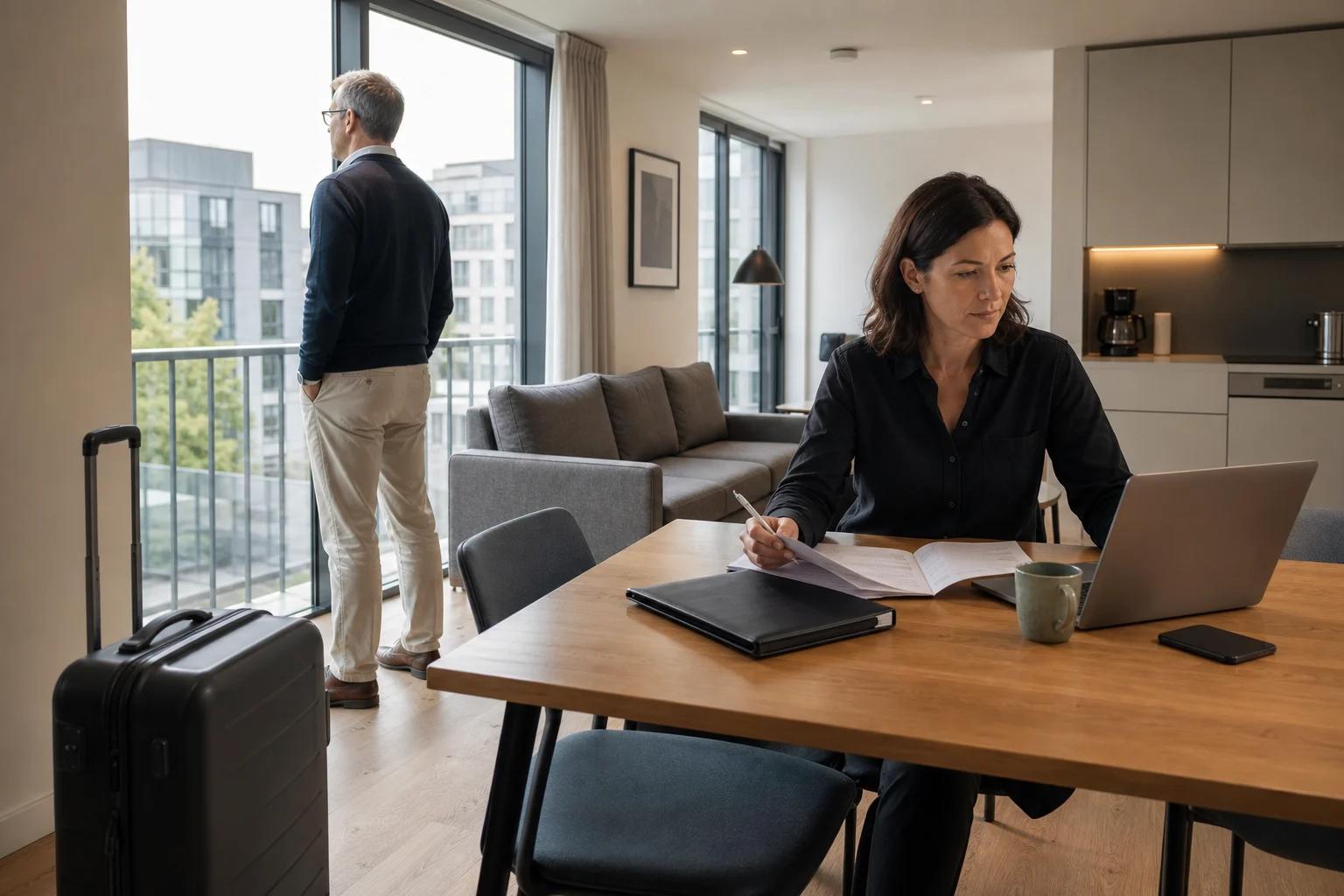
Accommodation for Interim Managers on a Temporary Basis: What Executives Should Consider During Longer Assignments
Interim managers need accommodation that supports focused work, clear processes, and a predictable stay. This guide shows which criteria really matter for location, workspace, invoicing, and extension options, and how to compare types of accommodation objectively.
Temporary housing after living abroad: How to make your return to Germany work
After living abroad, it is often not immediately clear where your permanent home will be. This guide shows how to organize your return to Germany with a furnished interim apartment, clear priorities, and a realistic booking plan.
Temporary Accommodation for Family Reunification in Germany: How Spouses and Children Arrive Stress-Free
When spouses or children move to Germany later, they often need accommodation for the transition period first. This guide shows which housing option makes sense for the first 4 to 12 weeks, what to consider regarding furnishings and move-in, and how to make the search more structured.
Extend Bleisure After a Business Trip with a Serviced Apartment: How to Plan the Follow-On Stay
Anyone who stays on after a business appointment needs a clear separation between work, follow-on time, and the private part. What matters are amenities, comparison criteria, and a clean process.
Temporary Accommodation for Caring Relatives and Longer Hospital Stays: Proximity, Quiet, and Everyday Practicality
Anyone planning several weeks of hospital accompaniment needs more than a bed nearby. This article shows which accommodation features matter for caring relatives, how hotels, apartments, and furnished flats are classified, and how longer stays can be planned in practice.
Double housekeeping with temporary housing: requirements, documents, and booking
Anyone temporarily living in another place for work should clarify the tax classification, the type of accommodation, and the documents early on. The article explains the difference from business travel and work away from home, outlines suitable accommodation scenarios, and organizes the documents for employees and companies.
Temporary Housing for Commuters with Irregular Work Blocks: How to Plan a Second Home
Irregular work blocks create different demands than a fixed weekly routine. This article shows when a second home makes organizational sense, how to classify an apartment, serviced apartment, or hotel depending on the block, and which criteria really help when choosing.by myroom24 editorial team
06.10.2026

Temporary Housing for Training Sessions and Workshops with Longer Durations: Criteria for Teams
Multi-week training sessions and workshops place different demands on accommodation than short trips. This guide shows which criteria matter for participants and companies when it comes to location, workspace, Wi-Fi, kitchen, laundry facilities, and duration.
Temporary Housing for Project Teams with Changing Work Locations: Staying Predictable
When project teams are working at multiple locations, accommodation needs clear coordination for individual work phases, billing routes, and possible extensions. Key factors are extendability, Wi-Fi, kitchen use, location, and well-organized booking.
Organizing corporate bookings for longstay accommodations efficiently: a guide for HR
Anyone who wants to organize a corporate booking for longstay accommodations efficiently needs clear internal details before making the request. This guide shows which information HR, assistants, and accounting should bundle and how to turn it into a verifiable B2B process.
Temporary Housing for Families Returning from Abroad
After returning from abroad, a family often first needs temporary, furnished accommodation with a clear structure. This article shows which questions about sleeping, kitchen, laundry, location, and booking really matter.by myroom24 editorial team
06.10.2026

Temporary Accommodation for Medical Professionals and Relatives from 28 Nights
In medical transition periods, short distances, privacy and equipment that does not complicate daily life unnecessarily are what matter. The key factors are proximity to the clinic, self-catering and the right period.
Reporting obligations for temporary housing: registration of residence, landlord confirmation and second-home tax
This guide separates residence registration, landlord confirmation and second-home tax and shows which details guests and HR should prepare cleanly before a long stay.
Temporary Accommodation for Business Travelers with Multiple Locations in Germany: How to Keep the Stay Flexible
When business trips move between several cities, accommodation organization needs fixed standards. This article shows how companies can standardize search, terms, approvals, and booking across multiple locations in Germany.
Temporary Accommodation in Mannheim for Project Teams and International Specialists: Clear Decision Support
For a stay of several weeks or months in Mannheim, the label alone does not matter, but rather the concrete need in the team and in daily working life. This article shows which criteria make the choice between apartment, serviced apartment and hotel objectively reliable.
Temporary Housing in Munich for International Professionals Without Schufa: Guidance for the Start
International professionals in Munich often need to arrange temporary accommodation alongside the start of a new job. This article shows how to narrow down temporary housing without Schufa and what to consider regarding location, furnishings, and documents.
Temporary Housing Without Schufa for International Professionals: Documents for Longstay
International professionals without a German Schufa mainly need clear responsibilities, consistent Longstay documents, and a well-described booking when looking for temporary housing.
Temporary Living with Corporate Booking and Batch Documents: Process, Roles, Documents
Anyone organizing temporary living for employees needs clear responsibilities, clean batch documents, and a clear approval path. This article shows the process for HR, assistants, and travel management.
Extending a Longstay Booking: What to Clarify Before the First Term Ends
This article shows which details, approvals, and timing points matter before extending a Longstay booking so the transition can be planned without a gap.
Notice Periods for Furnished Accommodation: Which Deadlines Matter for Longstay Stays
If you stay in furnished accommodation for longer, you should check the end date, cancellation method and extension options in advance. This article shows which questions matter before booking.
Rent Cap for Furnished Apartments: What Long-Stay Guests Should Check Before Booking
If you are looking for furnished accommodation for several weeks or months, you should read pricing structure, usage framework, and services separately. This article shows which questions help provide orientation before booking.by myroom24 editorial team
04.10.2026

Temporary Housing for Business Travelers with Longer Project Phases and Training: A Comparative Decision Guide
Multi-week projects, training sessions, and on-site phases need clear criteria for location, workspace, approval, and extension.
Temporary Housing in Bremen for Business Travelers and Project Teams: Which Accommodation Suits Longer Assignments?
Anyone working in Bremen for several weeks or months needs accommodation that fits the assignment, team size, and workflow. This article shows what business travelers and project teams should look for in furnished accommodation and how to compare options objectively.
Temporary accommodation after fire, mold, or heating failure: Which solution fits an uninhabitable apartment?
When fire, mold, or heating failure makes an apartment uninhabitable, clear priorities help: safety, documentation, and accommodation that fits the length of stay.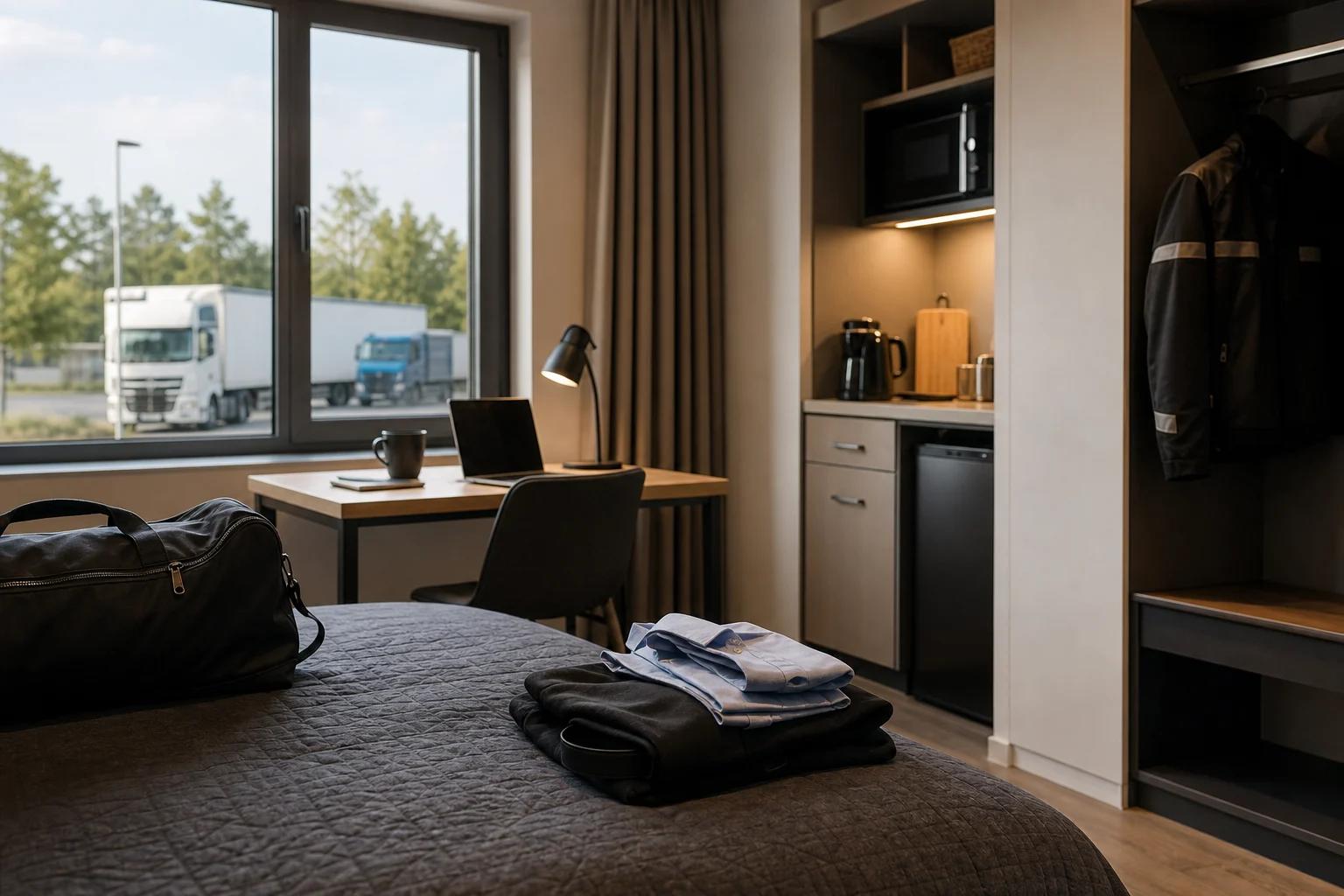
Temporary Accommodation for Truck Drivers and Mobile Commuters: When an Apartment Fits Better Than a Hotel
Mobile professions need accommodation that matches arrival times, sleep rhythm, meals, and laundry. This article shows what truck drivers, flight attendants, and other mobile commuters should look for and how hotels, apartments, and serviced apartments differ in practice.
Temporary Housing for Rotating Project Teams: Planning Assignment Blocks Clearly
Rotating project teams need accommodation planning that clearly maps arrivals, changes, and extensions. This guide shows what matters in assignment blocks, responsibilities, and accommodation comparisons.
Temporary Housing for Internal Transfers and Assignments: HR Planning
For internal transfers and assignments, accommodation needs an early fixed place in the process: responsibilities, duration, location, and booking should be clearly defined.
Book a long stay in a hotel subscription or serviced apartment: which booking model fits 28 to 179 nights
If you are planning 28 to 179 nights, you should assess the booking model, service, and extendability separately. That makes it easier to compare hotel subscriptions, monthly rates, and serviced apartments objectively.
Temporary Housing for Internal Transfers or Assignments: How Employees Bridge a Change of Location
For an internal transfer or assignment, the key points are move-in timing, commute, furnishings, and clear responsibilities. This article shows how employees and HR can prepare a change of location in a structured way, which type of accommodation fits in each case, and what matters for extensions, Wi-Fi, and reporting routes.by myroom24 editorial team
03.10.2026
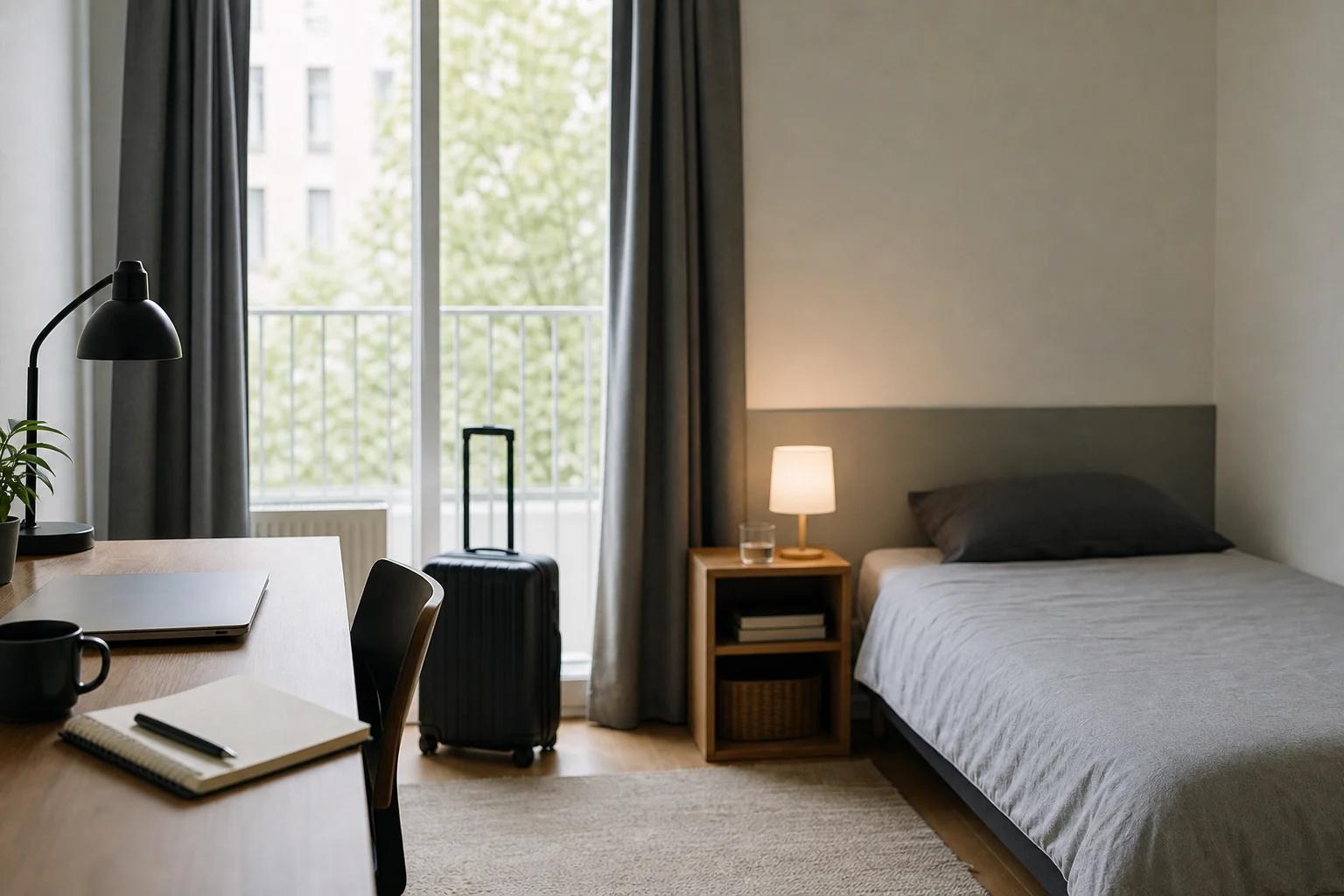
Private room for a while: When a room, apartment, or hotel fits
A private room for a while works when you mainly need a quiet place to sleep and retreat. As soon as work, rest, and organization must function in parallel, it is worth looking at an apartment or apartment hotel.by myroom24 editorial team
02.10.2026

Temporary Housing for Language Courses and Integration Courses: How to Get Started with Furnished Accommodation
If you are coming to Germany for a language course or integration course, you often need accommodation that can be used from day 1. This guide shows who temporary housing is suitable for, which amenities matter in everyday life, and how to organize your course, settling in, and first errands more easily.
Cleaning Service in Longstay Accommodations: Frequency and Services
Cleaning service can be scheduled regularly or added flexibly for longer stays. This article shows which points you should check before booking.by myroom24 editorial team
02.10.2026

Rent Guarantee Instead of a High Deposit for Temporary Housing: How to Decide
If you are looking for accommodation for several weeks or months, you should assess security deposit, starting budget, and accommodation type together. This guide shows when a rent guarantee can make sense and which points matter before booking.
Company Invoice and Payment Process for Long-Stay Accommodations: Checklist for HR, Procurement, and Finance
A guide for HR, procurement, and project management on invoice data, payment rhythms, additional costs, and clean approvals for long-stay bookings.
Temporary Housing for Long-Distance Moves and Job Hunting: How to Bridge the First Weeks Without a Permanent Home
During a long-distance move, starting a job, viewings, and move-in dates often overlap. This article shows which accommodation and contract details matter in the first weeks and how to make the transition phase manageable.
Temporary accommodation for trade fair build and event production teams: how companies organize several weeks efficiently
Trade fair build, event technology, and production teams need accommodation that fits arrival times, shift work, laundry needs, and internal billing. This article shows how companies structure accommodation for multi-week projects, what to watch for with individual bookings, team bookings, and consolidated invoices, and how to prepare the search properly.
Temporary housing for onboarding and probation with a later move: how to keep the start of a new job manageable
When the job start is fixed but the new apartment is not yet ready to move into, you need a temporary solution with clear planning. This article shows what to consider about location, duration, furnishings, and coordination with your employer or HR.by myroom24 editorial team
01.10.2026

Temporary Accommodation for Visiting Lecturers and Adjunct Faculty: Quiet Living During Semesters, Block Seminars and Teaching Assignments
Visiting lecturers and adjunct faculty need more than a place to sleep during an academic stay: a predictable time frame, a workspace for preparation and a location that makes travel to the university practical. This article shows which criteria really matter for temporary accommodation.
Temporary Housing for Returnees After an International Assignment: Between Arrival, Apartment Search, and Restart
After returning from abroad, several things often happen at once: settling in, clarifying deadlines, starting work, and looking for a permanent apartment. This article shows which accommodation features really matter in this phase and how to approach the first weeks in a structured way.
Check Long-Stay Living with Kitchen, Washing Machine and Storage: What Really Matters Between 28 and 179 Nights
If you are staying for several weeks or months, evaluate more than the photos. This checklist shows what really matters in everyday life when it comes to kitchen, washing machine, storage, furnishings and a work area.by myroom24 editorial team
01.10.2026

Temporary Living with Digital Check-in and Late Arrival: What Matters for Access, Keys, and Support
If you arrive late, you need clear information in advance about access, key handover, and support. This article shows which details you should clarify before booking and how to prepare the first day of your stay in a structured way.by myroom24 editorial team
01.10.2026

How to organize a longstay booking with a company invoice: what HR and assistants need upfront
Anyone who wants to organize a longstay booking with a company invoice needs clear responsibilities, complete company data, and careful advance coordination. This article shows which details should be set before the request, how to structure the invoicing process, and what project teams and relocation cases should pay particular attention to.by myroom24 editorial team
30.09.2026

Furniture Surcharge in Furnished Apartments: When the Extra Cost Is Understandable
A furniture surcharge often affects the comparison of furnished apartments more than the first glance at the listing price suggests. Anyone reviewing offers for 28 to 179 nights should look at furnishings, contract terms, and included services together. This article shows how to assess an extra charge for furniture objectively without lumping hotels, serviced apartments, and furnished apartments together.by myroom24 editorial team
30.09.2026

Temporary Housing in Germany for Remote Workers with a Stable Workspace: Criteria for Longstay
If you work in Germany for several weeks, you need more than a nice room. This guide shows what remote workers should look for in longstay accommodation, from workspace and Wi‑Fi to quiet and booking from 28 nights.
Temporary Housing for Moving, Renovation, and House Building with Children: The Best Transitional Solution from 28 Nights
When a move, renovation, or house build interrupts family life, the transitional solution needs more than just a bed. This article shows what matters in furnished accommodation, hotels, holiday apartments, and interim rentals in the first decision phase.
Working from home for a while in a serviced apartment: Which accommodation really makes productive work easier over several weeks
Anyone working remotely for several weeks needs more than a nice room. This guide shows how to recognize internet, workspace, light, quiet, storage, and kitchen for productive temporary work.by myroom24 editorial team
30.09.2026

Compare Transparent Total Costs for Temporary Housing: What Longstay Guests Should Really Look At
Anyone booking temporary housing should look beyond the visible price. What matters is which services are included, which extra costs apply, and how to compare offers fairly by total cost, location, and conditions.by myroom24 editorial team
30.09.2026

Planning Temporary Housing for International Professionals with Family: 7 Checks
How international professionals with family can assess accommodation for the first month in a sensible way: space, routines, location, and booking for a calmer start in Germany.
Temporary Housing for International Professionals with Family: How to Start in Germany with Less Stress
When starting in Germany, families mainly need accommodation that supports everyday life with a partner or children in a practical way: clear sleeping areas, a usable kitchen, storage space, a workspace, and a location that makes the first journeys realistic.
Temporary Housing in Hannover for Project Staff and Relocation
Anyone coming to Hannover for a project, a relocation, or a new job often needs more than a single overnight stay. This guide shows which housing features matter for professional transitions and how teams can approach the search in Hannover in a structured way.
Temporary Housing in Munich for Families with Children: Which Transitional Solution Really Fits
Families staying temporarily in Munich need more than a furnished place to stay: space, quiet, workable everyday routes, and a length of stay that fits a move or school change matter most. This article shows how to choose the right interim solution in Munich step by step.
Temporary Housing for Language Courses, Integration Courses, and Intensive Courses: How to Get Started with Furnished Accommodation
For several course weeks, what matters is accommodation that supports arrival, learning, and everyday life without unnecessary detours. Key factors are suitable amenities, accessible routes, clear processes, and a booking process that fits the course start.
Temporary Housing for Thesis, Exams, and State Exams: The Right Accommodation for Focused Weeks
Anyone living temporarily for a thesis, exam, or state exam needs accommodation that genuinely supports focused work. What matters are quiet conditions, a usable workplace, Wi-Fi, a kitchen, and a stay length that fits the exam period. This article shows how to compare housing options and when a serviced apartment, sublet, or room solution makes sense.by myroom24 editorial team
29.09.2026

Temporary Housing for Exams, State Exams, and Final Papers: Live Quietly, Study with Focus
For exams, state exams, and final papers, you need more than just a bed. This guide shows how students can choose quiet accommodation with a workspace, Wi‑Fi, kitchen, and good transport links, and when temporary housing from 28 nights makes sense.
Temporary Housing for International Professionals with Family Arriving from Abroad
International professionals with family need accommodation in the first weeks that combines sleeping, working, eating, and organization. This article shows how HR, mobility, and family can structure the search and what to look for in accommodation type, location, and booking.
Temporary Living in Koblenz for Projects and Commuters: Who the City Suits as an Interim Solution
Temporary living in Koblenz is especially relevant for fixed-term projects, regular commuting, and transition phases. The article shows how to align the reason, length of stay, and type of accommodation in a sensible way.
Temporary housing in Essen for project staff and relocation: Which accommodation suits longer assignments?
Anyone working in Essen for several weeks or months needs accommodation that fits the assignment, the work rhythm, and the organizational effort. This article shows how project staff, HR, and relocation can compare the right housing option for longer stays.
Temporary Accommodation for Auditors, Experts, and Plant Inspectors: The Right Solution for Time-Limited Assignments
For auditors, experts, and plant inspectors on fixed-term assignments, the key is accommodation that is quiet, easy to reach, and organized cleanly. This guide shows how companies choose the right type of accommodation and set up the booking process efficiently.
Temporary Living with a Home-Office-Friendly Workspace: What Remote Workers and Project Teams Should Look For
Anyone living temporarily while working at the same time needs more than a bed and attractive furnishings. A usable workspace, reliable internet, quiet, good light, and a layout that supports both working and living are key. This article shows how remote workers and project teams can assess long-stay accommodation from 28 nights in a practical way.by myroom24 editorial team
28.09.2026

Temporary housing for separated parents and shared custody: a stable transitional solution for families from 28 nights
When children move between two households, clear routines matter more than floor space alone. This article shows when a second place makes sense, what to look for in space, kitchen, storage, and location, and how myroom24 can support the search for a suitable housing solution.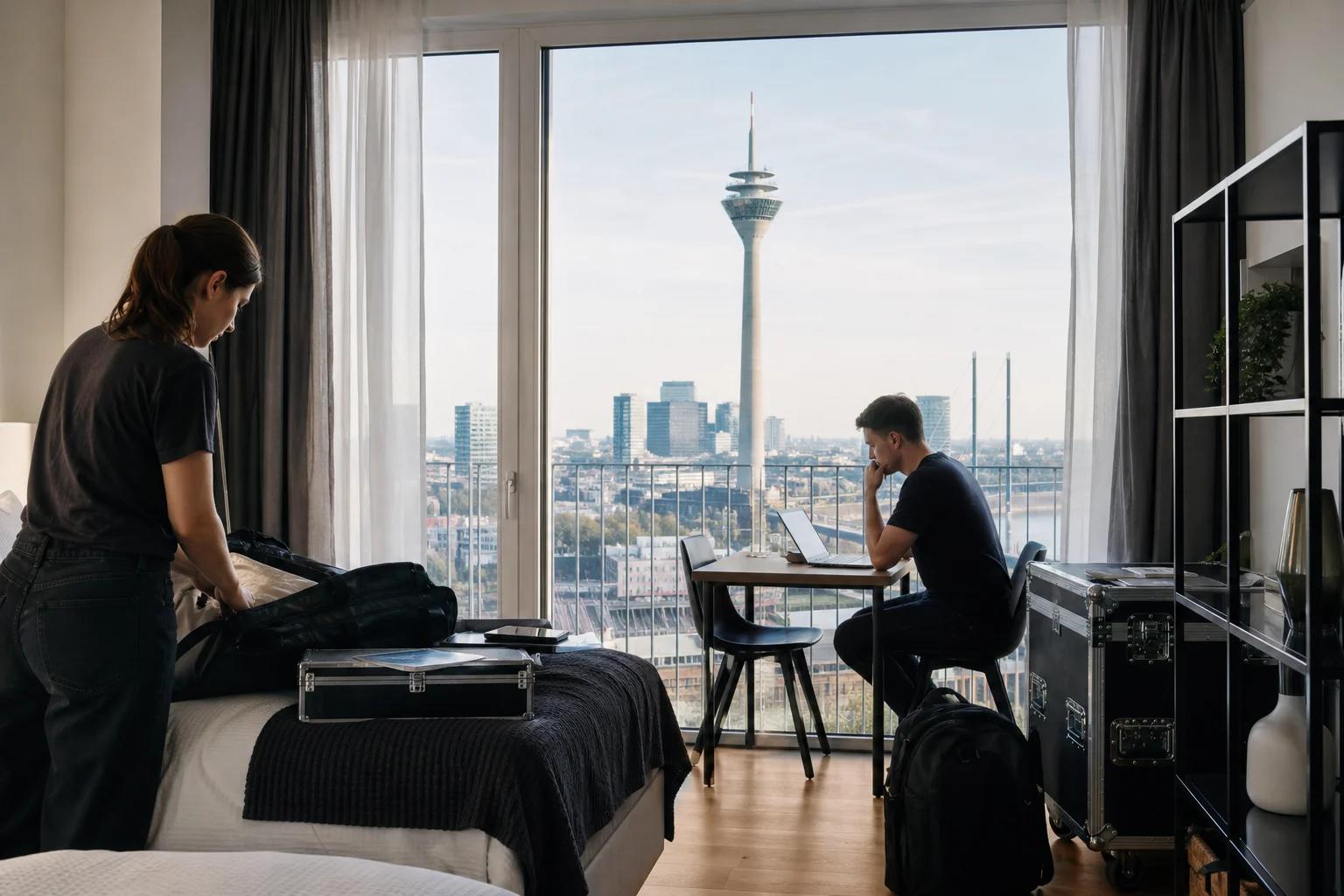
Temporary Housing in Düsseldorf for Exhibition Builders and Exhibitor Teams: Accommodation Near the Fair and City Center
For setup, exhibition days, and dismantling in Düsseldorf, you need accommodation that fits the project schedule. This guide shows what exhibition builders and exhibitor teams should consider regarding location, amenities, team organization, and booking.
Temporary Accommodation in Stuttgart for Automotive Project Teams: Organizing Suitable Apartments for Longer Assignments
For automotive and engineering project teams in Stuttgart, the key accommodation factors are location, good accessibility, stable Wi-Fi, parking options, and clear invoicing. This guide shows how to prepare longer assignments from 28 nights in a structured way.
Temporary Housing in Frankfurt for Consulting and IT Projects: Which Accommodation Suits Longer Assignments?
For multi-week consulting and IT projects in Frankfurt, location and furnishings are not the only factors that matter. The commute to the assignment site, a usable workspace, quiet for focused work, and practical self-catering are key. This article shows how to compare apartments, serviced apartments, and hotels objectively.
Checking a furnished temporary apartment with an inventory list: Why the inventory list and handover protocol matter
Anyone moving into a furnished temporary apartment should check the inventory list and handover protocol carefully. This article shows how to systematically inspect furnishings, condition, and any issues when moving in.
Recognizing Serviced Apartment Quality: How Guests Distinguish Good Long-Stay Accommodation
Anyone comparing serviced apartments for a longer stay needs clear criteria instead of marketing promises. This guide shows how to recognize quality in location, quiet, Wi‑Fi, workspace, service, cleaning, and booking—and how myroom24 supports the search for long-stay accommodation in a structured way.
Temporary housing for project managers and coordination teams: which accommodation works in project day-to-day life
Temporary project managers need accommodation that supports appointments, coordination and on-site work in a practical way. This guide shows what companies and assistants should look for in location, facilities, duration and the booking process.
Temporary housing for returnees from abroad: How to restart in Germany without housing stress
Anyone returning to Germany after a long stay abroad usually needs a clear framework first, not an immediate final housing solution. This guide shows how to structure the first weeks sensibly, which documents and decisions matter in advance, and how to recognize a suitable interim solution.by myroom24 editorial team
27.09.2026

Temporary Living with Kitchenette and Washing Machine for Several Weeks: Which Amenities Really Matter
If you are living temporarily for several weeks, you need accommodation that supports everyday life: a usable kitchenette, laundry facilities, storage space, and real work surface. This checklist shows what to check before booking.
Temporary Housing for Field Sales Employees with Changing Work Locations: How to Keep Accommodation Planable
Field sales employees need accommodation that fits changing work locations, tight time windows, and shifting weekly schedules. This article shows what teams and assistants should check before booking — from location and work setup to booking process and length of stay.
Compare Temporary Housing Transparently with Utilities, WLAN, and Cleaning: What Longstay Guests Should Look For
When living temporarily, the base price is not the only factor. This checklist shows how to compare utilities, WLAN, cleaning, and possible extra charges in a structured way and ask the right questions before booking.
Temporary Living with Self Check-in and Late Arrival: What Matters for Arrival, Access, and Comfort
Anyone arriving late needs clear access information and a smooth first entry. This article shows which details matter in advance, how to organize arrival, and what to look for in long-stay offers with digital check-in.by myroom24 editorial team
27.09.2026

Temporary Housing for International Scientists with Family: The Transitional Solution for Research and Teaching
International scientists with family often need a furnished interim solution when starting at a university or research institution. This article shows which criteria really matter during the transition, how to align the stay with the academic schedule, and what families should check before booking.
Temporary Housing for Wind Power and Energy Project Teams: The Right Accommodation for Installation, Maintenance, and Commissioning
Wind power and energy project teams need accommodation that fits installation, maintenance, and commissioning work. This article shows which criteria matter for longer assignments—from team size and vehicles to self-catering, rest periods, and changing job sites.
Accommodation for data center and cloud commissioning teams: keeping project starts manageable on the housing side
Data center and cloud projects often require several weeks or months on site. This article shows which housing requirements matter for commissioning teams, how hotels, serviced apartments, and team housing differ, and what project managers should consider when coordinating accommodation.
Temporary Housing for International Students with Family: How to Get Started in Germany with Children
International students with family need accommodation for the transition that is furnished, quiet, and practical for everyday life. This article shows which type of housing can make sense for the first weeks, what to look for in the kitchen, washing machine, quiet, and duration, and how to plan arrival in Germany with children in an organized way.
Temporary Housing in Dortmund for Project Staff and Relocation: Which Accommodation Is Best for Longer Assignments?
For longer stays in Dortmund, it is not just a furnished place to live that matters, but above all how well it fits the work location, commute, organizational effort, and length of stay. This article shows what project staff and relocation guests should look for.
Second-home tax for temporary living: when it becomes relevant and what guests should clarify in advance
Anyone living temporarily should consider second-home tax, registration obligations, and municipal classification separately. This article explains when the topic can become relevant, why cities handle it differently, and which documents movers, expats, weekly commuters, and mobility teams should sort out in advance.by myroom24 editorial team
25.09.2026

Temporary Housing for Shift Work and Night Shifts: Live Quietly Despite Changing Work Hours
Shift work changes housing needs significantly: anyone sleeping during the day or starting at different times needs peace, good blackout options, predictable laundry, and a location that fits the job site. This article helps you choose a quiet temporary home.
Temporary Housing for Cross-Border Commuters and Weekly Commuters: The Flexible Solution for Two Homes
Anyone living near their workplace during the week and returning home on weekends needs accommodation that combines commuting, rest, and daily life. This article shows which criteria really matter for cross-border commuters and weekly commuters - and how temporary housing differs from hotels and classic second homes.
Temporary Housing for Language Courses and Professional Training: More Than Just a Stopgap
If you move temporarily for a language course, further training, or a qualification program, you usually need more than just a bed: what matters is peace and quiet, a furnished setting, and practical everyday amenities. This article shows what matters in accommodation for 28 to 179 nights.
Temporary Housing for Resident Doctors and Doctors in Training: What Matters for Hospital Proximity, Quiet, and Planning
Resident doctors and doctors in training often need housing that fits rotations, shifts, and tight transitions. Location, quiet, furnishings, and a booking process that makes starting at a new workplace easier are key.
Temporary Housing for Trainees and Career Starters: The Right Transition Solution for Starting a Career
Trainees and career starters often need immediately usable accommodation for several weeks or months. This article shows the typical requirements companies have, how booking can be organized internally, and what matters for term, furnishing, and billing.
Temporary Housing for 3 to 6 Months: Who This Length Is the Better Solution For
Anyone looking for accommodation for 3 to 6 months needs a solution between a hotel and a traditional rental. This article shows when 3 months are enough, when 6 months make more sense, and how to compare term, furnishings, and booking logic in a practical way.
Furnished team apartment with two bedrooms: when more space for projects is worth it
When several employees are on a project assignment together, a single room is not always enough. This article shows when a furnished team apartment with two bedrooms makes organizational sense and which details project teams should check in advance.
Temporary Housing for Families at the Start of School and Day Care: How to Make the Transition Without Housing Stress
When school or day care is starting and the actual home is not yet settled, families need accommodation that truly supports everyday life. This article shows which criteria matter in the first weeks and how to compare hotel, vacation apartment, and longstay.
Temporary Housing in Wolfsburg for Automotive and Development Projects: How Teams Stay Flexible
Wolfsburg is a relevant location for automotive and development projects with clear requirements for temporary housing. This article shows which accommodation types and organizational questions project teams on site should typically review and how to approach the search in a structured way.
Temporary Housing in Hamburg for Internships and Transition Phases: Which Accommodation Really Fits
If you are coming to Hamburg for an internship, a new job, or a transition phase, you need accommodation that fits the length of stay, the location, and everyday life. This guide shows how to compare accommodation types, public transport, and practical conditions.
Temporary Housing for Clinical Placements and Shadowing: How Medical Students Find Suitable Accommodation
If you live near a hospital site for several weeks for a clinical placement or shadowing, you need more than a bed for one night. Location, quiet, self-catering, and an easy arrival without a major move are key. This article shows how medical students choose practical accommodation for 4 to 12 weeks.
Temporary Room in a Shared Apartment: When a Furnished Room Is Better Than an Entire Flat
A temporary room in a shared apartment can be a practical solution for students, interns, and people in transition. Here you can find out how shared rooms, furnished rooms, and temporary accommodation differ, which criteria matter, and when a temporary room makes more sense than an apartment.
Temporary Housing for Business Travelers on Longer Projects: When a Hotel for Several Weeks Is No Longer the Best Solution
Business trips lasting several weeks place different demands than a classic hotel overnight stay. This article helps business travelers, travel managers, and project teams compare hotels, serviced apartments, and furnished apartments based on daily work, privacy, and planning reliability.
Temporary Accommodation for International Employees: Starting Out in Germany
International employees often need a functional interim solution soon after arriving from abroad. This article shows which features really matter, which documents should be prepared, and how to organize the start in Germany more easily.
Serviced apartment with parking for longer stays: When the extra feature is really worthwhile
For project staff, consultants, and service teams with a car or company vehicle, parking is often more than a comfort detail. This article shows when it really matters, which alternatives exist, and how to structure the search for a serviced apartment for longer stays in a sensible way.
What belongs in a fully furnished apartment for long stay? The checklist for 28 to 179 nights
A fully furnished apartment for long stay should offer more than just furniture. This checklist helps business travelers, students, and remote workers realistically assess the setup for 28 to 179 nights.
Organizing accommodation for commissioning and start-up teams: How to keep project launches manageable on the housing side
Commissioning and production ramp-up are time-critical project phases. Anyone organizing accommodation for several people needs planning for lead time, launch phase, ramp-up, and extensions. This article shows what matters for furnished apartments, team accommodation, and coordination with project management and procurement.
Temporary Housing for Dual Households and Second Homes: The Flexible Solution Between Two Places
Anyone living between two permanent homes needs accommodation that does more than just offer a place to sleep. This guide shows which facilities, location, and length of stay really matter for dual households and second homes.
Temporary accommodation for site managers: what companies should consider during longer assignments
For longer construction-site and commissioning assignments, accommodation for site managers needs different qualities than a standard hotel. The article explains the differences from tradesperson and project accommodation, shows the most important selection criteria, and classifies the decision for HR, site management, and project stakeholders.
Organizing accommodation for seasonal workers and temporary workers: What companies should consider for longer assignments
When seasonal staff or temporary workers are needed at an assignment location for several weeks or months, accommodation has to fit the organization cleanly. This article shows what HR, deployment planning, and staffing providers should consider—from the search to the length of stay, location, and amenities.
Temporary Housing for Trainees and Dual Students: How to Get Off to a Smooth Start in Training or Studies from 28 Nights
When training or studies begin, there is often little time to look for housing. This article shows which accommodation from 28 nights makes sense, what matters for location and amenities, and how furnished temporary housing differs from shared flats, dorms, and hotels.
Rent a hotel monthly: When longstay from 28 nights is really worth it
Renting a hotel monthly can make sense for transitions, projects, or longer stays. This article covers the key decision questions about kitchen, workspace, washing machine, billing, and stays from 28 nights — and when alternatives are often the better fit.
Organizing employee accommodation centrally across Germany: how HR and travel managers handle multiple locations efficiently
When employees need accommodation at several locations, clear processes are needed instead of one-off requests. This guide shows how HR and travel managers can centrally organize, compare, and select employee accommodation across Germany.
Temporary housing after a job change and during probation: how to bridge the first weeks without rental stress
A job change brings enough change on its own. Anyone who needs to settle quickly in a new place during probation often benefits from a furnished interim apartment: ready to move into, with a kitchen, Wi-Fi, and a planned stay length. This guide shows what matters and how to bridge the first phase of work more calmly.
Temporary Housing in Munich for Job Changes and Probation Periods: How to Get Off to a Stress-Free Start
If you are moving to Munich for a new job or need to bridge a probation period, you often need a flexible interim solution quickly. This article explains why temporary housing can make sense, how to structure your search, and what matters in furnished accommodation in Munich.
Temporary Living for a Sabbatical and a Longer Break: How to Really Feel at Home for Several Weeks
A sabbatical or longer break needs more than a hotel room: orientation, peace, everyday practicality, and an easy booking process. This article shows what matters when living temporarily for several weeks.by myroom24 editorial team
12.09.2026

Temporary Housing for Production Teams, Film and TV Crews: The Right Accommodation for Longer Shoots
Longer shoots need accommodation that fits team size, working hours, and changing routines. This guide shows what production assistants and location managers should look for, from room layout and kitchen access to central coordination.
Temporary Housing During Separation or Divorce: A Calm Transition Solution from 28 Nights
When separation or divorce happens, an independent, practical housing solution is often needed quickly. This article explains what matters in a transitional home, which questions help before booking, and how a stay from 28 nights can be planned sensibly.by myroom24 editorial team
11.09.2026

Corporate Housing for Site Openings and Large Projects
When many employees need to be accommodated at the same time for site openings, production launches, or large projects, a central and well-planned solution is needed. This article shows the typical requirements that arise and how accommodation can be organized in a structured way.
Temporary Housing for Hospital Companions: How Relatives Find a Quiet Place Near the Clinic from 28 Nights
If a hospital stay lasts several weeks, companions often need more than a hotel room. This guide explains which accommodation near a clinic makes sense for relatives, what matters for quiet, kitchen, and accessibility, and how temporary housing differs from hotels, guest rooms, and clinic accommodation.
Finding an Apartment Before Starting a Job: How to Bridge the First 28 to 90 Nights
Between signing the contract, moving, and the first workday, one thing is often missing above all: a suitable apartment. Planning the first 28 to 90 nights well reduces stress and creates time for a permanent solution. This article shows what matters in a furnished interim stay.
Temporary Housing in Cologne for Trade Fair and Event Teams: How to Organize Longer Assignments Efficiently
For trade fair, event, and production teams in Cologne, longer accommodation is above all an organizational matter. This guide shows what companies should consider for team accommodation from 28 to 60 nights and how to approach the search in a structured way.
Temporary Housing for Doctors and Nursing Staff: What Matters for Clinic Proximity and Long Assignments
Long assignments in a medical setting need accommodation that makes everyday life easier. This article shows what matters with clinic proximity, amenities, and booking — and how hotels and furnished apartments can differ from the perspective of professionals and relatives.
Temporary Housing for Workation and Remote Work: Which Accommodation Really Fits Productive Weeks
If you work remotely for several weeks or months, you need more than a nice room. What matters is workability, peace, and accommodation that fits everyday life. This guide shows what to look for in workation and remote work stays.by myroom24 editorial team
08.09.2026

Temporary Living for Commuters and Weekly Stays: Why a Second Place Is Often the Better Solution
For commuters and weekly stay guests, a hotel is often not enough in the long run. This article shows when a second place makes sense, which criteria matter in everyday work life, and how a furnished solution can be classified for 28 to 179 nights.
Temporary Housing for International Professionals: How to Get Started in Germany Without Rental Stress
International professionals often need a housing solution for their start in Germany that offers clear structure, suitable furnishings and little coordination effort. This guide shows what matters for temporary housing from 28 nights for professionals as well as HR, mobility and relocation teams.
Organizing worker accommodation for long projects: how companies find the right solution for teams staying 28 nights or more
For long projects, it is not only the overnight stay that matters, but also the organization behind it: suitable room arrangements, clear responsibilities, short distances to the job site, and clean billing logic. This guide shows what dispatchers and site managers should look for when arranging worker accommodation for several weeks or months.
Temporary Living for Families in Transition: Which Accommodation Really Fits with Children
When families need temporary accommodation, not only price and location matter, but above all everyday suitability. This article shows which housing option makes sense during a transition with children and what to look for when searching.
How long can you live in a hotel? What really makes sense for long stays from 28 nights
If you stay longer than just a few nights, you need more than a comfortable bed. This guide helps you choose between a hotel, serviced apartment, and furnished apartment, with a focus on kitchen, Wi-Fi, washing machine, workspace, and stays from 28 nights.
Temporary Housing, Interim Rental, or Replacement Apartment: What Fits in Which Situation?
When someone looks for a temporary apartment, they often do not mean the same thing by temporary housing, interim rental, or replacement apartment. This article sorts out the terms and helps with the decision for moving, renovation, or an in-between phase.
Temporary Housing for Students, Interns, and Doctoral Candidates: How to Find a Suitable Interim Solution
Anyone moving to a new city for a semester, an internship, or a research stay usually does not need a classic holiday rental, but a functional, furnished solution for several weeks or months. This guide shows which amenities really matter, how to plan the stay length sensibly, and how to structure the search.
Serviced Apartment, Hotel or Furnished Apartment: What Works for Longer Stays?
If you are looking for accommodation for several weeks or months, you often face the same question: serviced apartment, hotel, or furnished apartment? This comparison helps you classify the differences for longer stays from 28 nights in terms of everyday life, kitchen, billing, workspace, and booking process.
Trial Living Before Moving: How to Properly Test a City and Neighborhood
If you want to find out before a fixed move whether a city and neighborhood fit your everyday life, you need more than a quick viewing. This guide shows which criteria matter when trial living, how to check routes, local services, and the surrounding area, and what to look for in a longer furnished stay.
Accommodation for consultants and executives on temporary assignments: what companies should look for in temporary placements
Temporary leadership roles place different demands on accommodation than a short business trip. This guide shows what companies should look for in location, amenities, booking, and extendability — and how to narrow down a long-stay accommodation in a sensible way.
Organizing accommodation for relocation and international professionals: How HR and mobility can plan the transition period
How do you organize accommodation for relocation and international professionals so that move-in, the transition period, and the move to a permanent apartment work smoothly? This guide shows the key steps for HR, mobility, and international employees.
Landlord Confirmation for Temporary Living: What Guests Should Know Before Move-In
If you are moving into a furnished place for a few weeks or months, it is worth thinking about arrival and registration documents early. This guide explains when the landlord confirmation matters in the process, how it differs from booking documents, and which steps make sense before move-in.
Organizing accommodation for project teams: how companies handle longer assignments efficiently
Anyone who needs to organize accommodation for project teams needs clear responsibilities, suitable room allocation, and a duration that fits the project plan. This guide shows how HR, Procurement, and project management prepare the booking in a structured way.
Furnished apartment for 1 to 3 months: How people moving house can quickly find a suitable temporary solution
If you are looking for a furnished apartment for 1 to 3 months, clarity matters most: which term fits, what is included, and how do you quickly find a reliable temporary solution? This guide helps with the selection.
Replacement Accommodation After Water Damage or Renovation: Which Temporary Stay Is the Right Fit?
When your own home is temporarily unusable, you need quick orientation. This guide shows what a replacement apartment should offer during the transition and what families can consider when booking and organizing.Loading...