Temporary Housing for Start-up Teams and Founders: What Matters Before Booking

When is temporary housing useful for start-up teams?
Temporary housing for start-up teams and founders is especially useful when the setup phase is already underway, but a permanent place to live has not yet been decided. In this situation, what matters less is the classic housing search and more whether the accommodation is work-ready from day one: move in, open the laptop, prepare meetings, and get started without detours.
In founding projects in particular, priorities often shift quickly. A pitch may come up at short notice, a location is being evaluated, a team member joins for a limited period, or funding is still not finalized. In that case, furnished accommodation is not just a place to sleep, but a working environment. The key question is whether the place covers several requirements at once: focused work, short team check-ins, downtime after intense days, and a structure that will hold up over weeks or months.
The important distinction here is between "just staying somewhere" and truly living productively. Anyone staying for several weeks needs more than nice furnishings; they need a space that does not constantly interrupt routines. That includes reliable digital working conditions, a practical room layout, and an everyday setup that does not have to be improvised all over again each day.
Which criteria determine daily work life?
The best accommodation is not the one with the most extras, but the one that supports the actual way of working. For founder teams, it is therefore worth checking the daily routines one by one.
Internet and digital working capability
For start-ups, stable online work is usually not a side issue, but a basic requirement. When video calls, shared documents, remote coordination, or product work all come together, the accommodation should be set up so that several people can work in parallel. In practical terms, that means checking the internet not just as a box to tick, but asking whether the planned working rhythm can realistically be handled with the available connection.
Workspace, materials, and short meetings
A team needs more than a table. What matters is whether laptops, documents, chargers, and possibly hardware can all fit at the same time without the accommodation feeling makeshift after just a few hours. A good solution allows both focused individual work and short team meetings. If people often switch between work and meals, they should check whether the work area and dining area can be kept separate in everyday use.
Self-catering and daily structure
The longer the stay lasts, the more important easy everyday organization becomes. For founder teams, that means shopping, meals, and short breaks should be possible without having to plan them anew every hour. Accommodation is especially useful when the working day does not have to adapt to external routines, but breakfast, lunch breaks, and dinner fit into a reliable rhythm.
Quiet, privacy, and different working hours
Start-up work is rarely even. Sometimes a quiet phase for concept work is needed, sometimes a spontaneous phone call, sometimes a small meeting. That is why the accommodation should allow privacy without isolating the team completely. This is especially important when individuals work at different times or when one person starts early while another still has calls in the evening.
When team size and composition are still open
In the founding phase, the final team structure is not always clear. In that case, the accommodation should not only match the current team size, but also the expected development. It helps to clarify before booking how the room or apartment layout works, where work materials can be stored, and whether later arrivals or earlier departures are possible without major rearrangement. This makes it easier to assess whether a shared stay can still be organized sensibly if the team structure changes.
Which type of accommodation fits which founding setup?

For longer project phases, there is no single ideal solution. The right type of accommodation is the one that matches the working style, the desired level of independence, and the schedule. Depending on the provider, the range includes different formats such as rooms, apartments, and houses in commercial accommodation facilities.
When independence is the priority
An apartment or holiday apartment can be a good fit when the team organizes itself a lot and needs a clear private retreat. This option is especially interesting when everyday life remains flexible, work is coordinated internally, and no tightly scheduled service offerings are the main focus.
When a structured framework is helpful
Serviced apartments and apartment hotels are just as suitable for long stays as a flat. They are a particularly good option when an orderly framework, a separate living area, and predictable routines are meant to come together. For founder teams, this can be helpful when work and living should be clearly separated and the stay lasts several weeks or months.
When location and schedule make the difference
A hotel can also be suitable during the setup phase if many external appointments are coming up or the location is especially convenient for client meetings, events, or transport routes. In that case, the label does not matter as much as the concrete comparison: How good is the location? Which services are relevant? How transparent are the total costs for the planned period? Especially on tightly scheduled days, a clearly structured setup can make organization easier without giving up the option of a longer stay.
How does myroom24 help with this search in practical terms?
myroom24 is an online booking platform on which commercial accommodation providers offer accommodation for private and business users. For founders and start-up teams, it is especially useful when the period is already roughly fixed, but the right type of accommodation still needs to be compared.
The platform allows users to enter the destination and length of stay. Available long-term accommodations can also be filtered by criteria such as price, location, and amenities. This is helpful when several aspects need to be checked at the same time and not just one single detail determines the choice.
Important for the setup phase: the long-stay options offered via myroom24 cover 28 to 179 nights. This makes it possible to cover a phase that can last several weeks or even several months. Accommodations marked as instant booking can be booked without prior approval from the host if available. This is especially practical when the start date is already fixed and the booking process should be completed quickly.
Which steps really help before booking?
Anyone deciding as a team should not start with the accommodation, but with their own workflow. This sequence helps avoid bad choices:
- Set the time frame: How long is the setup phase realistically meant to last, and what buffer is still acceptable?
- Clarify the working mode: Is the team mainly working remotely, in many calls, or regularly together on site?
- Record space requirements: How many workstations, retreat areas, and sleeping places are really needed?
- Compare total costs and location: Does the accommodation fit not only content-wise, but also organizationally with appointments, routes, and planning reliability?
- Think about extension in advance: What happens if funding, the pitch, or the location decision comes later than expected?
Such a comparison is more precise than looking at photos or individual equipment details. Especially in the founding phase, the combination of workability, quiet, location, and reliable procedures often decides.
When is a detailed comparison especially important?
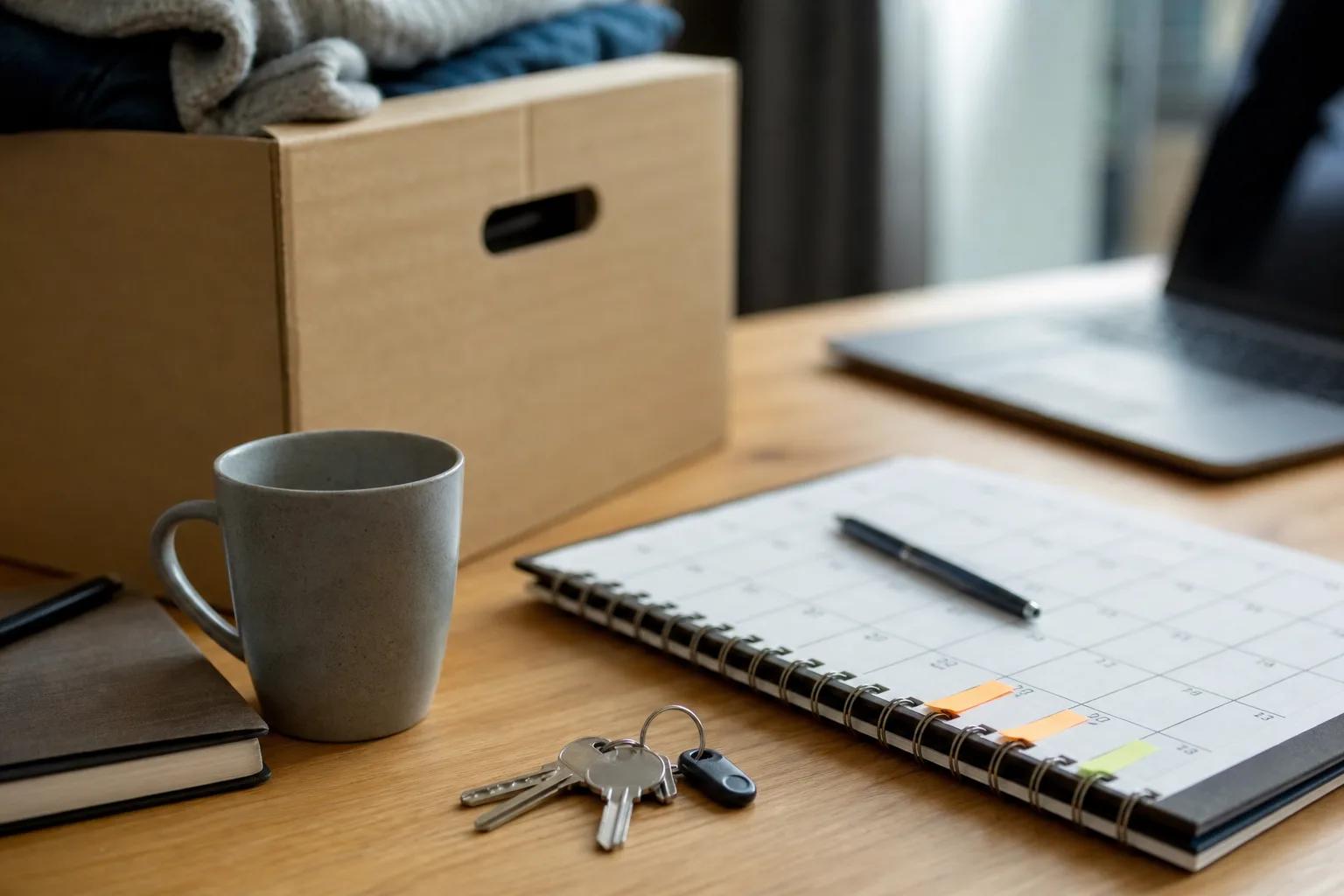
As soon as several people are involved, the coordination effort increases. Then it is not enough for the accommodation to "somehow fit." What matters is whether the place remains stable with changing schedules, different work rhythms, and possible team changes. Anyone who checks this early saves later rearrangements in both their head and their organization.
Especially when a team is switching between location search, product work, and external appointments, the accommodation should not become an additional project. A comparison that looks not only at the furnishings but also at everyday suitability over the entire stay is therefore helpful.
Next step
Once the key criteria are in place, it is worth comparing suitable options directly. A good place to start is myroom24 accommodations.
Frequently asked questions
How should we proceed if the team size is not yet final before moving in?
Plan with the smallest safe occupancy and check in advance whether the room layout, sleeping places, and work surface will still work if people arrive later or leave earlier.
When is a serviced apartment the better choice for a founder team than a classic flat?
When the team needs a clear living and working framework for several weeks or months, does not want to organize everything itself, and a structured routine is important.
What matters when two or more people need to work and make calls in parallel?
Stable internet, enough workspace, and a layout that allows focused work and short check-ins to happen side by side.
Which type of accommodation is especially suitable for many external appointments?
Accommodation with a well-suited location and a clear cost structure can make sense when travel to clients, investors, or events takes up a large part of the day-to-day routine.
What should be clarified before booking regarding a possible extension?
Whether the planned stay can be extended if needed and which organizational steps are required if the pitch, funding, or location decision is delayed.