Temporary Housing for Moving with Home Office and Family Life: Criteria for Space, Wi-Fi, and Privacy
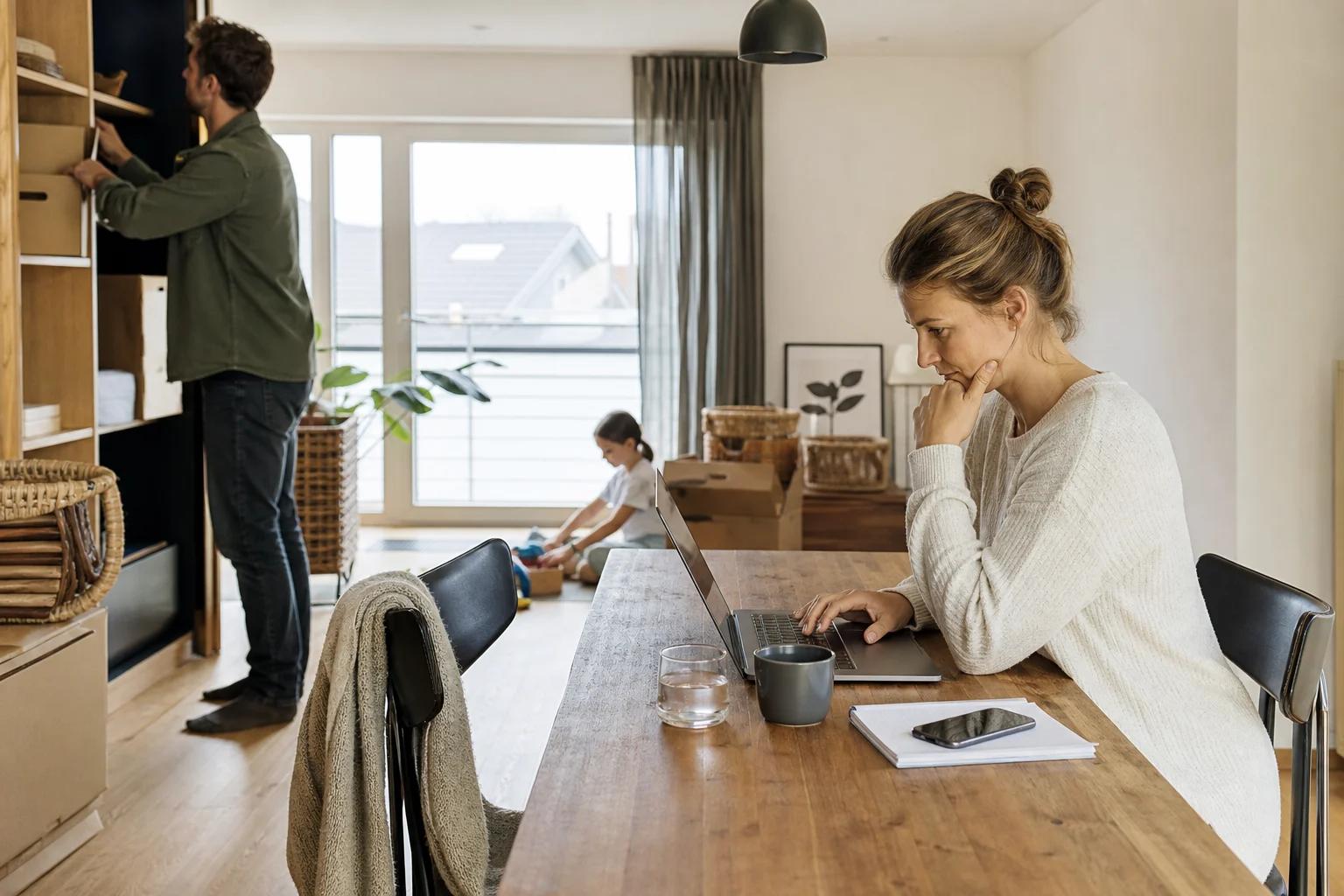
Temporary housing for a move with home office and family life only works well if the accommodation is more than just a place to sleep and leave things. In this transition phase, several demands come together at once: work, eating, sleeping, learning, phone calls, moving boxes, and family routines. If you think about this early on, you can narrow the choice down to a few clear criteria instead of having to reorganize every day.
Which type of accommodation works when work and family life are running at the same time?
The most important question is not what the accommodation is called, but whether it supports the daily routine in practice. An apartment, a serviced apartment, or even an apartment hotel can be suitable for longer stays if the specific unit offers enough structure for work, privacy, and family routines. A hotel is not automatically impractical either; it can make sense if the location, services, and floor plan fit your routine. What matters is not the category, but the actual usability.
A sober comparison with everyday life is helpful:
- Do two adults need to work or make calls at the same time?
- Are there fixed times for daycare, school, or care that can clash with meetings?
- Are meals usually organized in the accommodation, or more often on the go?
- How much moving material, luggage, and work documents need temporary storage?
- Do you need more quiet, more service, or a mix of both?
Anyone who answers these questions will more quickly see which type of accommodation causes the fewest daily adjustments. Especially in a transition phase, that is often more important than a single detail of the equipment.
What should the layout look like so nobody has to keep rearranging things?

When moving and working from home, the layout is often the real sticking point. An accommodation may look spacious in photos and still feel tight in everyday life if one table has to serve as a workspace, dining table, school station, and storage surface all at once. A better solution is a layout in which individual functions do not constantly blend into one another.
Two workstations without constant disruption
If two people are working at the same time, two separate rooms are not necessarily required. But there should be two usable workstations, or at least a clear way to use them one after the other or side by side. Practical features include:
- two stable surfaces with enough space for a laptop, documents, and a drink
- seating that allows for longer work sessions
- power outlets or charging points within easy reach
- lighting that supports video calls or focused reading
- enough distance so that conversations do not dominate the whole room every time
If only one work surface is available, everyday life can still be organized. But then it should be clear who works when and where the other person can move to during that time. Without such arrangements, conflicts can arise quickly, and they are not caused by the accommodation itself, but by the way it is used.
Privacy does not always require an extra room
Privacy does not automatically mean a separate room for each person. Often, a clear separation between zones is enough: an area for work, an area for rest, and an area for eating or playing together. This is especially helpful when children go to bed earlier, one parent is still in a video call, or someone simply needs a brief moment of peace after an appointment.
What matters is that one area can actually remain undisturbed. If the work area, dining area, and play area constantly overlap, the amount of rearranging needed throughout the day increases. Then every switch between work and family time becomes a small logistics task. A good temporary apartment reduces exactly this switching stress because everything does not have to be sorted again every evening.
Which equipment is especially relevant for everyday life with children and work?
The equipment should not only look nice, but also reflect real daily life. Especially in a family-friendly temporary apartment, functions count that are easy to underestimate at first.
Internet quality: not just available, but usable
Wi-Fi alone says very little. For everyday home office use, it matters whether several people can use the network at the same time without everything slowing down. If one person has a video conference in the morning while learning apps, streaming, or digital school tasks are running nearby, you need a connection that can at least practically support this parallel use. It is therefore worth asking whether the internet is usable in all living areas and whether the accommodation is designed for several simultaneous users.
Kitchen: a breakfast spot is rarely enough
A kitchen is helpful in this transition phase when it can do more than just coffee and sandwiches. If you are moving between unpacking, work, and family life for several days, simple meals, snacks, and spontaneous meal times should be realistically possible. That does not mean elaborate cooking has to happen every day. But there should be enough space to store food, prepare meals, and avoid improvising every time.
Storage space: visibility is not the same as order
Storage space is often only taken seriously when the first boxes arrive. That is when it becomes clear whether clothes, work documents, children’s things, and moving materials can be stored somewhere without blocking the living area. Good temporary solutions provide space so that not everything has to remain visible in the room. That not only creates more order, but also helps keep eating, working, and sleeping mentally separated.
Which location works when school, daycare, work, and moving all have to be organized at the same time?

In this situation, location is not a side issue. If daycare drop-off, the start of work, and an appointment with a tradesperson all come together in the morning, every unnecessary trip counts twice. A good location is therefore not just well connected, but also reduces the number of daily coordination points.
The most important questions to check are:
- Are daycare, school, or a temporary workplace within a sensible distance?
- Do many trips have to be organized by car every day, or can some be done on foot or by public transport?
- Is access for deliveries, visitors, or handover appointments clear and uncomplicated?
- Are there parking options, shopping facilities, or other everyday routes that make the transition easier?
Anyone who has many small trips during a moving phase benefits from a location where every errand does not create extra planning effort. This is especially true when work and family appointments cannot be rescheduled flexibly.
How do you compare an apartment, a serviced apartment, and a hotel fairly?
For longer stays, it is worth making a fair comparison of the concrete services rather than the category alone. Serviced apartments and apartment hotels can work just as well as an apartment for longer stays if the equipment and layout are suitable. A hotel can also be suitable if the services make daily life easier and the location fits your routine well.
Instead of making a blanket judgment, this comparison helps:
- Is there enough quiet for focused work?
- Can family life be structured spatially?
- Which services are included and which would have to be organized separately?
- How transparent is the overall effort for the entire stay period?
- Is the accommodation more suited to self-catering or to a stronger service setup?
This turns an abstract accommodation decision into a concrete usage question. That is especially important when moving, working from home, and managing family life, because it is not just about overnight stays, but about how everyday life will actually function in the coming weeks.
How myroom24 narrows the search for this transition phase
myroom24 is an online booking platform on which commercial accommodation providers offer places to stay for private and business users. For exactly this kind of transition, that can be helpful because the search can be tailored to a clearly defined length of stay: the long-term stays offered via myroom24 cover 28 to 179 nights.
You can specify your destination and length of stay and filter available long-term accommodations by criteria such as price, location, and equipment. This is especially practical if you do not need just any temporary solution, but an accommodation that fits work schedules, children’s routines, and moving logistics. The selection includes rooms, apartments, and houses in commercial accommodation facilities such as hotels, hostels, serviced apartments, and holiday apartments.
If you want to narrow the selection down to the must-have criteria from your everyday life now, take a look at suitable options at myroom24 accommodation.
Frequently asked questions
How can I tell whether two workstations in a temporary apartment are actually usable in parallel?
If there are two stable surfaces, suitable seating, power within reach, and enough distance for phone calls, parallel work is more realistic. A single surface is usually not enough for that.
What should I consider when school, daycare, and home office all follow the same daily rhythm?
Then fixed privacy options, stable Wi-Fi, and short distances to the most important appointments are especially important. Otherwise, work blocks and family time keep clashing.
How do I fairly compare a hotel, an apartment, and a serviced apartment for this transition phase?
Compare the actual usability: work surface, privacy, kitchen or catering, location, and transparent services. The name of the accommodation alone says very little about everyday life.
How do I know whether storage space in the temporary apartment is sufficient?
If luggage, moving boxes, children’s items, and work documents can be stored without blocking the living area, the storage space is more likely sufficient. If everything stays visibly in the way, it will quickly feel cramped in daily life.