Temporary Housing for Workation with a Reliable Workday
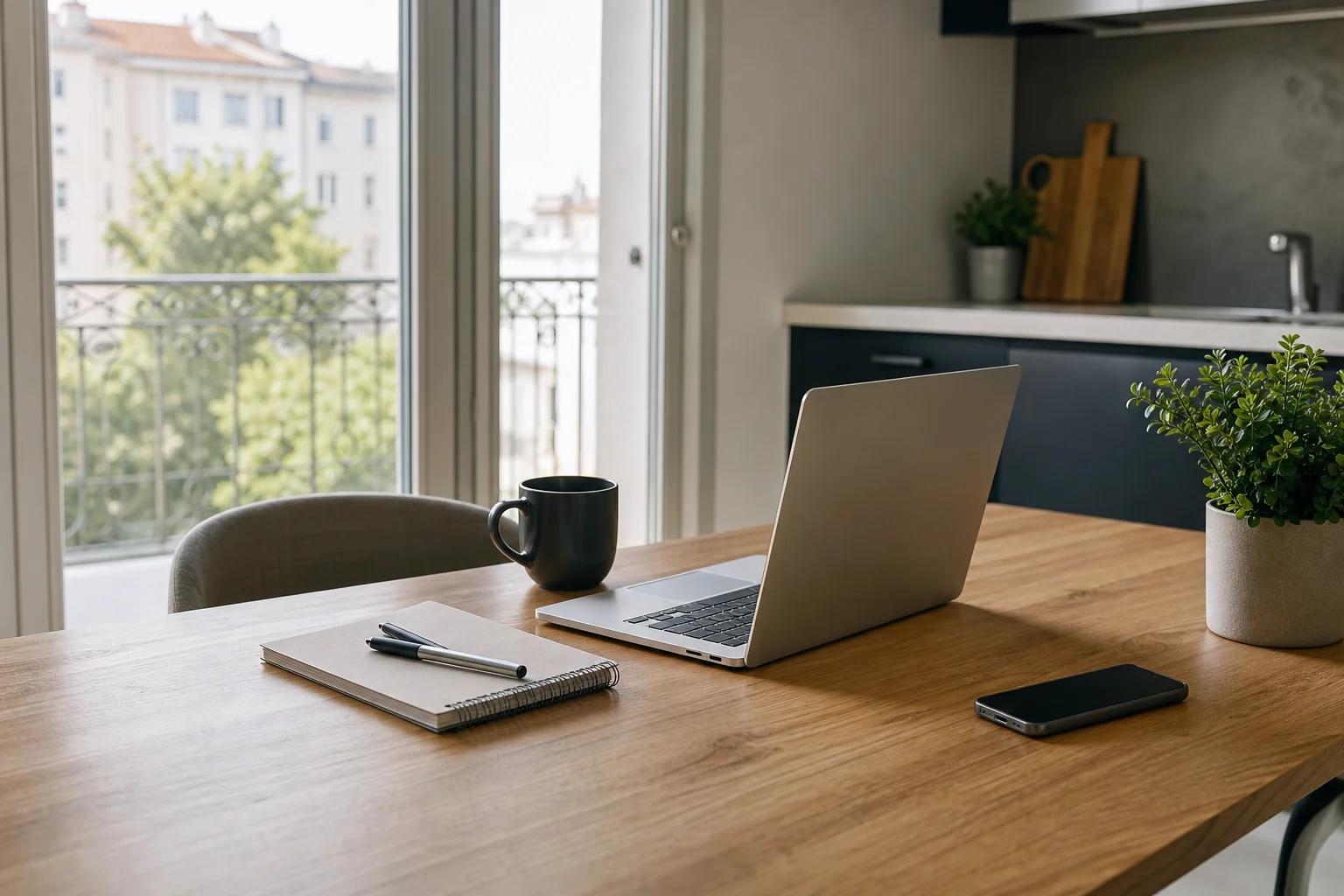
If you work remotely for several weeks, you need more than accommodation with a nice appearance. In a workation, everyday life determines whether meetings start on time, whether focused work remains possible, and whether the accommodation is still practical after the first week. This is exactly what temporary housing for a workation with a reliable workday is designed for: a form of living that combines work, breaks, and sleep over a longer period. myroom24 can help research suitable accommodation for such a period and narrow it down according to the criteria that really matter.
What changes between a short trip and a multi-week workation?
On a short trip, arrival, location, and spontaneous leisure activities are often the focus. On a workation lasting several weeks, the question shifts: Can I organize each working day here in a similarly reliable way? It sounds simple, but it is the decisive difference. As soon as appointments, deadlines, and different time zones come into play, the accommodation itself becomes part of the work process.
For this longer use, it is not enough if a room feels pleasant on the first day. What matters is whether the conditions hold up in repeated everyday life. A nice photo cannot replace a stable connection, a central location is of little help if the surroundings are noisy in the evening, and a dining table is only sufficient if it really works as a workspace.
If you are planning home office while traveling with a stay of several weeks, you should therefore not first look for the “best-looking” offer, but for the one that keeps your daily routine stable. That includes fixed working hours, reliable breaks, predictable meals, and the ability not to keep sitting at an improvised laptop spot after work.
Which criteria support productive temporary housing in everyday life?

Reliable Wi-Fi for calls, uploads, and cloud work
The internet connection is not a comfort feature for remote work, but a foundation. The important question is therefore not only whether Wi-Fi is available, but whether it fits the way you work. If you regularly take video calls, you need a connection that remains stable even when several applications are running at the same time or large files are being transferred.
It is helpful to ask in advance where the Wi-Fi is available and whether the intended workspace has a stable signal. Especially for longer stays, it is also worth considering how often you actively use the network: individual emails are something different from daily meetings, screen sharing, and large uploads.
A workspace that is not just “somehow possible”
A laptop on the coffee table is rarely enough for several weeks. For productive work, it is important that you have a real work surface: table, chair, and light should work together so that sitting for longer periods remains possible. That sounds obvious, but it is often underestimated when searching.
Also pay attention to spatial separation. If work and sleep are too close together, the boundaries in everyday life blur more quickly. A remote work apartment does not need to contain a classic office, but it should provide a place where you can work without constantly rearranging things. The clearer this area is, the easier it is to switch between work and recovery mode.
Quiet that remains workable on working days
Quiet is not only pleasant during a workation, but functional. It determines whether you can concentrate on complex tasks or are constantly pulled out of your workflow. It is therefore worth looking at the surroundings: Is the accommodation on a busy street, in a lively building, or rather in an environment with fewer disturbances?
What matters is not only the location on the map, but the actual noise level at the times when you work. Anyone with early calls reacts differently to neighborhood noise than someone who is out during the day and only works lightly in the evening. For a long-term decision, it therefore matters how well the accommodation supports your typical workday.
Kitchen and self-catering as part of the work routine
During longer stays, a kitchen quickly becomes an organizational advantage. It makes meals more predictable and prevents every working day from depending on external meal times. Especially if you work in a fixed rhythm over several weeks, a kitchen helps keep breaks flexible and avoids fragmenting the day unnecessarily.
What matters here is not only whether a kitchen is available, but how it fits into everyday life. Is there enough space for supplies? Can a quick breakfast before the first call be organized just as easily as a simple dinner after a long workday? Such questions are often more important for productive temporary housing than pure comfort features.
Location: practical rather than just attractive
A good location is the one that makes your actual daily routine easier. That can be a central address if you have appointments on site. But it can just as well be a quieter environment with good accessibility if you spend long hours at your desk and need short distances for shopping or breaks.
If you stay for several weeks, you should not understand location only as an address question. It affects how often you are interrupted, how spontaneously you can move around, and whether the switch between work, errands, and rest happens without extra effort. For a workation, therefore, it is not the most famous location that counts, but the most suitable one.
Which type of accommodation fits which working style?
Not every workation needs the same type of living arrangement. Depending on the way you work, rooms, apartments, or houses may make sense. Commercial accommodation facilities such as hotels, hostels, serviced apartments, and vacation rentals can also be considered for longer stays. What matters is not the category alone, but the facilities and the specific process on site.
If you mainly need structure, independence, and a fixed place to work, separate living and work areas are especially helpful. If, on the other hand, you are often on the move and use the accommodation mainly as a base, a more compact setup may be sufficient. A hotel can also be suitable depending on its facilities and location, if it supports your workday and you can work well with the services provided. Conversely, an apartment with a good kitchen and clear separation of rooms can make sense if you want to live more independently over several weeks.
The better question is therefore not: “Which accommodation is generally the right one?” But rather: “Which facilities, services, and location support exactly my work rhythm?”
How myroom24 helps with the search in concrete terms
myroom24 is an online booking platform on which commercial accommodation providers offer accommodation for private and business users. For a workation, this is helpful because you can align the search with a realistic period and specific requirements instead of just comparing general vacation offers.
You can specify your destination and length of stay and filter available long-term accommodation by criteria such as price, location, and facilities. This is especially useful if you are looking for a workation accommodation where not only the address matters, but also the working conditions. Important for longer stays: myroom24 covers long-term stays from 28 to 179 nights. This allows the search to be aligned with a period that suits several weeks of focused work.
In addition, some accommodations are marked as instant booking. If such an accommodation is available, it can be booked without prior approval from the host. This is especially practical if the travel period is already fixed and you want to complete the booking process directly. Nevertheless, it remains important to carefully review the details on facilities, location, and length of stay.
Which check questions should you ask before booking?

A good workation decision is rarely based on instinct alone. These questions help avoid typical bad bookings:
- Where exactly will I work, and is there really quiet and light there?
- Is the Wi-Fi suitable for video calls and larger uploads?
- Does the kitchen fit my everyday routine over several weeks?
- Can I sufficiently separate the work and sleeping areas?
- Is the location practical for my typical daily routine?
- Does the duration match the period I really need?
If you answer these questions before booking, you reduce the risk that the accommodation will not hold up in everyday life. Especially for longer stays, this is more important than a purely visual comparison of the offers.
Conclusion: How to recognize a good workation accommodation
A suitable workation accommodation is not simply furnished, but practical for everyday life. It offers stable Wi-Fi, a usable workspace, quiet, a sensible kitchen, and a location that matches your work rhythm. Whether this works best in a hotel, serviced apartment, or another commercial accommodation depends on your specific needs.
If you now want to narrow your search to the right period and the most important criteria, take a look at myroom24 accommodation.
Frequently asked questions
When can a hotel make sense for a workation even if I am staying for several weeks?
If the room offers a usable workspace, stable Wi-Fi, and a quiet environment, and you can work well with the services provided, a hotel can be suitable.
When is a kitchen more important than a central location for a workation?
Whenever you have fixed working hours over several weeks and want to manage meals yourself. In that case, a kitchen often supports your daily routine more strongly than a prime location.
How can I check in advance whether video calls will work in the accommodation?
Ask about Wi-Fi availability at the workspace and the stability of the connection for video calls, especially if you are online every day.
Which details should be clear before a longer workation?
Length of stay, workspace, quiet, kitchen, location, and the specific use of Wi-Fi should all be clearly checked before booking.