Serviced apartment, boardinghouse or aparthotel: what is the difference for longstay? – explained simply

If you are planning for several weeks or months, you are not only deciding on a type of accommodation, but also on the framework for the entire stay. That is exactly why the question Serviced apartment, boardinghouse or aparthotel: what is the difference for longstay? comes up so often. From 28 nights onward, other points matter than for a short trip: How independently do I want to live? Which processes need to be clear in advance? And how transparently are use, service and total costs described?
For the temporary housing comparison, it helps not to read the names in isolation. What matters more is the living logic, the service idea and the booking rules behind the offer. This makes it quicker to see whether the accommodation suits a project stay, a transitional situation or a longer assignment.
What do the three terms mean in everyday life?
The terms sound similar, but they focus on different things. For longstay, all three can be suitable if the framework conditions are right. The question is less what the accommodation is called and more how it supports your everyday life.
| Term | Practical focus | What you should look at especially closely in the listing | | --- | --- | --- | | Serviced apartment | independent living with a clear residential structure | layout, possibility for self-catering, space for work and luggage | | Boardinghouse | more functional and reduced organization | clear stay rules, simple use, matter-of-fact description of the offer | | Aparthotel | apartment-like living with orderly organization | service processes, arrival, contact person and the separation of living and organization |
This classification is intentionally practical. It does not replace checking the details in the listing, but it does help with the initial sorting of offers.
What does serviced apartment mean in the longstay context?
A serviced apartment is especially plausible when you need a living situation that is as independent as possible for several weeks. The key question is: Can I structure my daily routine there so that I do not constantly depend on external solutions?
For this, the listing should show in a comprehensible way how the unit can be used. Helpful information includes whether it is a self-contained living unit, how the space is laid out, and whether everyday topics such as working, eating and storing belongings are taken into account. The clearer these points are described, the easier it is to assess whether the accommodation is truly practical for a longer stay.
A serviced apartment often fits well when you do not only want to sleep during the stay, but also organize, work and maintain routines. This is especially relevant when you arrive in a new place and still need to structure your surroundings.
When is the boardinghouse difference important?

The boardinghouse difference becomes visible above all where you are looking for a straightforward, functional solution. The central question then is not how many extras the offer has, but whether the framework for your stay is understandable and uncomplicated enough.
A boardinghouse can make sense if you prefer a clear, reduced structure and want to use the accommodation primarily as a reliable base. This is relevant, for example, if you are out and about a lot during the day and therefore do not need an extensive service world.
When reading the listing, pay attention to whether the description is precise: How is use regulated? Which stay rules apply? How is access organized? If these points are clearly stated, that is often more helpful than big advertising language without concrete information.
For some readers, exactly this simplicity is the advantage: fewer distractions, fewer unclear intermediate steps, more focus on what really matters for the stay.
How do you recognize the aparthotel difference?
The aparthotel difference lies mainly in the mix: you have an apartment-like form of living, but at the same time a more orderly organizational framework.
This is especially interesting if you want your own living area on the one hand, but also want clear processes on the other. In that case, you should pay less attention to buzzwords in the listing and more to the concrete organization: Is there a comprehensible process for arrival and access? Is a contact person described? How much structure does the offer bring to the stay without requiring you to give up independence?
An aparthotel can therefore be suitable if, during a longer stay, you do not want to live entirely in a classic apartment, but also are not looking for a purely functional concept. The practical benefit comes from the combination of a private unit and an orderly process.
How do you compare listings, service and total costs fairly?
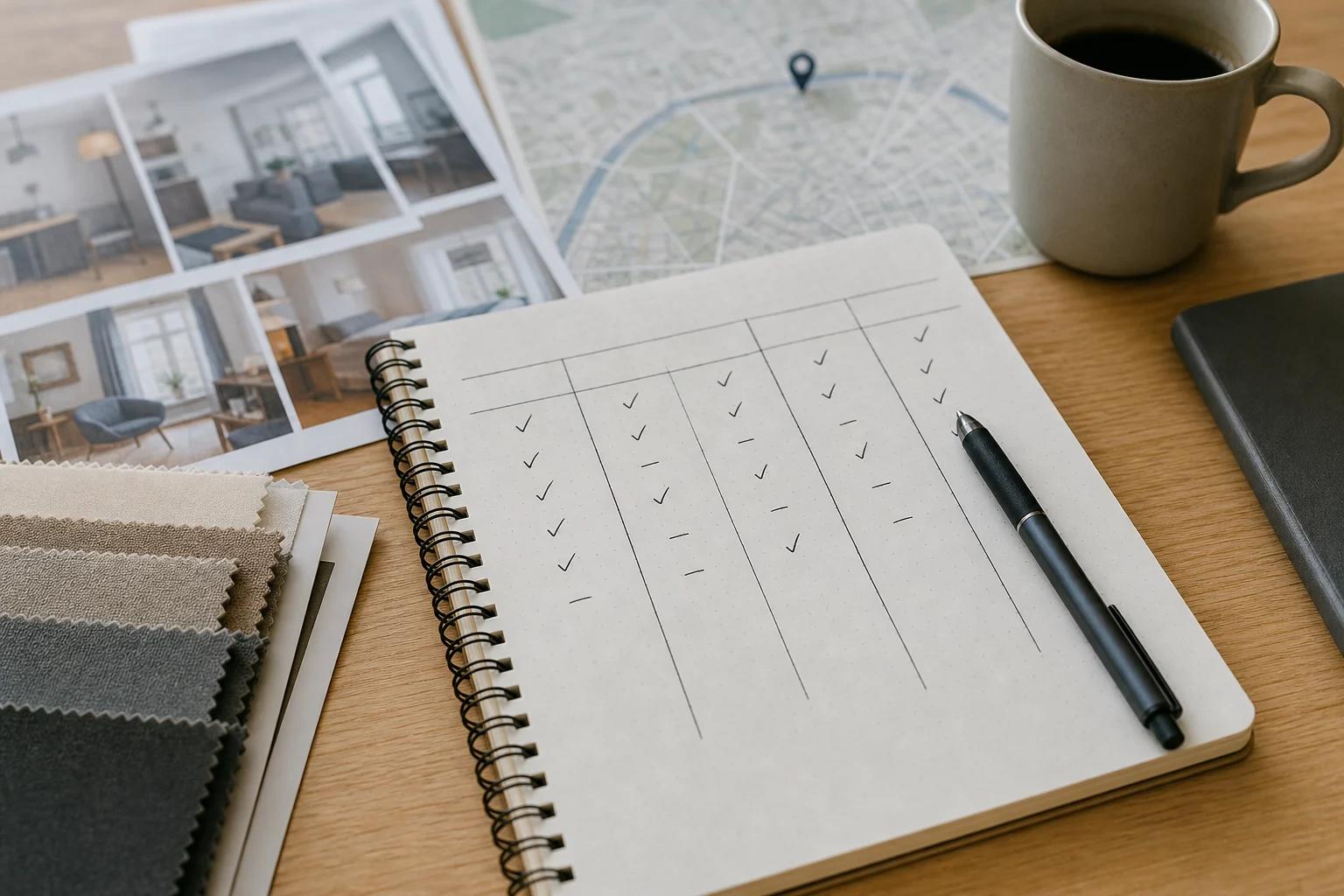
Especially for longstay, it is worth building the comparison systematically. That way, you avoid letting the label be the only deciding factor.
These points bring the most clarity in the booking process
- Room type and use: Is it clearly described whether you are booking a room, apartment or another unit?
- Suitability for everyday life: Can you work there, eat there and store your luggage sensibly?
- Rules for the stay: Are arrival, use and departure explained in a way that is understandable for a longer period?
- Service and organization: Which services are included, which processes are regulated, and what do you have to organize yourself?
- Location in relation to the purpose: Does the location fit your commute, appointments or project site?
- Transparency of total costs: Which services are included and which are handled separately?
This list is also helpful when a hotel is part of the selection. A hotel does not have to be ruled out across the board for longstay. What matters is whether location, concrete services, room layout and booking framework fit your plan. The fair comparison therefore does not run on prejudice, but on the question of which solution best reflects your everyday life.
How myroom24 helps with the search for longstay
myroom24 is an online booking platform on which commercial accommodation providers offer accommodations for private and business users. The offer includes rooms, apartments and houses in commercial accommodation facilities such as hotels, hostels, serviced apartments and holiday apartments.
For longstay, one point is especially important: the long-term stays offered via myroom24 cover 28 to 179 nights. This means the search is exactly in the range where the comparison between serviced apartment, boardinghouse and aparthotel makes sense.
Users can specify destination and length of stay and filter available longstay accommodations by criteria such as price, location and amenities. This allows the search to be narrowed to the concrete need rather than looking only at one category. If an accommodation is marked as instant booking, it can be booked without prior approval from the host if available.
Which accommodation suits which everyday life?
The best choice often depends less on your job title than on what your day actually looks like.
If you want to organize a lot yourself
Then a serviced apartment is a strong option. This is especially true if you need a fixed place in the morning, in the evening and on free days where you can structure your everyday life largely independently.
If you are looking for a clear and reduced solution
Then a boardinghouse may be a good fit. This option often suits people who only need a reliable, matter-of-factly described place to stay and do not expect an extensive service world.
If you want to combine living comfort and organization
Then it is worth looking at an aparthotel. It is especially interesting if you want your own living area but appreciate a comprehensible framework for arrival, stay and departure.
If a hotel is also in the comparison
Then check the same questions again particularly carefully: How is the room laid out? Which services are included? How far is the distance to appointments or the place of work? And how transparent are the conditions for the entire stay? This lets you compare objectively and without unnecessary category debates.
What is the best next step?
First record your concrete need: How much independence do you need, how important are clear processes to you, and which location best supports your stay? Then compare only the offers that actually reflect your period and requirements.
If you want to narrow the search directly, start with Unterkünfte vergleichen and filter by destination, length of stay and amenities.
Frequently asked questions
How can I tell from the listing whether an offer is really intended for 28 to 179 nights?
Look for clear information on length of stay, minimum or maximum nights, and rules for arrival, use and departure. If the listing sounds like a short stay only, you should ask before booking.
Which type of accommodation is more suitable if I want to cook and work during my longstay?
Then a serviced apartment is often the first sensible point of comparison, because the unit should be usable as independently as possible. Make sure the layout and description fit this everyday use.
When is an aparthotel more suitable than a boardinghouse?
If you want an apartment-like unit but also value more organizational structure around the stay and access. Then it is worth looking at the process, not just the name.
How do I compare a hotel fairly with the longstay variants?
Compare the room layout, included services, location and the conditions for the entire stay. A hotel can be suitable if these points fit your longstay plan.
What should I ask if the description remains unclear between boardinghouse and serviced apartment?
Ask how the unit is used, what is included in the stay, and which rules apply for the entire duration. That way you clarify the most important differences before booking.