Temporary Housing in Hamburg for Port and Logistics Projects: Location, Access and Amenities

What task must the accommodation fulfill in everyday work life?
Temporary housing in Hamburg for port and logistics projects works best when the accommodation reflects the actual day-to-day assignment. What matters first is not whether a property is offered as a hotel, serviced apartment, apartment or room, but whether it supports the concrete processes of a project: arriving, sleeping, eating, preparing and then being able to relax again after the shift.
For longer assignments, different types of accommodation may be suitable. The offer can include rooms, apartments and houses in commercial accommodation facilities such as hotels, hostels, serviced apartments and holiday apartments. This does not lead to a blanket recommendation for or against any particular category. A hotel can suit some assignments if service and processes fit well. A serviced apartment can be just as useful if more independence or a clearly defined living area is needed. The right choice therefore depends not on the label, but on how well it fits the assignment.
An easy check question is therefore useful: Which tasks actually happen again and again in everyday life? Anyone who only needs a reliable place to sleep will assess things differently from a team that also needs to cook, organize equipment or live with changing shifts. These differences should be visible before booking.
Which location suits a fixed place of work, multiple sites or changing shifts?
For port and logistics assignments, location is above all a question of recurring travel routes. A Hamburg port accommodation is practical when it makes the trip to work predictable in everyday life. It is worth first distinguishing the assignment profile.
1. A fixed place of work
If the same location is visited every day, the accommodation should be optimized for that one main route. In this case, general city-center location matters less than whether the route remains reliable in the morning and evening. A short distance helps, but it is even more important that the route is dependable when shift start or shift end is fixed.
2. Multiple work sites or changing access routes
Anyone who is not heading to just one point in the port or logistics sector needs a location that sensibly bundles several routes. In this case, accommodation is often more suitable if it is not only close to one specific site, but also matches the most frequent journeys in the project profile. For a logistics team in Hamburg, that can mean choosing an address from which most trips can be made with similar effort.
3. Early or late shifts
In shift work, location should not be assessed only by kilometers, but by the actual daily rhythm. An accommodation can look good on the map and still be impractical in everyday life if access is inconvenient or difficult at the relevant times. Anyone starting very early in the morning or returning late should therefore check whether the route remains realistic then as well.
The crucial difference is therefore the assignment profile: a single site requires different criteria than multiple destinations, and early shifts require different routes than later return times. Anyone who does not separate these differences quickly ends up comparing the wrong offers.
How do car, van and public transport affect the choice?

The mode of arrival often influences whether accommodation is suitable more strongly than the location on the map alone. Anyone arriving by car needs a place where loading and unloading can be done without extra effort and where parking does not become an organizational issue every day. This is especially important when vehicles are an integral part of the project.
With vans or company cars, the requirements shift again. Then it is not just about easy access, but also about whether the accommodation is practical for larger vehicles. A location that is attractive for walking routes may be unsuitable for work vehicles if access or parking is complicated. The location should therefore always be considered together with the type of vehicle.
For teams with mixed arrival methods, a second look is needed. If some arrive by car and others depend on public transport, the accommodation must not only seem sensible from one perspective. What matters then is whether both groups can manage in everyday life without unnecessary detours. Especially for longer assignments, this is more important than theoretical centrality.
Shift start also plays a role. Teams starting early need different routes than colleagues with later working hours. An accommodation can be ideal for one part of the team and only work to a limited extent for another. That is why arrival should always be considered together with the work rhythm.
What amenities does a team need for early and late shifts?
For longer assignments, amenities determine whether the stay can be organized easily in everyday life. A cooking facility is a central point here. It helps not only with meals, but also with the question of whether early and late times can be managed within the team without constant outside catering.
It is also important whether the accommodation has a clear residential character or whether sleeping, eating and short coordination tasks are too close together. When several people with different shifts are housed together, a clear structure in the space is often more helpful than extra features that are of little use in everyday life. A well-planned layout can do more than a long list of amenities.
For early shifts, breakfast and preparation need to be quick. For late shifts, it is crucial that late meals and returns also work without stress. Thinking about this in advance avoids later friction in the daily routine.
So the right amenities are not the most extensive amenities, but the ones that match the shift model. That is exactly where the selection should begin: What is really used in everyday life, and what exists only on paper?
How does it stay quiet when the team has different schedules?
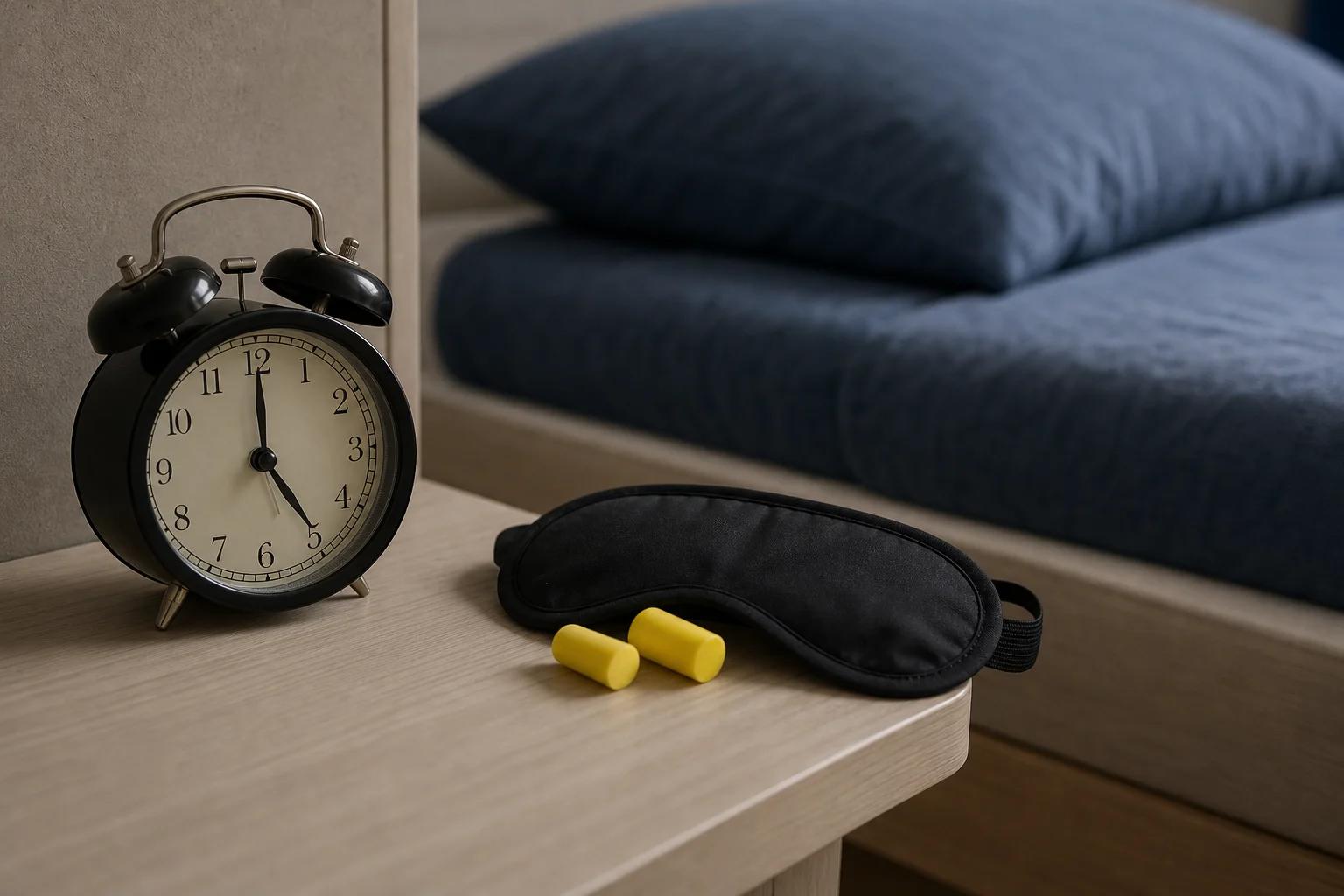
Quiet living is not a side issue for project teams. If some people get up very early, others return later and still others need to sleep in between, the accommodation needs a structure that can handle these routines. What matters is not only noise level, but also the separation of rest and activity periods.
Accommodation is helpful when sleeping and shared use do not constantly compete with each other. This can be achieved through separate areas, a clear room layout or simple, easy-to-understand use in everyday life. The less cooking, packing, phone calls and sleeping interfere with each other, the easier it is to organize the assignment over several weeks.
Especially with staggered shifts, the accommodation should not only appear quiet at first glance, but also function in the actual usage rhythm. Anyone arriving at night needs different conditions than someone who needs daytime rest for preparation or short phone calls. That is why looking at the shared living model is more important than simply considering a room or bed in isolation.
How myroom24 helps with this search in practice
myroom24 is an online booking platform on which commercial accommodation providers offer accommodation for private and business users. For port and logistics assignments, this is practical because the search can be geared to the concrete working period and not just to an address.
Users can specify the destination and length of stay and filter available accommodation by criteria such as price, location and amenities. This helps compare offers for the planned assignment in a factual way. The offer includes rooms, apartments and houses in commercial accommodation facilities such as hotels, hostels, serviced apartments and holiday apartments.
Important for planning: the long stays offered via myroom24 cover 28 to 179 nights. This makes it possible to align the search directly with the project period. If an accommodation is marked as instant booking, it can be booked without prior approval from the host, subject to availability.
What information should be agreed internally before booking?
Before an accommodation is chosen definitively, the project details should be clearly defined internally. Otherwise, the comparison becomes unnecessarily confusing. Above all, it helps to agree briefly on how the team will actually use the stay.
The following points should be clear for the decision:
- How many people are traveling, and should they live together or separately?
- Is there a fixed work location, or do the sites change over the course of the project?
- Who arrives by car or van, and who uses public transport?
- Are there staggered start times, early shifts or late returns?
- How important are cooking facilities, privacy and a clear living area compared with sleeping only?
Anyone who bundles this information in advance can compare offers much more precisely. Instead of looking for the property that seems right on the outside, the search then focuses on the accommodation that fits the real working routine.
What is the next sensible step?
Once the work site, shift times and mode of arrival are clear, the search can be narrowed down significantly. For a direct comparison of suitable options, it is worth taking a look at myroom24 accommodations to review suitable accommodation for the planned stay.
Frequently asked questions
When is accommodation for a fixed port location more suitable than a more central location?
If the same place is visited every day, the accommodation should mainly map this main route reliably. A central location only makes sense if it really simplifies the journey.
What is more important than the shortest distance when there are multiple logistics sites in the same project?
The decisive factor is which location bundles the most frequent journeys in the project best. Accommodation should fit the overall set of routes, not just one individual work site.
Which type of living arrangement is most suitable for mixed early and late shifts?
The best option is accommodation where sleeping and active use are clearly separated and a cooking facility is available. That makes it easier to organize different times of day in the same property.
What information should be available before booking for a team using both cars and public transport?
Important points are the split between modes of arrival, the number of people, the work sites and the shift times. Only then can it be checked whether location and access suit everyone.