Temporary Accommodation for Maintenance and Repair Windows in Industrial Facilities: Practical Planning

What question comes up first during maintenance windows?
Temporary accommodation for maintenance and repair windows in industrial facilities is above all a planning task: Does the accommodation suit shift changes, travel routes, team sizes, and possible schedule shifts? During planned shutdowns, it is not just a bed for the night that matters, but a location where a maintenance team can start and end the working day in a sensible way.
The more precisely the assignment is prepared, the more important simple processes become: arrival without detours, clear room allocation, quiet retreat spaces after long shifts, and facilities that remain practical on site for several days or weeks. The choice should be based on exactly that.
Which type of accommodation suits which assignment profile?
For longer assignments, different forms are possible: rooms, apartments, and houses in commercial accommodation facilities such as hotels, hostels, serviced apartments, and holiday apartments. What matters less is the name of the accommodation than the question of how well it supports work on site.
When self-catering is important
An apartment or serviced apartment is often interesting when a kitchen and a certain level of independence are needed. This is useful, for example, when the team works outside traditional meal times or several people do not take their breaks at the same time.
When service and structured processes are more important
A hotel can also be a good fit if location, services, and organizational processes suit the maintenance window. A hotel is not automatically the wrong choice; what matters instead is whether check-in, accessibility, and daily logistics fit the work rhythm.
When several people need to be accommodated at the same time
For larger teams, it is worth looking at whether the accommodation can accommodate different trades, separate arrival times, and different needs for rest. A good layout is then more important than a single feature such as a large sleeping room or a central location.
Which location questions are really decisive for travel?

The location should not only look good on the map, but also fit the actual route to the site. For maintenance windows, these questions are especially helpful:
- How many minutes will realistically pass between the accommodation and the facility?
- Does the route suit the early shift, late shift, or night work?
- Can vehicles be parked sensibly?
- Is arrival practical even with changing arrival times?
- Can deliveries or material transport be organized without unnecessary detours?
Especially for planned special assignments, parking and delivery logistics are a real time factor. If several team members arrive in different vehicles or bring materials with them, a poorly located site can make the process unnecessarily complicated. That is why the location should always be considered together with the assignment logic, not separately from it.
Which facilities relieve the team in day-to-day work?
For technical assignments, a kitchen and laundry access are not just comfort details. They determine whether a team can remain self-sufficient after a long working day or has to plan external trips.
A kitchen is especially helpful when shifts run at different times or breaks do not fit fixed restaurant hours. Laundry access is particularly useful when work clothing or personal laundry needs to be cared for over several assignment days. This reduces additional trips between the site, the accommodation, and external services.
Room layout also deserves attention. For a maintenance team, it can make sense to plan sleeping areas so that early and late shifts do not disturb each other. Anyone coordinating different trades often needs not only enough beds, but a layout that allows rest periods and coordination to coexist.
How does team coordination become easier during planned shutdowns?
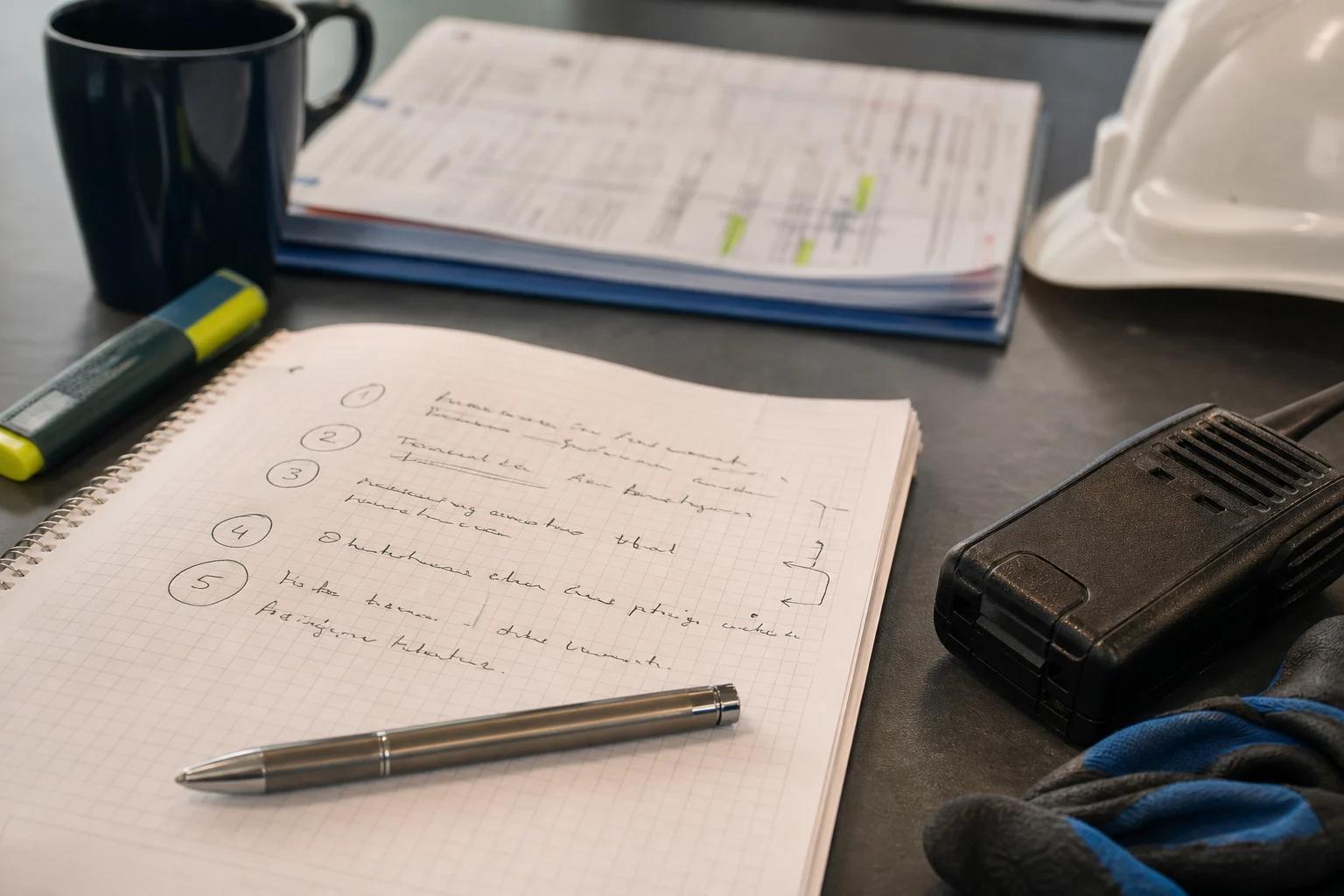
Maintenance windows rarely run in a perfectly linear way. Often the order changes, individual work steps take longer, or one trade finishes earlier than planned. To prevent this from turning into last-minute improvisation, accommodation planning should be based on clear internal coordination.
A sensible approach is, for example:
- Record the assignment period with lead time, core date, and possible follow-up period.
- Clearly define responsibilities for arrival, room allocation, and questions.
- Consider different shift times already when booking.
- Define an internal escalation path for delays.
- Clarify in advance whether an extension must remain possible organizationally.
This keeps the accommodation from becoming an additional source of disruption. Especially during shutdowns or multi-stage maintenance work, clear allocation helps: Who arrives when, who sleeps where, and who decides if the assignment process changes?
How myroom24 helps with this planning in concrete terms
myroom24 is an online booking platform where commercial accommodation providers offer accommodation for private and business users. For industrial assignments, this is helpful because the search can be tailored to a clear stay period and functional criteria.
On myroom24, you can specify the destination and length of stay and filter available long-term accommodation by price, location, and facilities. According to the stored facts, long-term stays from 28 to 179 nights are intended. For a maintenance window, this means the search process can be adapted to the planned assignment instead of having to look for a suitable solution on site first.
If the date is fixed and the schedule is tightly timed, accommodation marked as instant booking can also be relevant, provided it is available. This is especially practical when a quick decision is needed and the operational planning is already complete.
What arrangements should be in place before booking?
Before booking, it is not enough to have only names and dates; the questions that will later be decisive for the process should also be clarified. These include, for example:
- Who arrives first and who follows later?
- Will different trades be accommodated together or separately?
- Does the room layout need to take early rest periods into account?
- Who is the internal contact person if the shutdown is delayed?
- What extension solution is planned in the event of follow-up work?
The better these points are clarified in advance, the easier it is to choose accommodation that not only accompanies the assignment, but also supports it organizationally. Especially for an industrial assignment with several participants, this avoids unnecessary queries during ongoing operations.
What is the next sensible step?
If the maintenance window is already defined, it is worth comparing location, facilities, and length of stay with the actual assignment plan. For the specific search, the suitable myroom24 accommodations can be a good starting point for narrowing the selection to the team’s requirements.
Frequently asked questions
What should be set internally before booking if there may be a schedule change?
A clear contact person, the question of an extension, and a simple escalation path are important. This keeps the team able to act even during follow-up work or delays.
How do you organize accommodation for staggered arrivals in a maintenance team?
It is best to plan arrival windows, room allocation, and handovers separately in advance. Then not everyone has to arrive at the same time, and the accommodation can reflect the process cleanly.
When is a hotel a sensible option for a maintenance window?
When location, check-in, services, and daily logistics fit the shift plan. A hotel can be just as suitable as an apartment if the operational planning is based on it.
Which room layout helps when several trades are on site at the same time?
A layout based on rest needs and arrival times is helpful, not just on the number of beds. This makes it easier to coordinate early shifts, later arrivals, and separate workflows.