Temporary housing for workation with a quiet workspace and stable internet
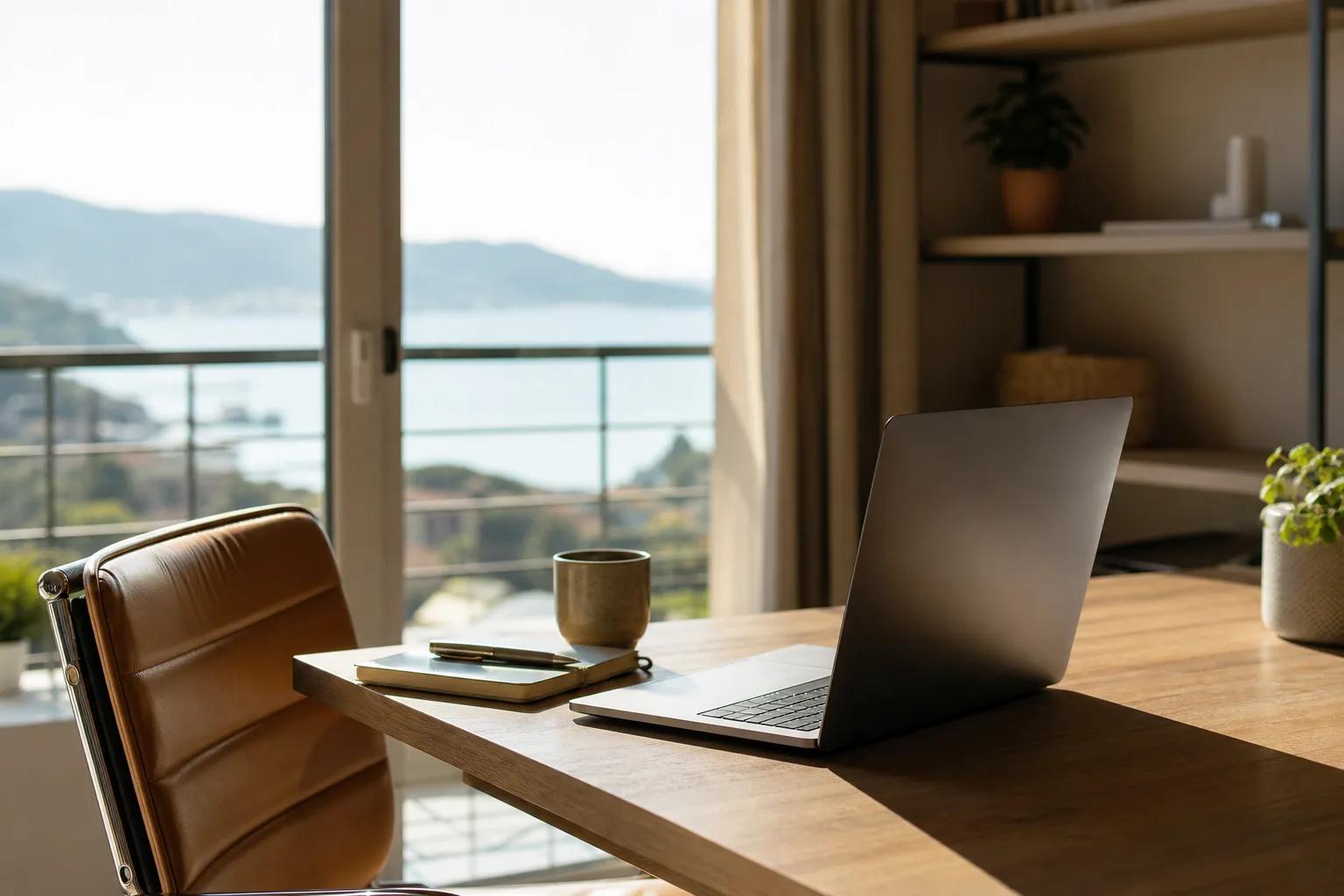
What does a workation accommodation really need to deliver in everyday life?
When it comes to temporary housing for workation with a quiet workspace and stable internet, it is not about a holiday feeling, but about being able to work under real conditions. If you are working remotely for several days or weeks, the accommodation has to do more than look good. It needs a place for focused work, dependable internet use, and a routine that allows calls, focus phases, and breaks to coexist.
That is why, especially for longer stays, it is important to assess the accommodation like a temporary workplace. A room can be furnished to a high standard: if you do not have a clear workspace, have to constantly rearrange things, or feel disturbed during every call, a workation quickly turns into an improvised workday without structure.
How to recognize a truly usable workspace
The first question is not whether it looks nice, but whether you can work there in peace for several hours. A good workspace is clearly identifiable and not just a corner of the room that looks good in photos.
Pay particular attention to these points:
- Is there a fixed desk or at least a clearly defined workspace?
- Is the seating suitable for longer working periods or only for short use?
- Is the work area arranged so that video calls are possible without constantly moving things around?
- Are there signs of sufficient light at the workspace, ideally daylight?
- Can the work area be separated from the sleeping area or living area?
What matters here is not only the equipment, but also usability. A wide table is of little use if the surface is too cramped, the power sockets are in an awkward place, or the room is visible in the background of every call. If the description does not mention such details, you should ask specifically before booking.
How to assess internet use realistically
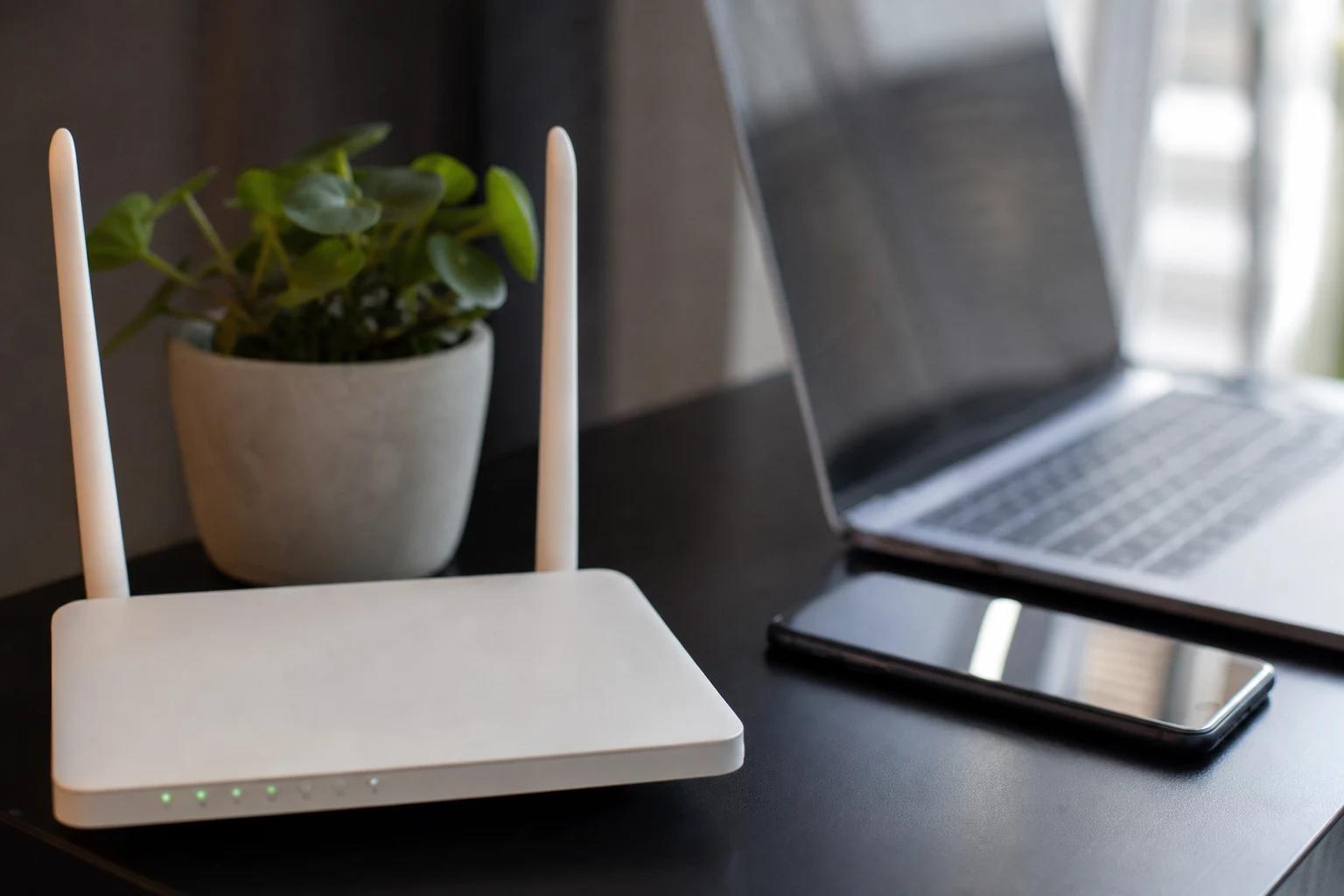
For remote work, internet is not a comfort feature, but a basic requirement. The key question is therefore not only whether Wi-Fi is available, but whether the connection can actually support your working day.
Useful questions to ask are, for example:
- Is internet use described specifically, or does it remain a general Wi-Fi reference?
- Is the connection presented in a way that makes video calls and cloud work realistically possible?
- Can several devices be used at the same time without the workflow constantly stalling?
- Is there a place in the accommodation where you can make low-disruption calls?
If you are frequently in meetings, you should pay particular attention to practical usability. It is not enough for internet to be available. What matters is whether you can reliably keep appointments, exchange files, and work for longer periods without constantly having to switch locations.
What role peace, location, and daylight play in productive living
A good workspace only really works if the surroundings support it. Quiet starts not in the room, but with the location and the layout of the accommodation. Anyone who wants to work with focus should check whether there are indications of possible sources of disruption, such as a lot of foot traffic, heavily used communal areas, or a floor plan in which sleeping and working constantly overlap.
Daylight is also more than a comfort detail. A workspace with enough light usually feels clearer and more pleasant than a dark, improvised area. For longer stays, this is especially relevant because you will spend many hours there and will not be moving back and forth between office and accommodation every day.
A simple question is therefore helpful: does the apartment fit my work rhythm in a way that lets me start in the morning, stay focused at midday, and truly switch off in the evening? If the answer is unclear, what is often missing is not the equipment, but the spatial logic.
How to compare accommodation types fairly in everyday work

For workation, what matters is not the label of the accommodation alone, but the combination of equipment, services, location, and everyday usability. A hotel can be just as suitable for longer stays as an apartment or a serviced apartment, if the conditions are right. What matters is what you actually need in daily life.
So compare not by category, but by function:
- Do you need a clear workspace with peace, or more flexible living space?
- Is a structured routine with service important to you, or do you prefer more independence?
- Do you need a room you can separate between work during the day and rest in the evening?
- Which location helps you work reliably instead of reacting only to attractive photos?
This helps you avoid making a rushed decision based only on the type of accommodation. Especially for remote work, accommodation is suitable when it supports the reality of work. If you write, plan, or sit in calls a lot, different functionality matters than for a stay with only a few online appointments.
How myroom24 helps you find a suitable workation accommodation
myroom24 is an online booking platform on which commercial accommodation providers offer accommodation for private and business users. For finding a workation accommodation, it is especially practical that you can specify your destination and length of stay and filter available long-stay accommodations by criteria such as price, location, and equipment.
This is particularly helpful when you are not looking for just any accommodation, but one with a clear work function. Through myroom24, different types of accommodation can be found, including rooms, apartments, and houses in commercial accommodation facilities such as hotels, hostels, serviced apartments, and holiday apartments. This allows the selection to be tailored to your way of working instead of relying only on the outward impression.
For longer workation phases, the confirmed length of stay is also important: the long-stay offers on myroom24 cover 28 to 179 nights. This suits project phases, temporary assignments, or work periods in which a temporary solution is needed without immediately requiring a permanent form of housing.
If you narrow the selection to work-relevant criteria, you can compare more precisely which accommodation brings together peace, internet, and room layout in a form that fits your daily routine.
What specific questions you should ask before booking
If an accommodation seems suitable at first glance, the details often make the difference. So before booking, ask the questions that actually affect your working day:
- Is there a usable workspace with a table and seating?
- Is the internet access described in a way that is sufficient for calls and file uploads?
- How can the work area be separated from the sleeping area?
- What surroundings or location can be expected for focused work?
- Does the length of stay fit your project or remote work phase?
A useful example: if you have several video appointments every day, peace and workspace should be weighted more heavily than a particularly flexible room feel. If, on the other hand, you mainly write or plan and are only online occasionally, the focus can be more strongly on daylight, order, and a quiet floor plan. This helps you avoid choosing accommodation based on a lifestyle feeling rather than on your working day.
Conclusion: How to make a sustainable decision
A good workation accommodation is recognized by the fact that it makes work possible in everyday life instead of merely promising it. So first check the workspace, internet, and peace, then location, light, and how well the room can be used over several weeks. That exact order helps you distinguish productive living from mere travel atmosphere.
If you would like to compare suitable accommodation for your planned stay, start here: myroom24 accommodation.
Frequently asked questions
How can I tell before booking whether an accommodation is suitable for daily video calls?
Look for a clear workspace, a quiet environment, and an internet description that goes beyond a simple Wi-Fi checkmark.
What should I ask if the listing says little about the internet?
Ask whether the connection is described for calls and parallel work, and whether usage is stable in the work area.
When is a hotel just as sensible for workation as an apartment?
When the location, peace, workspace, and desired services fit your work rhythm. The category alone does not decide.
What information do I need particularly early before a longer workation?
The main points that need clarification are the workspace, peace, internet, room separation, and the right length of stay for your project.