Temporary Accommodation with Late Arrival and Digital Access: Check-in Without Uncertainty
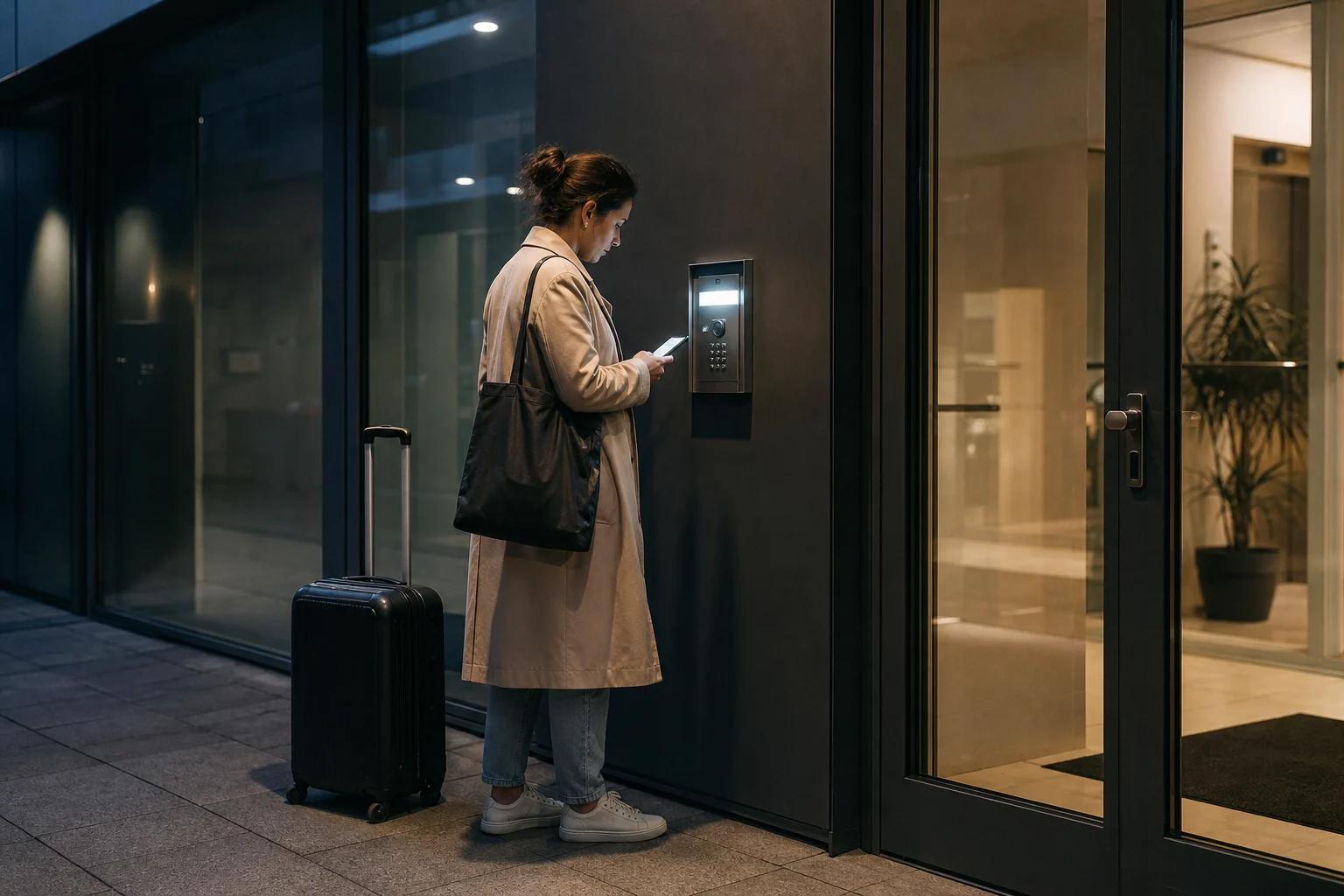
Temporary accommodation with late arrival and digital access becomes especially important when arrival, a work appointment, or the course of a trip do not line up exactly. The difference is not only whether check-in happens digitally, but whether you have enough information in advance to plan the first route to the accommodation without having to ask follow-up questions.
Which details should you confirm in writing before arrival?
The central question is: Which information do you need on the day you arrive in a form you can use immediately while on the move? Good preparation does not start with the access code itself, but with the details that make the access unambiguous.
Beforehand, clarify at least these points:
- the full address with all additions relevant for navigation and building identification
- the correct entrance, if there are several doors, building sections, or levels
- the exact access method, for example a code, an app, or another approved solution
- the time from which access is active
- the contact route for questions, preferably with a clearly responsible person or office
- the rule for a delayed arrival if your trip is postponed
Clarity is crucial here. If the address, entrance, and activation time do not match, even digital access will not help much. That is when uncertainty arises exactly at the point where you need to act quickly. Especially with a late arrival, the information should be prepared so that you can retrieve it without having to search for long in emails, chats, or attachments.
How do you plan a late arrival when you are arriving outside service hours?
If arrival takes place outside normal service hours, the question shifts from “When will I arrive?” to “What do I do if something changes on the way?”. That is why the trip should be prepared not only for the target time, but also for the last 30 to 60 minutes before it.
A short arrival plan with 3 steps is useful in practice:
- Determine the final mode of transport: Know whether you will travel by train, plane, car, or taxi all the way to the accommodation.
- Define an orientation point: Mark a point that can be described clearly, such as the entrance, courtyard, parking area, or nearest stop.
- Plan a time buffer: Allow for delays with luggage, transfers, or finding the way.
When no one is there in person to hand over the keys, directions become more important than a general welcome. A clear note such as “entrance to the left of the main entrance” or “access via the inner courtyard” is more helpful than a friendly but vague hint. If you arrive at night, there is also the fact that signage, door numbers, and bell plates may be harder to read. That is why it is worth not only reading the access information before departure, but also mentally running through it once as a route sequence: arrive, orient yourself, enter, know the follow-up contact route.
How can you tell whether digital access really works in everyday use?
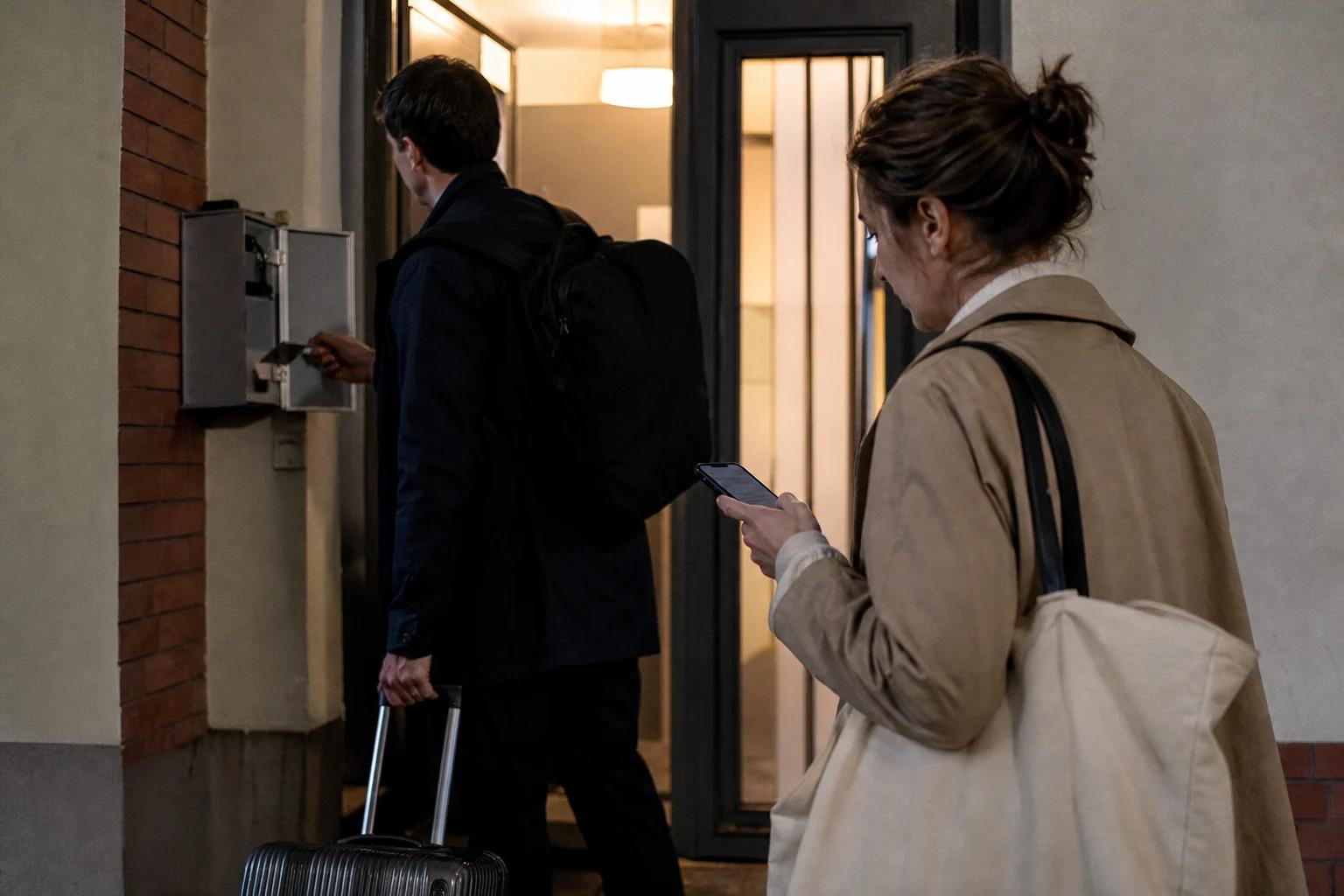
Digital access is only useful if it can be used reliably under real conditions. The decisive question is therefore not whether the access sounds modern, but whether it makes your arrival easier without creating new obstacles.
Check these points in advance:
- Do you need to activate or unlock the access before departure?
- Do you need internet, a specific device, or an app to use it?
- Is the access information also available offline in case the network fails while you are on the move?
- Is the process still understandable with luggage, tiredness, or darkness?
- Is there a documented alternative if the first method does not work?
With a code, what matters is that it is complete and correct. With an app, it is important to set it up in time and not have to search for login details at the door. With a locker or another handover solution, you should know not only the access itself, but also the exact location and the order of the process. The fewer steps you still have to piece together at the building itself, the more robust the solution is for a late arrival.
What problems arise with support and key handover?
Especially outside office or service hours, it becomes clear whether the support is really described in a usable way. The most important question then is: Whom can you reach if access does not work immediately, and how quickly can you get a replacement piece of information?
Typical stumbling blocks are not major technical problems, but small uncertainties:
- The access code is available, but not clearly assigned to the correct entrance.
- The name on the bell, door, or mailbox differs from the documents.
- The contact information gives only one channel that is difficult to use while traveling.
- There is no clear sequence for the case where the first access attempt fails.
- The handover is organized digitally, but the collection point is not described precisely.
To keep the process from stalling, you should note a clear backup route before arrival: Which number will you call, which chat or message is intended, and what do you do if no reply comes? With a secure key handover, the main thing is traceability. That means not only that the key or access code is handed over securely, but also that you can later trace the handover: Who approved it, when was access unlocked, and where is the information if you need it again?
Which documents should you have ready on the day of arrival?
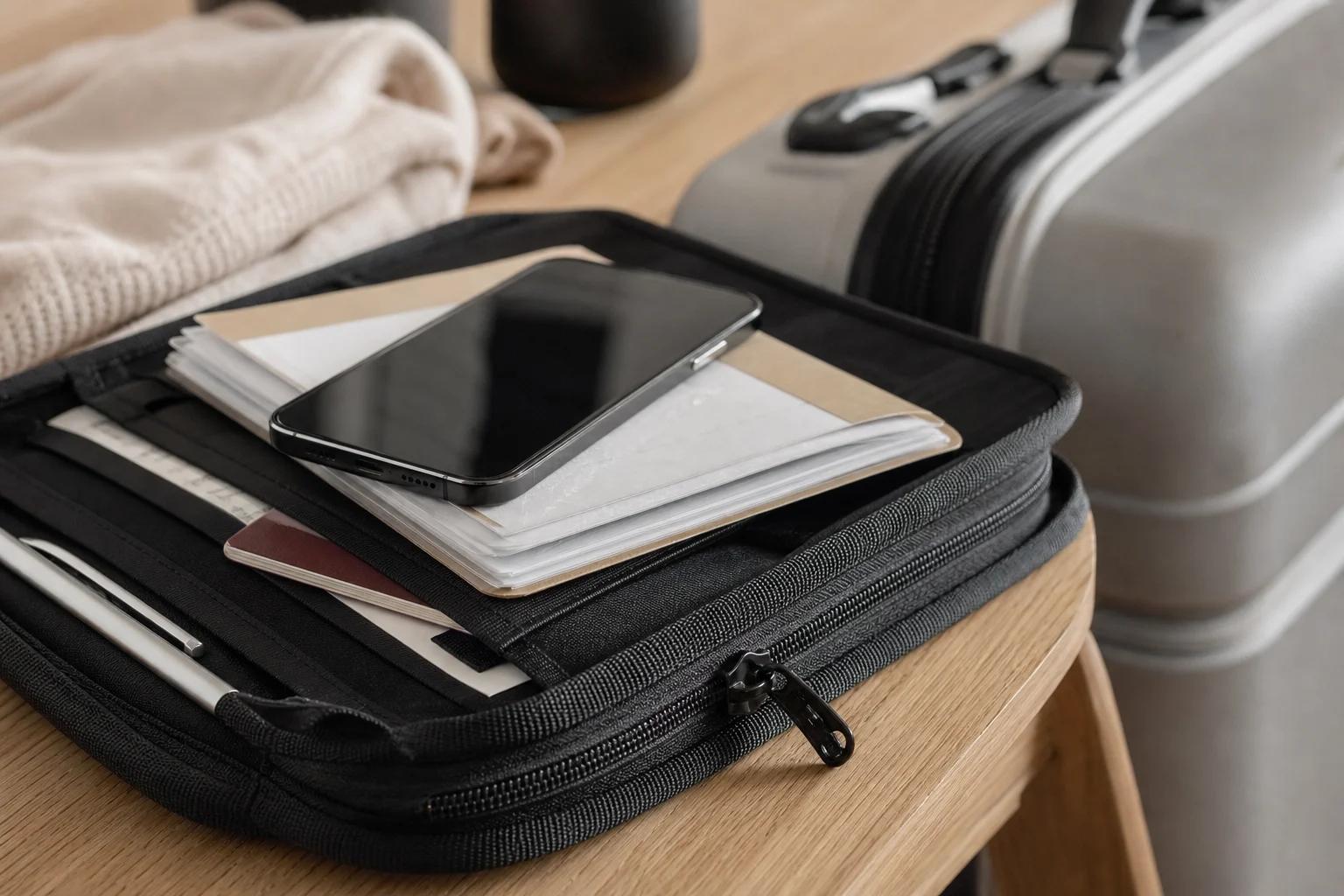
The best digital solution helps little if you have to gather the most important details from different apps first. That is why a small offline collection is worthwhile, one you can open even if the battery is low or the network connection fluctuates.
It is sensible to have these details ready before departure:
- booking confirmation
- address and arrival route
- access instructions in their final form
- contact details for questions
- a note on the agreed backup route
- if required: documents requested for the handover
It is practical if you not only have these details by email, but also saved as a screenshot or PDF. That way, you avoid searching through different inboxes while standing on the pavement or sitting in a taxi. This is especially helpful when the day of arrival is already tightly scheduled.
How do you compare types of accommodation without ruling one out across the board?
For longer stays, what matters is not the name of the accommodation, but whether the equipment, services, location, and access fit your everyday life. Serviced apartments and apartment hotels are just as suitable for long-term stays as a flat. Hotels can also be suitable for longer stays if the specific conditions fit.
So compare not in the abstract, but according to actual use:
- Equipment: What do you really need for the planned stay?
- Services: What support is relevant for arrival and the stay?
- Location: Does the route to the accommodation fit your arrival time and appointments?
- On-site orientation: Is access described in a way that you can find it even when arriving late?
- Transparent total costs: Are services and possible additional costs presented in a comprehensible way?
This perspective is especially important when you are planning not just an overnight stay, but a longer stay. Then what counts is whether the accommodation clearly maps the arrival process and whether you understand the conditions in advance. Digital access is only one component; just as important are clear directions, suitable accessibility, and a comprehensible on-site organization.
How myroom24 helps with this topic in practice
myroom24 is an online booking platform on which commercial accommodation providers offer accommodation for private and business users. The range includes rooms, apartments, and houses in commercial accommodation facilities such as hotels, hostels, serviced apartments, and holiday apartments. For long-term stays, 28 to 179 nights are intended.
For a later arrival, it is especially helpful in the search that you can specify your destination and length of stay and filter available long-term accommodations by criteria such as price, location, and equipment. This lets you narrow down offers in advance according to the points that are really relevant for your arrival.
If an accommodation is marked as instant booking, it can be booked without prior approval from the host if it is available. That can simplify the booking process when the stay framework is already fixed and you want to complete the next step quickly.
If you now want to compare options specifically, start with myroom24 accommodation by destination and length of stay.
Frequently asked questions
Which details should I ask for directly before a late arrival?
The address, correct entrance, access method, activation time, contact route, and what to do if you are delayed should all be provided in writing.
How do I tell whether digital access is really practical for my arrival?
It must be usable without open steps: activated, securely backed up offline, and described with a clear alternative.
What is most important with key or access code handover outside service hours?
You need a clear point of contact and a documented backup route if the first access attempt does not work.
Which documents should I have available offline on the day of arrival?
The booking confirmation, route to the accommodation, access instructions, contact details, and the agreed backup solution should be saved.
What should I compare well in advance between a hotel, serviced apartment, and flat?
Compare equipment, services, location, on-site orientation, and transparent total costs — not just the label.