Temporary Housing in Cologne for Congress and Event Teams: Close to the Trade Fair, Clear Processes, More Peace and Quiet
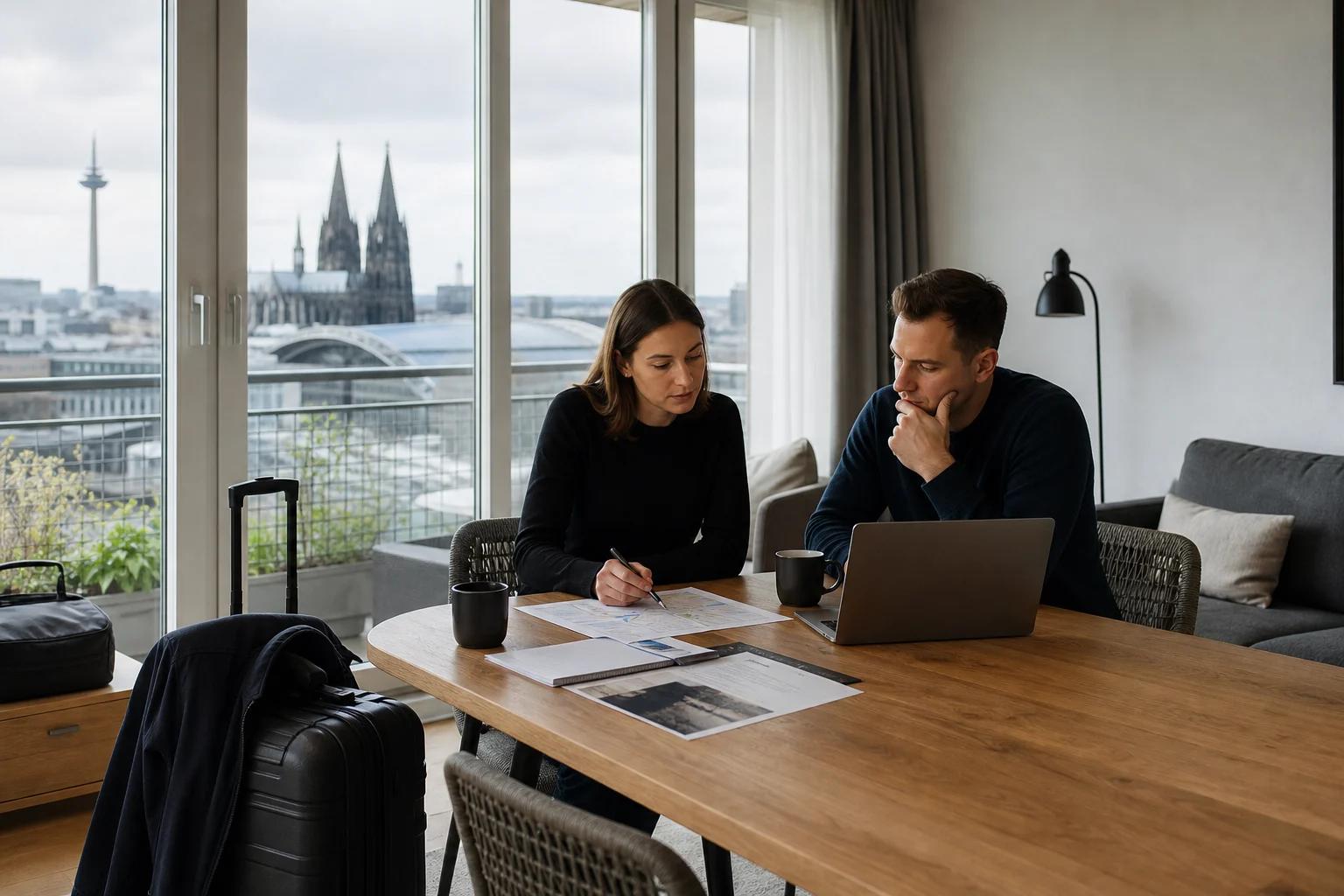
What questions should a team clarify first before searching in Cologne?
Temporary housing in Cologne for congress and event teams works best when the accommodation is adapted to the actual deployment schedule. Before searching, this does not require a long wish list, but rather a clear clarification of the points that would later cost time in everyday life if they remained unresolved.
The most important question is therefore not only: How many beds do we need? What also matters is: Who is traveling together, who is working the same shifts, who needs separate rest periods, and where will materials accumulate during the day that should not be placed in the middle of the sleeping area? Only when these points are clear can the accommodation be sensibly assessed.
For internal coordination, a short responsibility framework has proven useful:
- One person bundles arrival, departure, and length of stay.
- One person checks whether the room layout fits the shifts.
- One person records who is reachable on site if time windows change.
- One person coordinates where cases, documents, or technology should be kept during the stay.
This means the accommodation is not viewed in isolation, but as part of the deployment plan. This is especially useful for congresses, setups, or event services, because rest, coordination, and material flow do not work independently of one another.
Which type of accommodation fits the actual deployment logic?
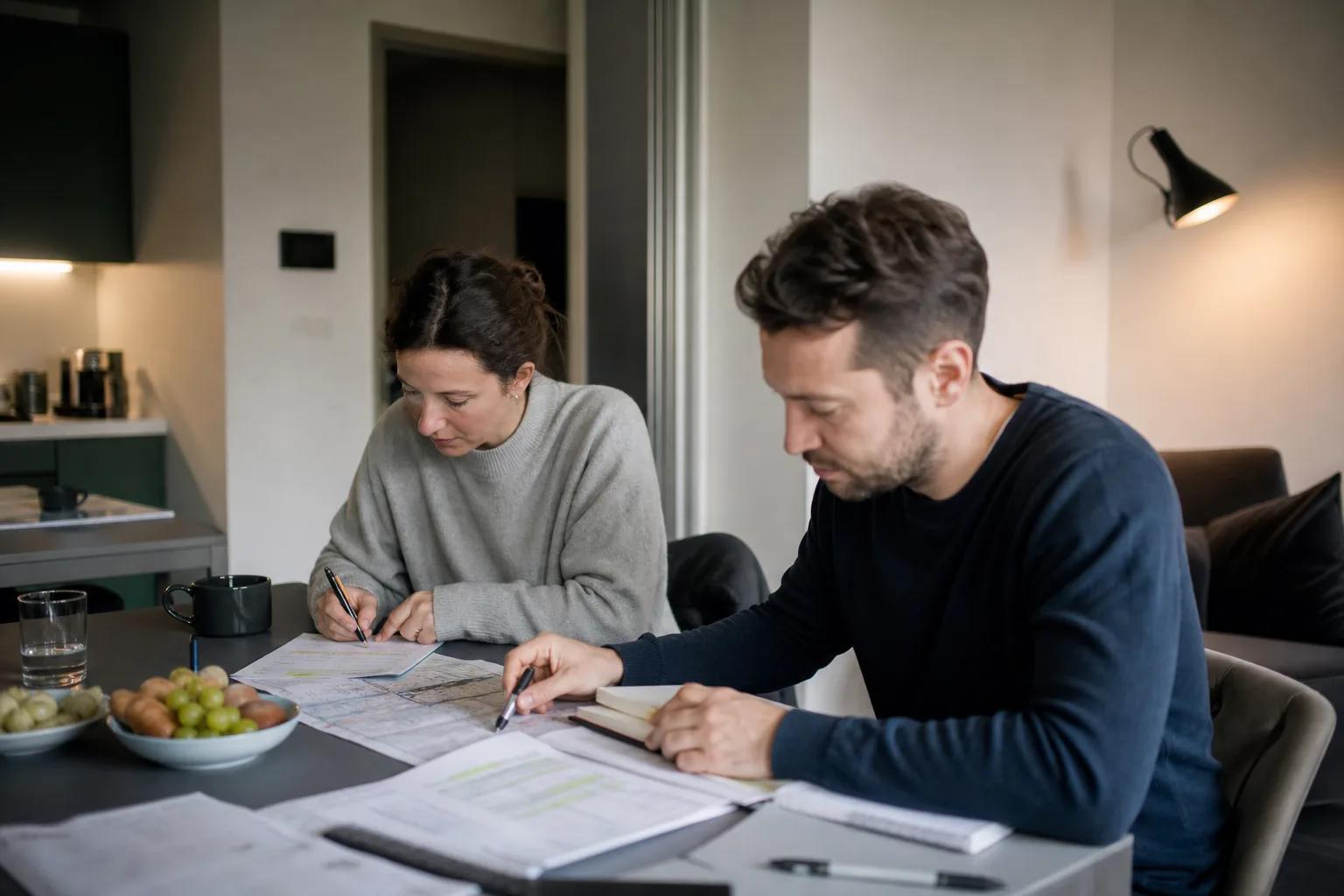
Single apartments: suitable when time windows differ
Single apartments are especially useful when team members do not follow the same rhythm. Anyone who has to leave very early while others come back late does not necessarily need a shared living area, but rather a clear retreat.
This is particularly helpful when there is a lot of calling, follow-up work, or sleeping at different times on the road. In that case, the focus is not on the shared area, but on separating rest and activity.
Team apartments: suitable when coordination in everyday life is important
Team apartments are more suitable when several people regularly need short discussions. This applies, for example, to groups that start together, divide up materials, or prepare the next day together after an event.
In this case, it is worth looking at the room layout: Is there an area where you can sit together briefly without having to move sleeping places or luggage every time? If so, the daily routine can often be organized more calmly.
Serviced apartments and apartment hotels: also suitable for longer stays
Serviced apartments and apartment hotels are just as suitable for long stays as a flat. For teams, the name is not the decisive factor, but the combination of space, services, and clear processes.
This is especially practical when not every step is meant to be organized yourself. Anyone working on site for several days or weeks should therefore check concretely: Which equipment is included, which services are provided, and how transparent are the total costs compared with the rest of the selection? This allows for a factual comparison without making a blanket judgment about any accommodation category.
Hotel-like solutions: sensible when processes should be clearly organized
Hotel-like solutions can also be suitable for longer assignments when a standardized process is important. This is helpful, for example, when arrival, handover, and daily orientation should be as clear as possible, or when a team does not need a large shared living area.
Instead of evaluating the type of accommodation by name, the deployment logic should decide: Does the team need separate retreat spaces, a shared meeting option, or a formally clear process with little coordination effort? This is exactly where the options differ in everyday life.
Which location questions are decisive in Cologne for congress and event teams?
For teams, the location is mainly about whether the route to the place of work functions reliably over several days. For a congress accommodation in Cologne, the distance is therefore not the only important factor; what also matters is how the route works with luggage, work materials, and changing times.
These checks are helpful before booking:
- Is the route still manageable with cases, bags, or documents?
- Does the route remain practical with early starts and late returns?
- Does the day lead to one fixed place or to several addresses?
- Are there steps along the way that take time, such as handovers of materials or short intermediate stops?
- Does the location fit the rest windows between setup, assignment, and follow-up?
Especially for events with early starts or late endings, a location is important that does not just look good once, but also works in a repeated daily routine. If the team walks the same route on several days, it quickly becomes clear whether the location really fits the assignment.
What helps with shift changes, setup phases, and material logistics?
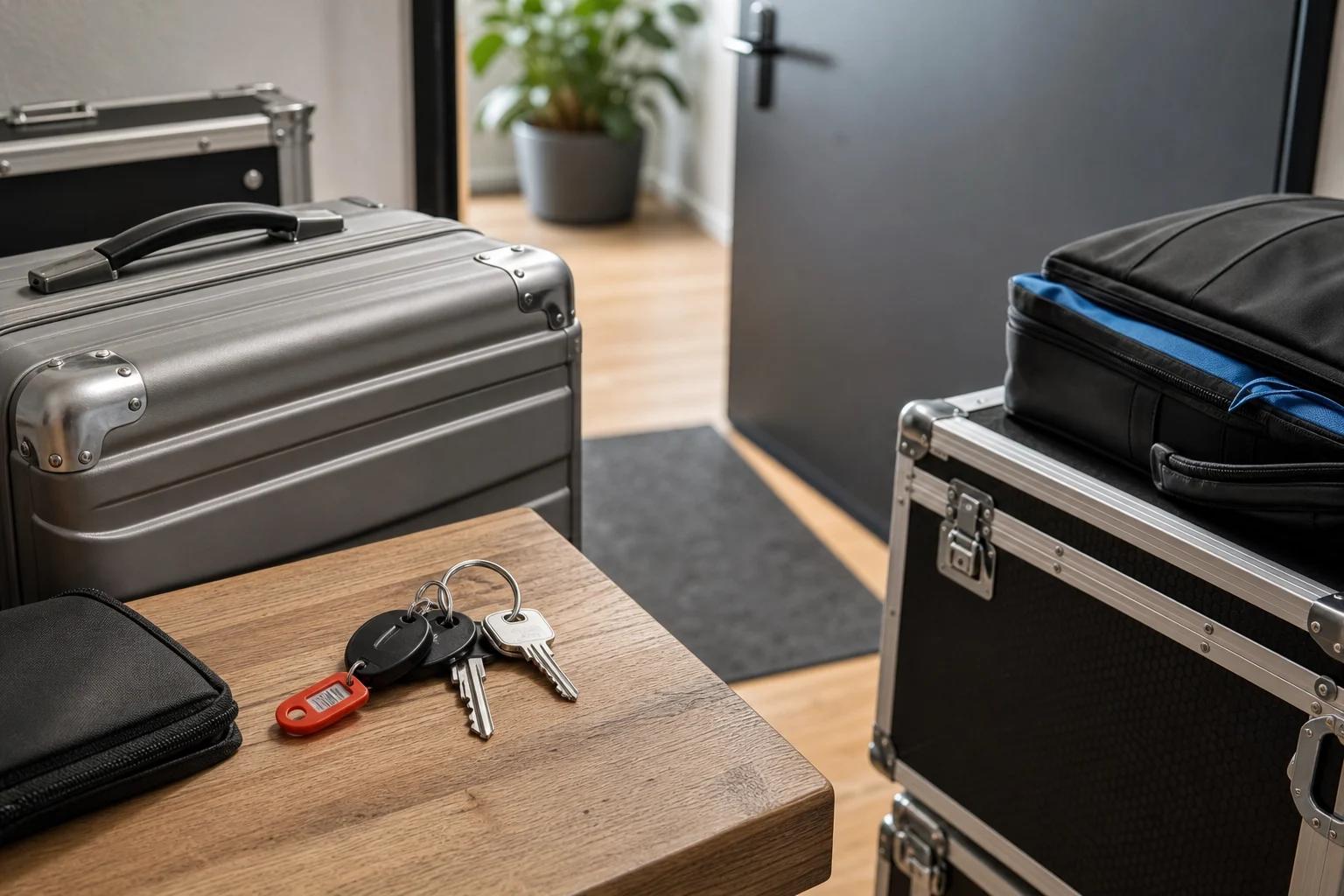
The accommodation should not only provide sleeping spaces, but also enable a process that can be organized cleanly within the team. This starts before arrival and only ends when it is clear where the materials are, who has which data, and how the handover works on site.
Three points are especially important:
1. Responsibility for booking and changes
The booking should be handled by one clearly named person. This person collects the travel details, bundles follow-up questions, and informs the team about changes. This way, differing arrival times or spontaneous adjustments do not get lost in several separate conversations.
2. Key handover and check-in
If several people arrive at different times, a previously agreed solution for key handover is needed. Otherwise, effort arises exactly at the moment when the team actually needs to arrive or start working immediately. For teams with a tight schedule, it is therefore important to clarify in advance who can be on site at what time and who takes over the handover.
3. Materials, luggage, and work equipment
Cases, documents, technology, and personal bags need a separate place. The clearer this point is arranged, the less luggage interferes with the rest periods. For joint assignments, this is often just as relevant as an additional room, because otherwise the living area quickly gets mixed up with work materials.
Anyone who sets out these three points clearly not only reduces coordination effort, but also prevents misunderstandings between the team, the accommodation, and arrival planning.
How myroom24 helps with the preselection in concrete terms
myroom24 is an online booking platform on which commercial accommodation providers offer accommodation for private and business users. For congress and event teams, this is helpful because the search can be aligned from the start with the place of work and the length of stay.
Through myroom24, you can specify the travel destination and length of stay and filter available long-stay accommodations according to criteria such as price, location, and amenities. The range includes rooms, apartments, and houses in commercial accommodation facilities such as hotels, hostels, serviced apartments, and holiday apartments.
For planning team stays, a clear framework is also important: the long-stay offers provided via myroom24 cover 28 to 179 nights. This suits assignments that cover not just individual nights, but a continuous period around the event, setup, and follow-up.
If the assignment plan is already in place, the booking type can also matter: accommodations marked as instant booking can be booked without prior approval from the host if available. For teams with a fixed time window, this can shorten coordination, provided the accommodation and the period already fit.
When is a final team check worthwhile before the final selection?
Before the booking is completed, the team should check once again whether the accommodation and the process really fit together. Not every seemingly spacious accommodation is automatically sensible if the use on site looks different from what was planned.
A brief check before booking should therefore answer these questions:
- Are all names, arrival dates, and departure dates really documented in the same way?
- Does the number of sleeping places match the actual number of people?
- Is there enough shared space for the discussions the team really needs on site?
- Is it clear who should be contacted if changes occur?
- Can luggage be stored in a way that keeps rest periods possible?
If these points are clarified, the selection can be made on a factual basis. This is especially important when several people traveling for different tasks need the accommodation to do more than just provide a night’s stay.
If you would like to compare the options for your team, start with myroom24 accommodation.
Frequently asked questions
Who should coordinate the booking and later changes for a team?
One clearly named person should bundle all data and pass on changes so that arrival times and room requirements do not drift apart.
When does a team need separate retreat spaces rather than one large shared area?
When shift times, arrivals, or sleep rhythms differ greatly and shared areas would disturb the need for rest.
How should a group organize key handover and late arrivals?
Before booking, it should be clear who arrives when and who can handle the handover. Without this clarification, unnecessary waiting times arise.
What must be clarified before booking regarding cases, documents, and technology?
It should be clear where materials will be stored and whether the sleeping and storage areas are sufficiently separate so that the living area remains usable.