Compare temporary accommodation with mid-stay cleaning and linen changes: how to check service in long stays
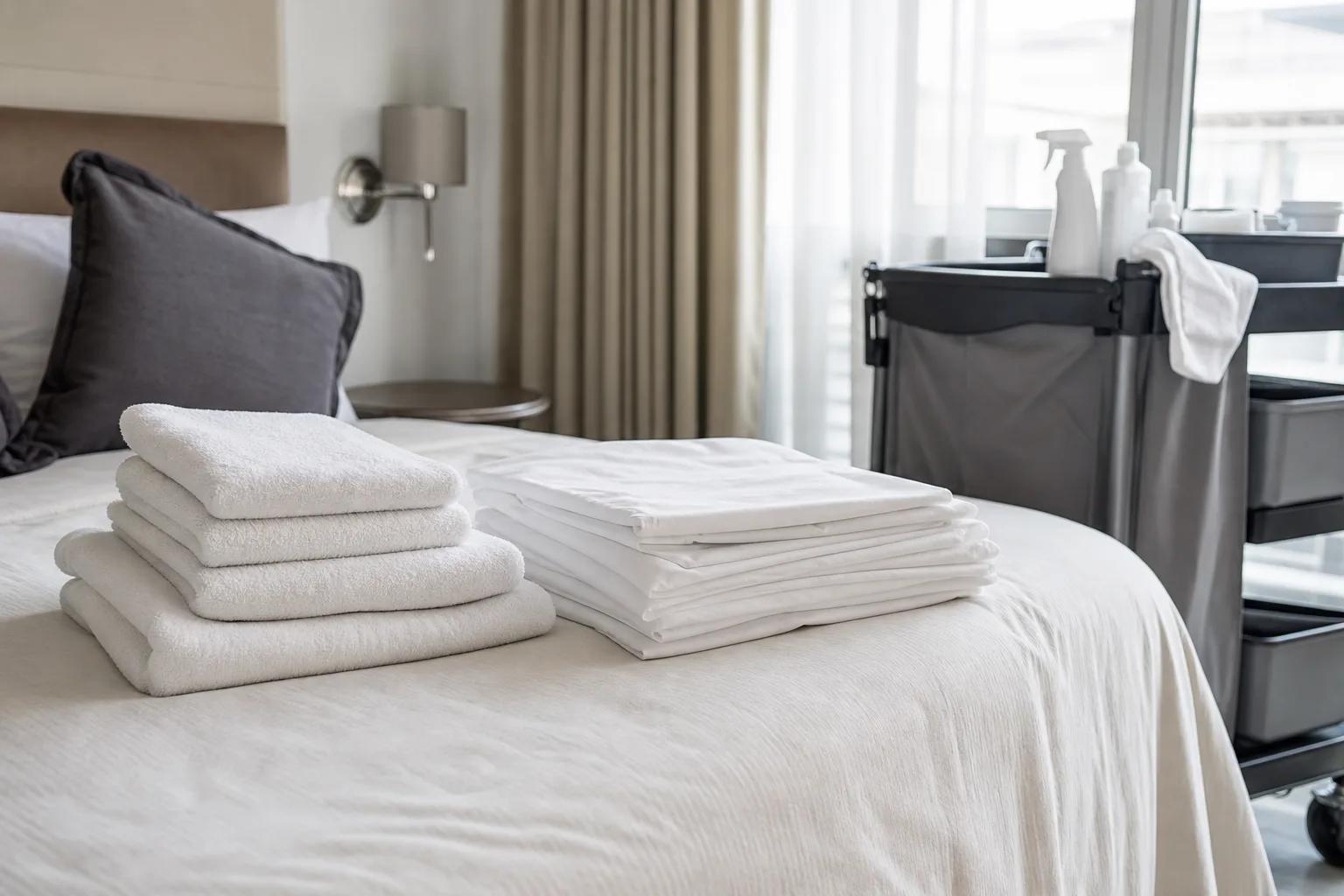
How do basic cleaning, mid-stay cleaning and linen changes differ?
When you compare temporary accommodation with mid-stay cleaning and linen changes, it is not only about the accommodation itself, but about how clearly the service is described for the duration of the stay. Especially when you are on site for several weeks, it makes a difference whether an offer only mentions a general cleaning term or clearly separates the individual services.
In the wording of offers, basic cleaning usually stands for the fundamental cleaning on which further services are based. Mid-stay cleaning means an additional cleaning during the stay. Linen changes refer to bed linen and often also towels. For your decision, it is therefore not just the term that matters, but above all the question: What is really included, and what remains open?
Anyone who distinguishes between these three points can compare offers more effectively. For example, an accommodation may be well equipped, but without a clear note on the cleaning rhythm it remains unclear how much organisation in everyday life will be up to you. Conversely, a rather simple offer with transparently described service may be easier to assess in daily life than an apparently comprehensive package without details.
Which details should you check carefully in the listing?

A useful comparison only emerges when the description says more than just “cleaning included.” The decisive details are the ones that make the later process concrete.
What is actually cleaned?
Check whether the text speaks only generally about cleaning or whether specific areas are named. This is relevant for long-stay guests because bathroom, kitchen, living area and workspace can have different importance in everyday life. If this clarification is missing, it remains unclear how extensive the mid-stay cleaning really is.
How often does the service take place?
A fixed rhythm is more helpful than a vague formulation. If an offer does not explain whether the cleaning is regular, at certain intervals or only on request, it is difficult to classify the service in advance. Especially for longer stays, a understandable rhythm is often more important than a mere service promise.
How is the process organised on site?
Is the accommodation entered for cleaning? Does someone need to be present? Is there advance notice? Such questions may seem minor in comparison, but they are decisive in everyday life. Anyone who is busy at work or has fixed appointments needs clarity about access and the process, not just about the service label.
Are bed linen and towels regulated separately?
Cleaning and linen changes are often mentioned together, but sometimes they are also separated. Exactly this separation helps with comparison: then you can immediately see whether only cleaning is provided or whether fresh textiles are also planned. For many guests, this is not a side issue but part of the daily usability of the accommodation.
Is the service only mentioned or also explained?
Some texts list terms without explaining how they relate to each other. Therefore, pay attention to whether the cleaning service is described as a fixed part of the stay or only appears as a buzzword. The clearer the classification, the easier it is to compare offers side by side.
Which service combination suits which stay pattern?

Not every long-stay situation needs the same level of cleaning and linen changes. The sensible question is how you actually use the accommodation.
For a project stay with many work appointments, a clear cleaning rhythm is often especially helpful. Then it is important that you know when cleaning takes place and whether you need to plan around it. If you are often out during the day, the process should not only be mentioned, but described in a way that can be understood.
For a transition situation involving appointments, moving-related topics or organisational effort, predictability is what matters most. Then it is important whether linen changes and mid-stay cleaning are described in a way that means you do not have to ask additionally how bed linen or towels are handled.
For a stay in which you cook a lot yourself or spend a long time in the accommodation, the question of the cleaning scope is particularly important. Then it is not enough to know that some kind of service exists. What matters is whether kitchen, bathroom and other used areas are clearly named in the scope of services.
This makes the comparison more concrete: the decisive question is not “How much service is there?”, but “Which service fits my on-site routine?”
How do you compare hotels, serviced apartments and apartment hotels objectively?
For longer stays, you should not assess the type of accommodation in isolation. Hotels, serviced apartments and apartment hotels can all make sense depending on equipment, services and location. A fair comparison starts where the name ends and the details begin.
What room layout do you need?
If you are staying for a longer period, it is not only the category that matters, but also the layout of the room or apartment. Ask yourself whether you need separate areas for living, working and resting, or whether a compact layout is sufficient for your stay. This question is often more meaningful than the accommodation label alone.
Which services are described specifically?
A hotel offer can be just as much a part of the selection for a longer stay as a serviced apartment or an apartment hotel. So do not compare categories in general terms, but the services that are actually mentioned: Is a mid-stay cleaning described? Is there a linen change? How clear is the scope? It is exactly these details that help you assess everyday life on site.
How transparent are the location and total costs?
A complete comparison should also include the location and the transparently described total costs. Anyone comparing several offers side by side should check which services are included in the price and which are regulated separately. This prevents you from comparing two accommodations that have very different service scopes in detail.
How myroom24 helps with the pre-selection
On myroom24, you can specify your destination and length of stay and filter available long-stay accommodation by criteria such as price, location and furnishings. This is helpful if you want to sort offers not only by type of accommodation, but also by the service described.
The range includes rooms, apartments and houses in commercial accommodation facilities such as hotels, hostels, serviced apartments and holiday flats. It is also important for selection: the long stays offered via myroom24 cover 28 to 179 nights. This is exactly the range in which it makes sense to compare mid-stay cleaning and linen changes directly with the planned stay.
If an accommodation is marked as instant booking, it can be booked without prior approval from the host, subject to availability. This can simplify the process if you have already checked which service details are decisive for your stay.
The most sensible next step is therefore: first set the period, then compare the type of accommodation, and then check the cleaning and linen services in detail. If you would like to view suitable options, start here: myroom24 accommodation.
Frequently asked questions
How can I tell whether mid-stay cleaning and linen changes are planned separately?
Look for whether both services are mentioned separately or described together. Only then can you see whether both are truly included.
Which detail is most important for accommodation for several weeks if I want to organise as little myself as possible?
The most important details are a clear cleaning rhythm and an unambiguous rule for bed linen and towels. Without this information, the process remains unclear.
How do I fairly compare a hotel offer with a serviced apartment?
Compare the room layout, specifically described services, location and the transparently stated total costs. The label alone is not enough for this.
What should I check if the service description sounds too general?
Ask about scope, rhythm and on-site organisation. Only then can you judge what the service looks like in everyday use.