Temporary Housing for Individual Experts in Rollout and Commissioning Projects
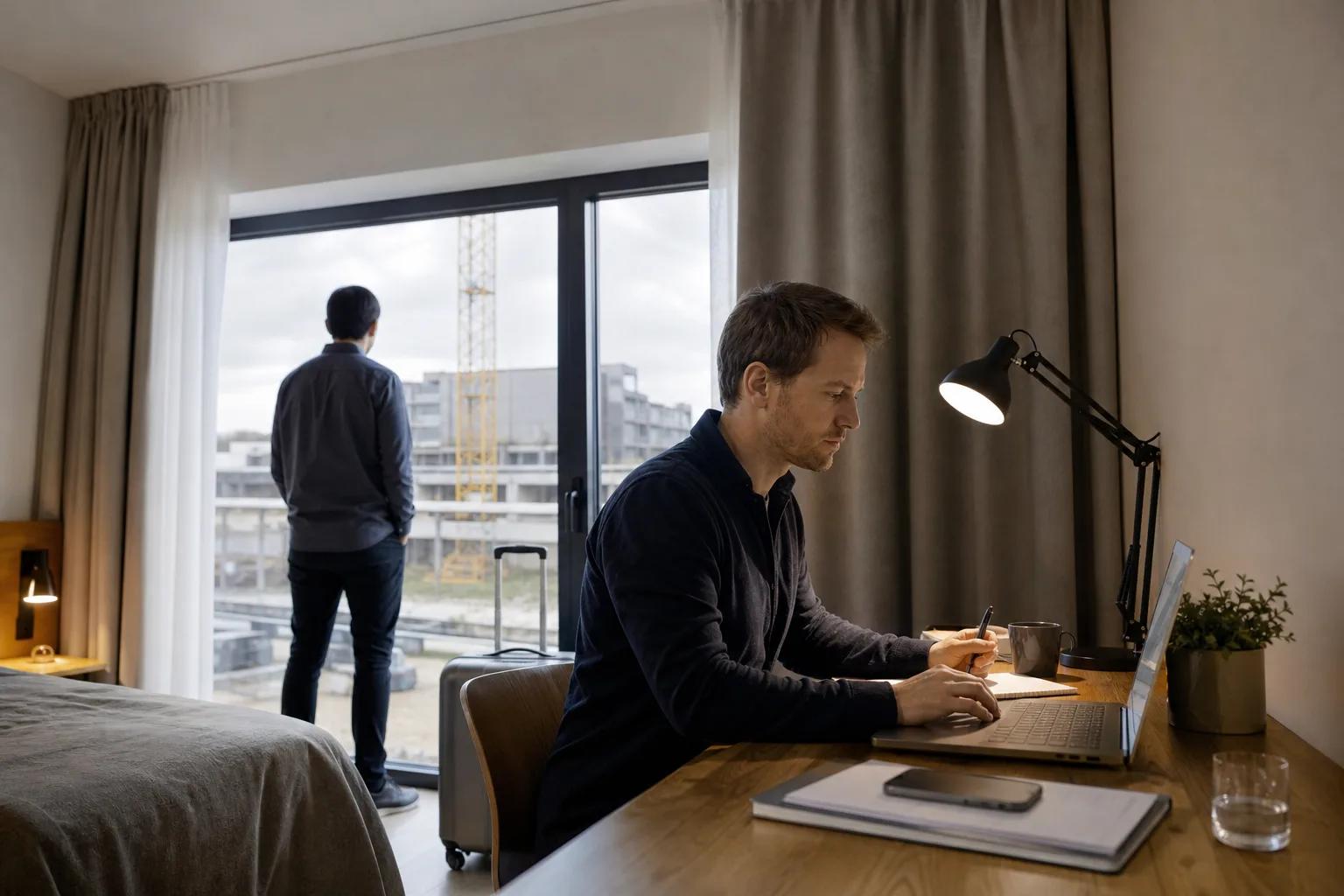
What is temporary housing for individual experts in rollout and commissioning projects about?
Temporary housing for individual experts in rollout and commissioning projects is especially relevant when only one specialist is working on site and the assignment is clearly tied to tasks such as testing, coordination, documentation, or sign-off. In that case, it is not about group logistics, but about accommodation that supports the project’s working mode.
For project managers, rollout leads, and technical specialists, this decision is therefore more than just a booking. It affects how well the stay fits into the project routine: with enough quiet between appointments, a practical work environment, and a location that matches the job site. Individual specialists often need different conditions than project teams because they have to organize their routes, follow-up questions, and documentation independently.
How does accommodation for individual specialists differ from team accommodation?
In team accommodation, shared processes are the focus: several people, similar start times, and often shared transfers or coordinated evening plans. In accommodation for individual project staff, the focus shifts. The person has to function alone on site, react more flexibly, and structure the day so that there is no unnecessary friction between customer appointments, internal questions, and their own follow-up work.
For selection, this means that it is not only the address that matters, but also how much independence and quiet the accommodation allows. Individual specialists often benefit from a more compact solution if it helps them work faster, sleep more soundly, and start the next day in a more structured way. Conversely, a larger team accommodation can create unnecessary coordination for a single person.
Helpful distinguishing questions include, for example:
- Does the specialist need a clear retreat or mainly a place to sleep?
- Do they still need to handle documentation, video calls, or coordination after the project appointment?
- Is the accommodation designed for one person or primarily for several travelers?
- Should the stay be easy to plan for a short period or part of a longer project phase?
- Who is internally responsible for approval, rebooking, and billing?
Which type of accommodation is suitable when quiet, workspace, and services matter?

For longer assignments, different types of accommodation may be suitable. Serviced apartments and apartment hotels are just as appropriate for long stays as a flat. A hotel can also be a good fit if the location, services, work options, and overall process suit the project. What matters is therefore not the label alone, but which form best supports the day-to-day needs of the individual expert.
To avoid choosing based on surface features alone, it is worth looking at four concrete decision points:
1. How does the person work on site?
If protocols, evaluations, or coordination are still pending after the customer appointment, a usable work area is more important than living space alone. A table, power outlets within reach, and enough room for a laptop and documents can make the difference between a productive evening and improvisation.
2. How much self-organization makes sense?
A flat or apartment often supports more independence. A hotel can be useful if certain services save time in the process or make fixed routines easier. For project managers, the key question is whether the specialist works more independently or whether reliable services noticeably structure the day.
3. How important is the location in the project context?
Not every good accommodation is automatically well located for the assignment. The key is whether it fits the local routes, whether evening appointments are manageable, and whether the specialist can return without much effort after a long workday. A central location is not essential in every project, but it can make coordination easier when the schedule is tight.
4. How transparent is the overall billing?
For the booking decision, more matters than the overnight rate alone. The more relevant question is which additional items belong in the calculation: travel, parking, cleaning rhythm, meals, or extra organizational steps. Project managers should therefore always consider transparent total costs, not just the obvious room rate.
What needs to be clarified before arrival and check-in?
Especially for individual specialists, arrival is often less standardized than for a group trip. That is why it should be clear in advance who organizes the accommodation, how the person will arrive on site, and whom they can contact if they have questions. This is particularly important when the go-live date is tight or timings in the project can change at short notice.
Useful points to clarify before the stay are:
- Who is the direct contact for arrival and handover?
- How is access organized if arrival is outside the usual time window?
- What information does the specialist need in advance so they can check in without follow-up questions?
- Is there a fixed person in the project for changes, such as delayed arrival or a shift in schedule?
- Are rebooking or cancellation clearly coordinated internally and externally?
This turns a simple booking into a predictable process. That matters for project staff because the accommodation process should not cost extra time when many other coordination tasks are already underway on site.
How can quiet, WLAN, and the work routine be checked in advance?

The question is not only whether WLAN is available, but whether it really supports the concrete work routine of a single specialist. In rollout and commissioning projects, documentation, questions, files, and coordination are often part of the day. That is why a general statement about equipment is often not enough.
A short advance check with specific questions is practical:
Work area
Is there a table that is truly usable for a laptop and documents? Is there enough space for a phone call or a short meeting? Does the person have to work at the kitchen table, or is there a clearly designated work area?
Connection and focus
Is WLAN sufficiently planned for the intended work routine? Can follow-up questions still be handled in the evening? How quiet is the accommodation during phases when concentrated work is needed?
Access organization
How does the key handover or access work if the project schedule changes? Who responds if the arrival date shifts? For individual specialists in particular, simple and clearly communicated processes are often more important than additional team coordination.
For example: if a consultant works with the customer during the day and still has to handle emails and project documentation in the evening, location is not the only factor. What matters most then is a reliable work area, a clear access arrangement, and accommodation where retreat and work do not constantly compete.
How myroom24 helps in this booking situation
myroom24 is an online booking platform where commercial accommodation providers offer stays for private and business users. For rollout and commissioning projects, this is helpful because the travel destination and length of stay can be specified and available long-stay accommodation can be filtered by criteria such as price, location, and equipment.
Through myroom24, different types of accommodation can be compared, including rooms, apartments, and houses in commercial accommodation facilities such as hotels, hostels, serviced apartments, and vacation apartments. For planning purposes, it is also clear that the long stays offered via myroom24 range from 28 to 179 nights.
If the project is running tight, accommodation marked as instant booking can also be booked without prior approval from the host, subject to availability. This does not replace careful coordination, but it can simplify operational booking when the assignment has to be scheduled at short notice.
What information should be in place internally before approval?
Before accommodation is approved for an individual expert, not only should the period be clear internally, but responsibility within the project should also be clearly assigned. This saves back-and-forth between the department, procurement, and accounting.
These details are especially helpful:
- project name or rollout reference
- planned stay period
- responsible contact person
- billing address or cost center
- requirements for work area and accessibility
- note on whether the specialist is traveling alone or as part of a larger project
The cleaner these points are documented, the easier it is to align the booking with the assignment. This is especially relevant when individual project staff arrive at different times or when the specialist stays longer than the rest of the team.
What is the next sensible step?
Once the location, work requirements, and internal approval have been clarified, the search should not remain general. At that point, it is worth comparing suitable accommodation directly by length of stay, location, and equipment.
Take a look at the myroom24 accommodation and check which options fit the planned project period.
Frequently asked questions
When should only the individual person be accommodated instead of the whole team for a rollout?
When only one specialist is needed on site or when their working hours, documentation, and coordination differ significantly from the rest of the team.
What information do I need for centralized billing of an individual booking?
Important details are the project name, period, cost center or billing address, and the person who approves the booking internally.
What should I check before booking if the go-live date has been postponed?
Whether the stay period is flexible enough and what rules apply for rebooking or cancellation so the booking does not drift away from the project plan.
When is a hotel for a longer commissioning assignment just as suitable as an apartment?
When the location, services, work area, and daily routine fit the assignment and the specialist benefits from exactly that.