Temporary Housing with Self-Check-in for Late Arrival: Move-in After Office Hours
What information should be clear before booking?
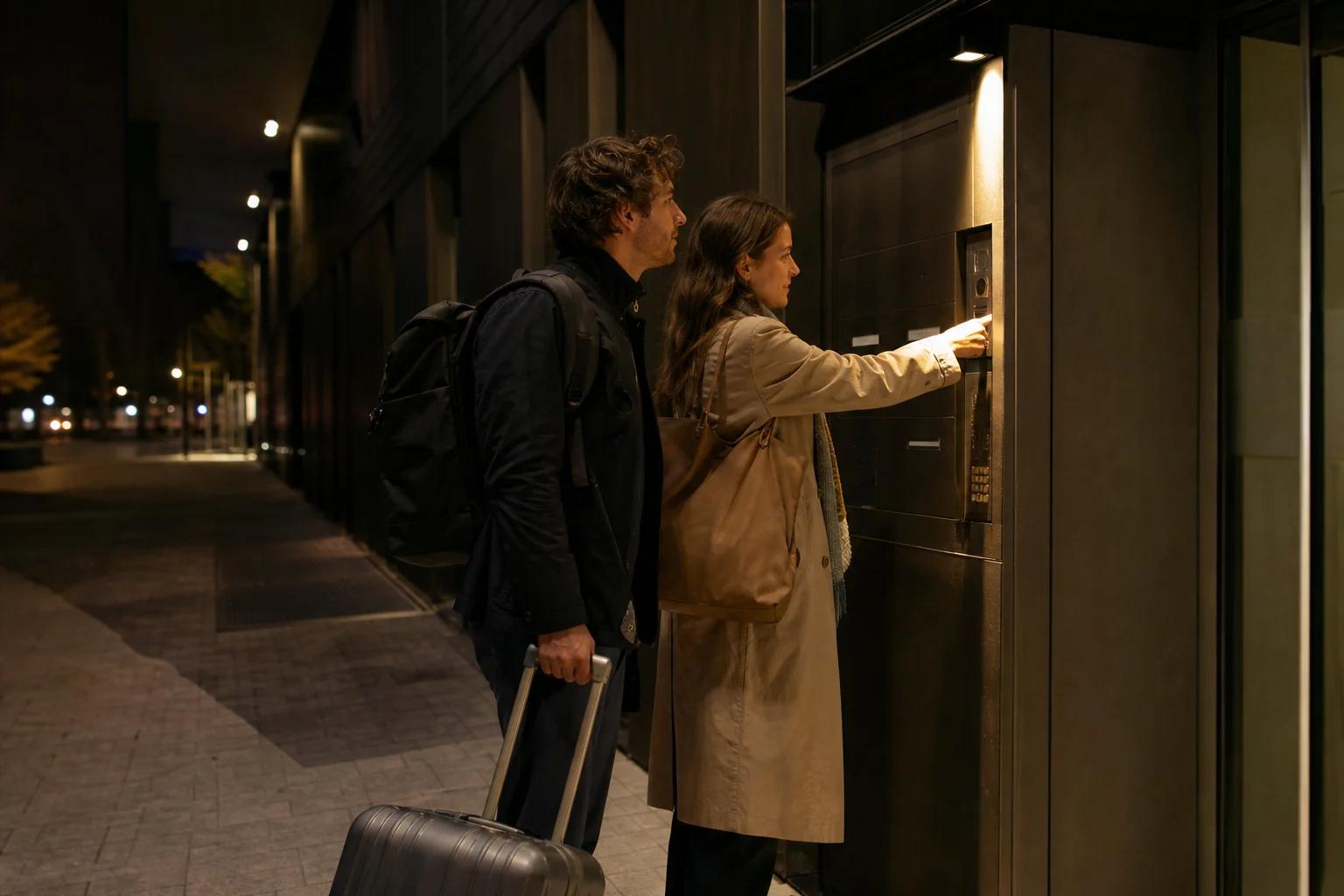
Anyone planning temporary housing with self-check-in for late arrival should not organize move-in only on the day of arrival. What matters is that the process from arrival to entering the accommodation is described in such a way that you do not have to improvise even when tired, on the way, or carrying luggage.
Before booking, you should therefore not only be given an access code, but also have the entire process clarified in writing. These points are especially important:
- Who sends the access details, and when do they arrive?
- What time counts as the latest arrival time?
- What happens if the journey is delayed?
- Who is really reachable if there is a problem?
- Where exactly does the key handover take place if no self-check-in is used?
It is also helpful to ask about the practical process, not just the term. A note such as “self-check-in possible” does not yet tell you whether you open the door with a code, a key box, or another solution. Especially when arriving later, what counts is whether the description is specific enough to find and enter the accommodation without follow-up questions.
Also watch out for typical sources of error: multiple entrances, unclear house numbers, missing information about the floor, or access that only works via a device that may run out of battery on the way. If a provider explains the process well, that includes not only the access itself, but also the question of whom you contact if the first attempt does not work.
How do you keep communication simple when arrival is delayed?
Late arrivals often become complicated when several messages are sent on the way. A clear communication route with a single contact person and a short, clear message is better.
It is practical to decide before departure when you will send updates. A sensible process is, for example:
- As soon as the first foreseeable traffic jam, train cancellation, or flight delay occurs, send a brief warning.
- As soon as a realistic arrival time is known, communicate it clearly.
- When you are at the destination, confirm once more that you are now at the access point.
The content of the message is important. Instead of long explanations, three pieces of information are usually enough: the new time, the current status of the journey, and the question of whether anything changes at access. That way, the other side knows whether they need to stay reachable or prepare anything else.
Also avoid sending the same information in parallel by email, messenger, and phone. That feels cumbersome and can lead to no one being sure which message is the relevant one. If several people are arriving, it should be clear in advance who handles the communication. That saves time and prevents misunderstandings during key handover or access to the code.
What belongs in the first hours after arrival?

The first night is especially relaxed when you do not have to arrive, unpack, search, and clarify follow-up questions all at the same time. That is why it is worth having a small sequence for the first minutes after entering the accommodation.
Right after move-in
Place the most important things so you can find them again immediately:
- Booking confirmation or access information
- Mobile phone and charger
- ID card and other documents
- Key, if there is still a personal handover
- Everything you need directly for the night
Also save the address and contact information offline. That is useful if the network is weak, the battery is running low, or you do not want to search your inbox after the journey. Anyone arriving with luggage should also calmly look at the route from the door to the sleeping area before unpacking everything else.
If the handover was planned in person
If a personal key handover was agreed, you need a clear time window and a fixed place in advance. Otherwise, the stay begins with waiting, questions, and uncertainty. In this case, it is useful to know who is handling the handover, how you will recognize that person, and what happens if the arrival is delayed again.
If access works without contact
With contactless check-in or a key box, the order matters. Note in advance what happens first, where you enter the code, and which information you need next. Especially in the dark and when tired, this is more helpful than a general description without concrete steps.
If several people are arriving, not just one person should know the code. Otherwise, stress builds quickly if the other person’s phone is empty or the message is not available at the right moment.
How myroom24 supports the search in concrete terms
myroom24 is an online booking platform on which commercial accommodation providers offer accommodation for private and business users. For this topic, that is helpful because you can narrow the search from the outset to the planned stay and the right conditions.
On myroom24, you can specify destination and length of stay and filter available long-term accommodation by price, location, and amenities. The selection includes rooms, apartments, and houses in commercial accommodation properties such as hotels, hostels, serviced apartments, and holiday apartments. For long-term stays, 28 to 179 nights are intended via myroom24.
This is especially useful when arriving later, because you do not have to check after booking whether the accommodation basically fits your period. You can already narrow the selection in advance to properties where length of stay, location, and amenities match. That does not replace checking the check-in process, but it makes the search much more targeted.
Which type of accommodation is best when arriving later?
For late arrival, the category alone does not decide. An apartment can be just as sensible as a serviced apartment, an apartment hotel, or a hotel offer if the access is clearly explained and the organization fits the process.
So compare concrete points rather than just the label:
- Access in the evening: Is it clearly described how you get into the building or unit after office hours?
- Contact person: Is there a reachable way to contact someone for questions and problems?
- Services: Which support is actually relevant for the first evening or the next day?
- Location: Is the accommodation located in such a way that your journey remains realistically manageable?
- Total costs: Are all relevant components shown transparently so you can compare offers sensibly?
For longer stays, it also matters how suitable for everyday use the unit is described to be. Anyone staying for several weeks often looks more closely at the practical process after the first evening: Does someone still have to wait? Is there a clear contact route? Is the accommodation described in a way that makes repeated late returns uncomplicated?
Important: No type of accommodation is automatically better or worse for late arrival. What matters is whether the description supports the actual process. An accommodation with good organization can be just as suitable for the first night as for the rest of the stay.
What should be checked the next day?

After a late arrival, it is worth doing a short check the next morning so that small uncertainties do not accompany the whole stay.
Check above all:
- Whether access worked as described
- Whether anything is still missing or needs to be added
- Whether you have the right contact person for questions
- Whether the information for the coming days is complete
- Whether you should store the access details securely in a second place
If something remained unclear the evening before, it is best to note it down right away. That way, you will not later have to piece together from fragments of memory what exactly was missing. This is especially helpful for business stays, because the next day often starts early and open questions would otherwise take unnecessary time.
Conclusion: late arrival needs a clear process
With temporary housing with self-check-in for late arrival, preparation is what matters most: access, responsibilities, time windows, and the plan for the first night should be settled before departure. Anyone who also keeps communication short when there are delays and checks again briefly the next day starts the stay in a much more structured way.
If you want to compare suitable options, start with myroom24 accommodation and pay particular attention to length of stay, location, and the access details.
Frequently asked questions
How should the process for a personal key handover be secured before a late arrival?
Have a precise time window, a fixed location, and a reachable contact person confirmed. Without these three details, the handover becomes unnecessarily risky.
What should you do if the arrival time is only known while you are on the way?
Report the new ETA to the agreed contact person as early as possible and confirm whether access remains unchanged.
What information should you keep ready for the first night in addition to access details?
Save the address, contact routes, and booking data offline and keep the charger, documents, and everything you need for the night ready separately.
How can you tell whether self-check-in is really practical for a later arrival?
By the fact that the process is described concretely: access, sequence of steps, and help in case of a problem are clearly named.
What is the most important follow-up the next morning after a late arrival?
Check whether access and contact routes worked and whether anything still needs clarification. You should report open points together and early.