Long-stay living with parking and charging infrastructure: what matters
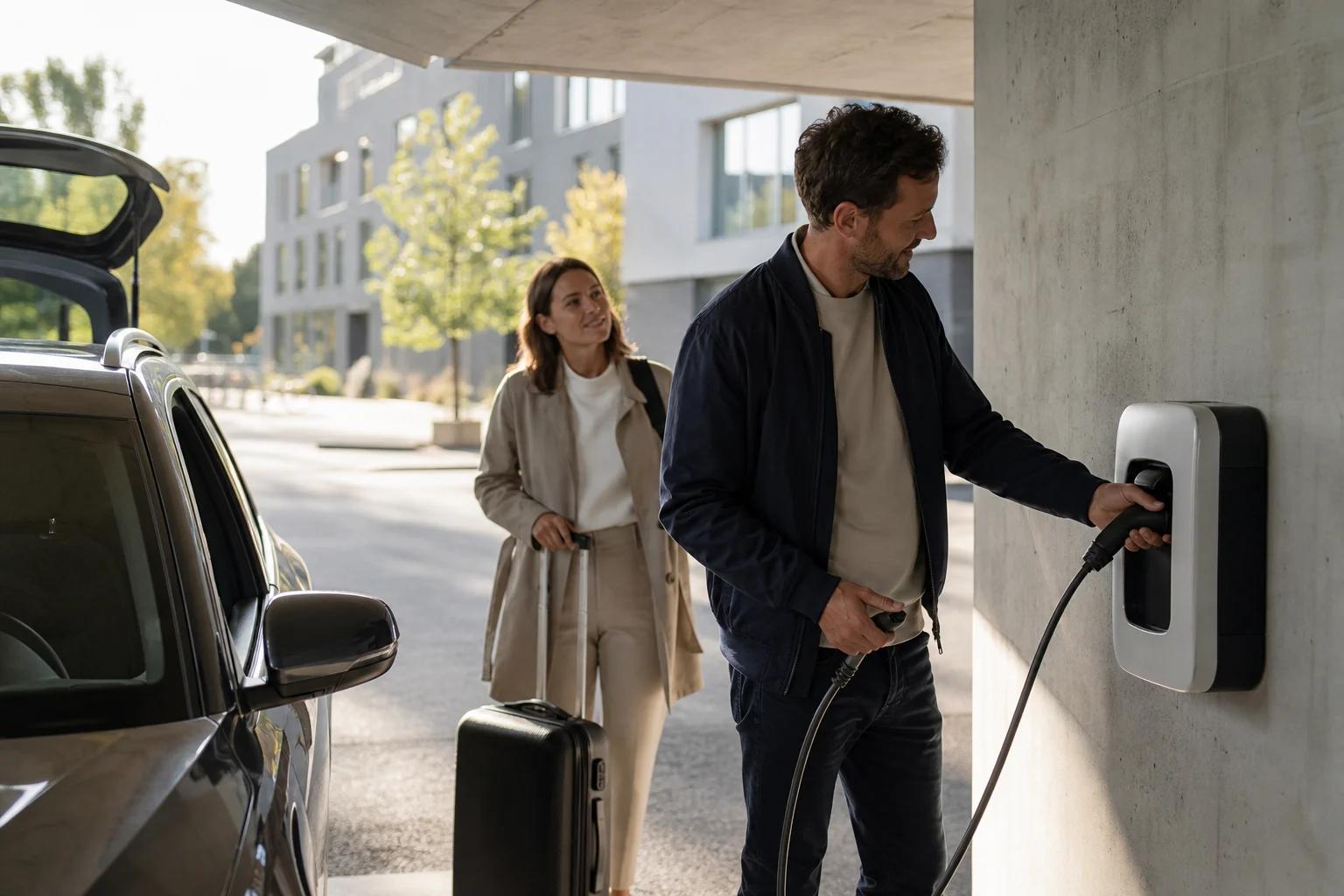
Long-stay living with parking and charging infrastructure is especially relevant when the stay requires not just accommodation, but also reliable mobility on site. Anyone arriving by car or electric car usually thinks in terms of processes: How do I get there, where do I park, how far is it to my workplace, and how much organization does charging the vehicle require? Especially in long stay with parking, it is therefore not only the room or apartment equipment that matters, but also how well accommodation, arrival and daily routes fit together.
Whether hotel, serviced apartment or holiday apartment: what matters is not the category alone, but whether parking, charging, location and booking conditions fit your actual routine. For commuters, field staff, project teams and international specialists with a car, this can make a noticeable difference when luggage, work materials or changing deployment locations are part of the picture.
When are parking and charging infrastructure really relevant in long stays?
The key question is not whether there is a parking space somewhere, but whether the accommodation supports your mobility in everyday life. The topic becomes especially relevant when you need the vehicle regularly, leave early in the morning or return late in the evening. It is also helpful when working at different locations or attending appointments in the surrounding area if you can plan the car on site without complications.
For wohlen auf zeit mit auto, the rule is: the more your daily routine depends on the vehicle, the more important short distances, clear access routes and understandable on-site organization become. If you arrive with several bags, documents, tools or sample cases, it also matters how easy loading and unloading is. That is not a minor detail, but part of the stay process.
Which location makes arrival and the commute easier?
The right location is not only a question of the city center, but of the routes you actually need to travel. An accommodation can also make sense outside the center if it reliably covers the route to work, to customers or to regular deployment sites. Conversely, a central location helps little if daily parking or reaching the accommodation with luggage remains inconvenient.
Therefore, check specifically:
- How far is the walk from the parking space or bay to the entrance?
- Does the vehicle need to be moved every day or only occasionally?
- Is the accommodation located so that the workplace, center or important transport connections are easy to reach?
- Can you arrive without complications even with heavy luggage or after a late arrival?
Especially for longer stays, a location that takes your work rhythm into account is helpful. For project teams or field staff, this can mean that it is not the quickest look at the map that counts, but the sum of the drive, the walk from parking and the daily start to the working day.
Which parking details should you clarify before booking?

When parking at serviced apartment or in other long-stay offers, the key question is: is the bay clearly assigned or merely generally available? If you do not check this properly in advance, what seems like a simple arrival can quickly turn into extra coordination.
Pay attention to these points:
- Is the parking space directly at the accommodation or only nearby?
- Is it a reserved space or parking subject to availability?
- Are there restrictions on vehicle height, access or entry times?
- Is parking included in the booking or handled separately?
- Are there special rules for guests, deliveries or short loading and unloading stops?
It is also important how you get from the vehicle to the accommodation. Anyone arriving with a lot of luggage or regularly loading and unloading materials needs not only a place for the car, but also a short and understandable route to the entrance. That does not save minutes on paper, but it avoids unnecessary detours on site.
How do you recognize charging infrastructure that is usable in everyday life?
An accommodation charging infrastructure is only practical if you understand how it is organized. The term alone does not tell you whether you can charge the vehicle directly at the accommodation or whether only public charging points in the surrounding area are available. For everyday use, this difference is crucial because routes, charging times and coordination differ significantly.
So ask specifically:
- Does the charging point belong to the accommodation or is it only nearby?
- Is use tied to a specific parking space?
- Are there fixed access rules or times when charging is possible?
- Does the charging option need to be confirmed in advance or requested separately?
- Is the charging infrastructure practically reachable for your entire stay without additional daily detours?
If you use the vehicle regularly, the combination of charging access and daily routine is especially important. A charging point that is mentioned but can only be used with extra travel or unclear rules can make the stay more complicated than a clearly regulated solution.
How do you compare location, parking and charging without double checking?
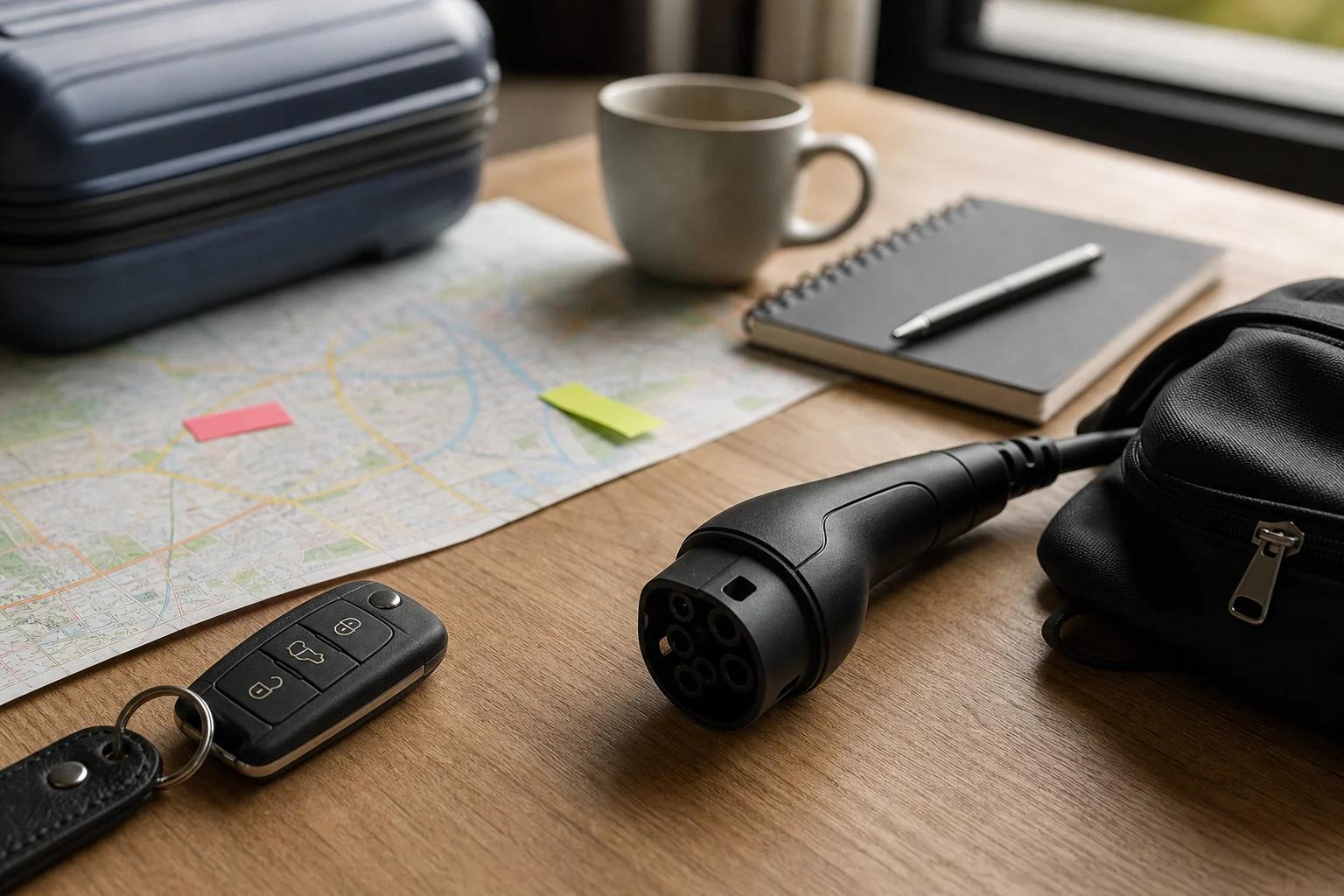
Instead of assessing every detail individually and independently, a simple order helps. First check whether the location fits your routes. Then look at parking and charging access. Only in the third step should you ask how it feels in everyday life: leaving in the morning, returning in the evening, moving luggage, parking the vehicle, and, if applicable, charging it.
This order is useful because it prevents a single feature from overly shaping the decision. A good parking space helps little if the commute is impractical. A good location is also only convincing if parking and charging are clearly regulated. The decisive factor is therefore the combination of accessibility, access and daily usability.
Especially for longer stays, it is worth mentally going through your own daily routine: what does a typical week look like? How often do you really drive? Do you have to start at certain times? Do you arrive with luggage, equipment or work documents? Anyone who answers these questions often recognizes more quickly which offer works in real use.
How myroom24 simplifies the pre-selection by destination, duration and equipment
myroom24 is an online booking platform on which commercial accommodation providers offer accommodation for private and business users. This is helpful for pre-selection because you can specify the destination and length of stay and filter available long-term accommodation by criteria such as price, location and equipment.
Important for this topic: the long-term stays offered via myroom24 cover 28 to 179 nights. So if you are specifically looking for a solution for a temporary assignment, a longer project stay or a transition period, you can narrow the search to suitable time periods and compare the offers by the relevant features.
This makes the selection structured: first you check which accommodations are generally suitable for the stay, and then whether location, equipment and mobility-related questions fit your plan. myroom24 does not replace your decision, but it can make the pre-selection clearer.
What information should you secure before booking?
Before you book firmly, you should read the offer page as if you had to plan your arrival exactly for tomorrow. In particular, save or note the booking period, the location description, the information about parking or a bay, and all details about the charging option. If something is only mentioned briefly, it is worth clarifying the details in advance so that there are no interpretive questions later.
The notes on check-in, arrival and house rules are also important when you arrive by car. In some accommodations, the question of whether loading and unloading, parking the vehicle or using a charging option is expressly regulated can also be relevant. If an accommodation is marked as instant booking, it can be booked without prior approval from the host if available. In that case in particular, it is worth taking a close look at the details.
When comparing offers, a small record for each accommodation helps: what is said about the location? How is parking regulated? Are there clear notes on the charging infrastructure? Which details must be confirmed before booking? On this basis, it is easier to decide which accommodation fits your stay.
If you want to compare suitable accommodations by location and equipment, start here: myroom24 accommodation.
Frequently asked questions
How do I know whether a parking space really belongs to the accommodation?
Look for a clear assignment in the offer: directly at the accommodation, reserved space or only parking subject to availability. If it remains unclear, you should ask before booking.
What is the most important difference between charging infrastructure at the accommodation and charging points nearby?
The difference lies in the daily effort. A charging option at the accommodation is usually easier to plan than an external charging point, for which you need to factor in additional routes or coordination.
Which details should I secure in writing before arrival?
Secure the booking period, check-in information, parking rules and any charging arrangements. That way you have all the important information ready when you arrive.
What should I do if both parking and charging needs are important?
Only compare offers where location, access and the parking or charging route fit together. A good individual feature is often not enough for longer stays.