Temporary Living in Germany for Digital Project Work Across Changing Locations: How to Keep Working on the Move Planned
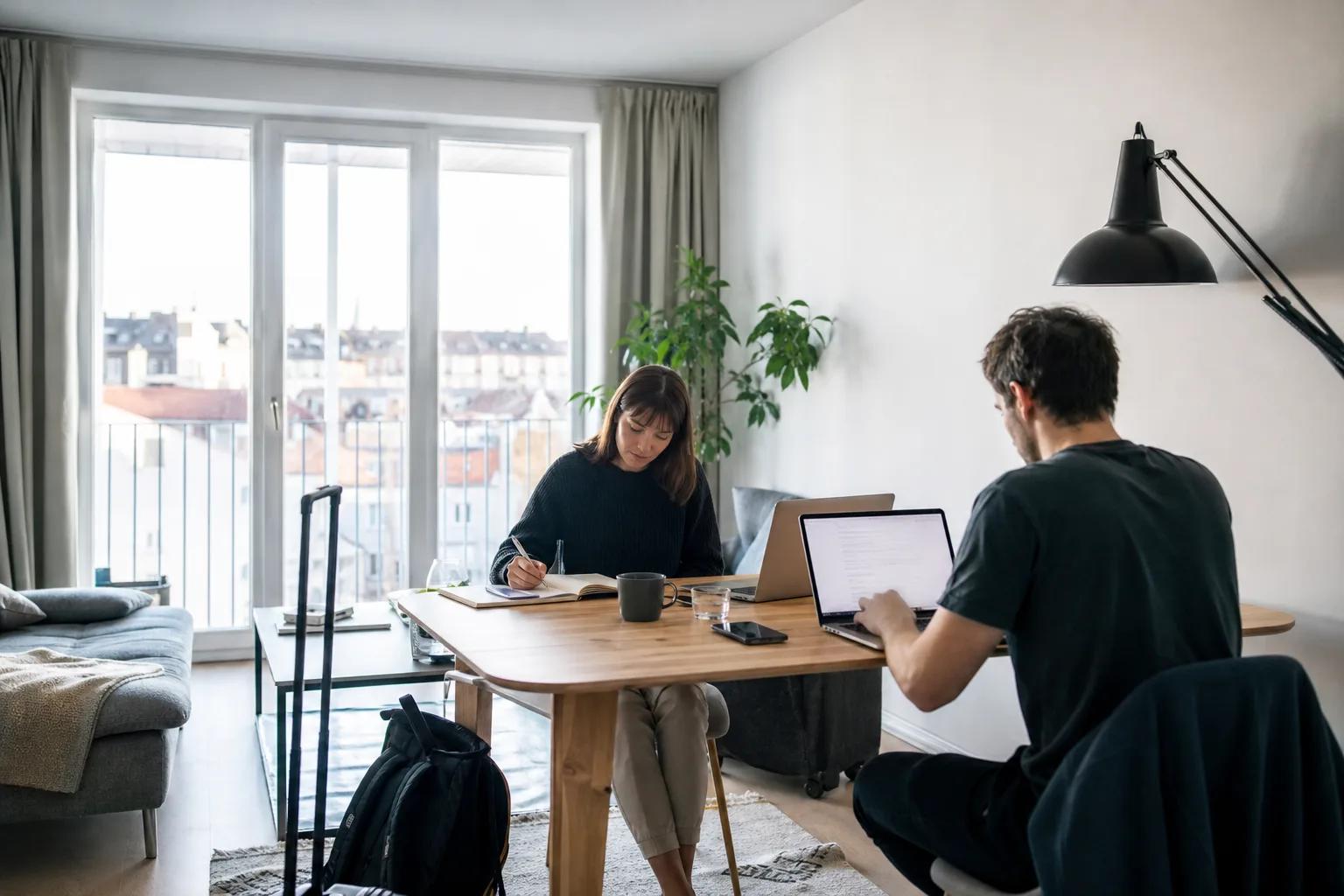
Why the accommodation has to match the work rhythm
If you move between several locations in Germany for a project, you are not only planning travel and appointments, but also the time between assignments. That is often where it is decided whether working days start calmly, breaks are placed sensibly, and transitions between cities work without constant reorganization.
In temporary living in Germany for digital project work across changing locations, the name of the accommodation is therefore less important than its suitability for the actual workflow. A long call day places different demands than a day of focused solo work. A weekend with a change of location needs different conditions than a week with a fixed project site. The better the accommodation fits these routines, the less you have to improvise in everyday life.
Which type of accommodation suits solo work, couples, and small teams?

The most sensible accommodation is the one that supports the way you work. That is why it is worth looking at the usage situation rather than relying on a broad label.
If you work alone
For solo work, it is often crucial whether there is a fixed place for a laptop, documents, and charging devices. A room may be enough if the workspace is clearly defined and you only need a compact base for quiet work. An apartment offers more room if you spend longer blocks at the desk, want to leave things out, or prefer to separate the work and living areas more clearly.
Accommodation with services can also make sense if you do not want to handle every detail yourself and the setup should fit a clearly structured workday. The key question here is: can you arrive, work, and move on again without daily re-planning?
If two people are working on a project at the same time
For couples or duos, it is not just the space that matters, but also simultaneous usability. If both people need to be online at the same time, separate work zones or at least a room layout that can be divided well is more helpful than a shared table that constantly has to be rearranged.
In this setup, it is worth taking a close look at the daily sequence: Who starts earlier? Who has calls? Who needs quiet? An accommodation can work for two people if it offers not only sleeping places, but also room for different work rhythms.
If a small team is traveling together
For small project teams, the focus is less on private retreat alone and more on a mix of shared work and separate focus phases. A larger apartment or a house can be suitable if coordination, short meetings, and rest are all meant to take place in one location.
Here, the key question is not how many people could theoretically fit inside, but whether the space can be used for collaboration and retreat at the same time. Especially in intensive project phases, this avoids unnecessary trips between accommodation, workplace, and meeting point.
Hotels can also be a suitable option in such scenarios if the location, services, and overall setup fit the schedule. Serviced apartments can likewise be suitable for longer stays if they offer the desired mix of independence and organization. What matters is always the concrete benefit in everyday project work, not a blanket preference for a single type of accommodation.
Which details directly affect the working day?
Once the general type of accommodation is settled, the furnishings often determine the quality of working time in everyday life. For digital project work, four points are especially relevant, and they affect solo, couple, and team work in different ways.
A real workspace is more than a table in the room
A work surface should be usable in a way that does not require you to clear it every day. For longer project phases, it matters whether there is permanent space for a laptop, notes, and accessories, and whether you can work comfortably for several hours.
If you change cities frequently, a clearly usable workspace is especially valuable because you do not have to reorganize everything each time you are on the road. An improvised spot may be enough for short tasks, but it is often impractical as soon as several calls, documents, or concentrated work blocks come together.
Wi-Fi is only useful if it matches your way of working
For digital project work, it is not enough that Wi-Fi is available. What matters is whether it fits the demands of your work, for example for video conferences, parallel tools, or file transfers.
As soon as several people are working at the same time, the demands increase further. Then it is not only the availability of internet that matters, but also whether everyone involved can stay productive in parallel without slowing each other down technically or spatially.
Quiet and location affect different workdays in different ways
A quiet location is especially important when you need to work with focus or regularly take part in discussions. At the same time, the accommodation should be located so that your routes to appointments, transport connections, or the next assignment sites are not unnecessarily long.
For project work with several stations, this means: the best location is not automatically the most central one. The sensible location is the one that best reflects your route between workplace, accommodation, and the next site.
Self-catering reduces friction in tight time windows
When the days are tightly scheduled, it is helpful to be able to organize meals and short breaks yourself. A kitchen or kitchenette can then be more important than extra living space, because you do not have to plan time and travel anew for every meal.
This becomes especially relevant when a location is used only for a limited project phase. The better the accommodation supports simple self-catering, the less extra organization is needed between two working days.
How to structure your search by project phases

If your assignment involves several locations, searching by project phases helps more than comparing individual offers at random. The question is then not only what generally looks good, but what is actually needed in each phase.
1. First define the secure section
Start with the period that is already reliable. This prevents you from planning accommodation too early or too late. If additional cities are added later, you can assess the next section separately.
2. Then determine the working format
Alone, as a pair, or in a small team: this question changes accommodation needs significantly. People working alone often need more quiet and a clear workspace. People traveling together need more flexibility in how the space is shared. People on the road as a team should think about shared and separate use in parallel.
3. Then check the daily routine
Ask yourself whether your working day consists of long focus phases, many conversations, or frequent changes of location. The answer will show whether you should place more value on room layout, accessibility, or self-catering.
4. Finally, match the accommodation to the travel plan
If you are heading to several places one after another, accommodation and route should be considered together. A good choice is the one that supports your planned routes instead of creating extra effort.
How myroom24 organizes the search for changing locations
myroom24 is an online booking platform where commercial accommodation providers offer accommodation for private and business users. For location-flexible project work, this is useful because you can enter your destination and length of stay in advance and filter available long-term accommodation by criteria such as price, location, and amenities.
The documented length of stay is especially relevant: on myroom24, long-term stays of 28 to 179 nights are provided for. Accommodation marked as instant booking can be booked without prior approval from the host if available. This can simplify selection when a project window is already fixed and the accommodation needs to be assigned quickly.
The range includes rooms, apartments, and houses in commercial accommodation facilities such as hotels, hostels, serviced apartments, and holiday apartments. This makes it possible to compare the type of accommodation with the planned working mode instead of searching for only one single type.
How to make a confident final decision
If several cities, work phases, and people are involved, a clear sequence is worthwhile: first the secure period, then the working format, then the question of space and location. This way, you compare offers not in the abstract, but in relation to the actual project.
If you want to take this step now, start with myroom24 accommodation and first check the location, length of stay, and working environment.
Frequently asked questions
How do I plan the length of stay when several cities are coming up one after another?
First orient yourself by the longest secure project phase. For later cities, you can then check separately once the dates are reliable.
How can I tell whether an accommodation can be used by two people at the same time?
What matters is whether both people can work in parallel without having to constantly switch the same space. Separate work zones or a clearly divisible area are important for that.
Can a hotel be suitable for longer digital project work?
Yes, if the location, services, and overall setup fit your workflow. Compare it with apartments or serviced apartments based on your concrete needs.
What should I do if the project destination is fixed, but the exact return date is still open?
Plan the secure phase first and assess the accommodation only for that period. Add the open part later once the dates are reliable.