Temporary living for late arrivals with digital access and self check-in
What really needs to be clarified before booking?
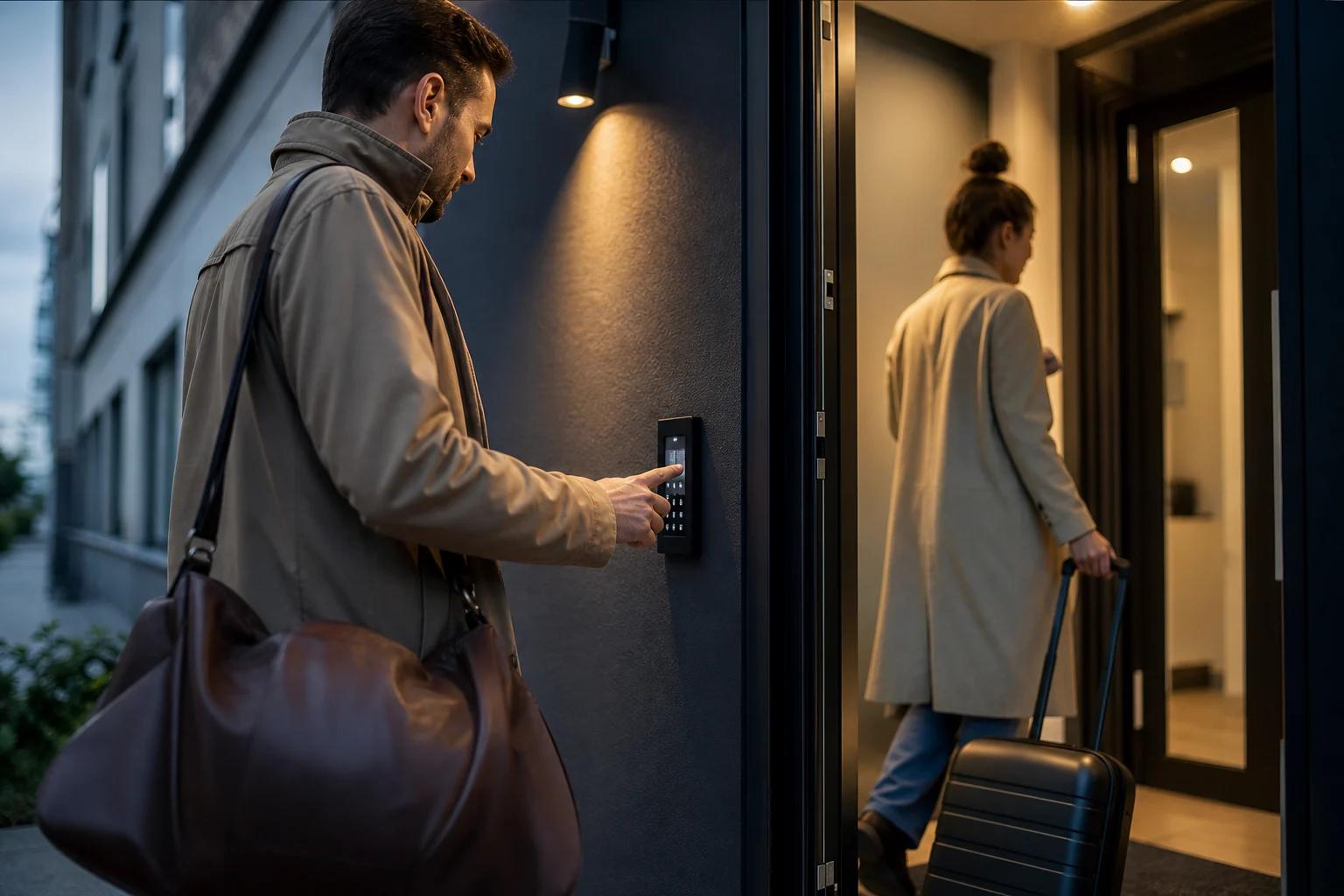
Anyone planning temporary living for late arrivals with digital access and self check-in should not wait until the day of arrival to think about the process. What matters is that it is clearly established before booking how access works, when it is possible, and who can be reached if there are questions. Especially when arriving after business hours, an accommodation only really helps if the arrival does not first have to be explained on site.
For longer stays, access alone is not the only factor. It is also important whether the type of accommodation, the location, and the communication channel fit the planned trip. A hotel can be just as suitable as a serviced apartment or another commercial accommodation if the arrival logistics are clearly described and the information is complete. So the question is not: Which type is generally better? Rather: Which solution is prepared most clearly for this specific arrival?
Three details that should be clearly stated in advance
- Access: Is there key handover, a code, an app, or another described process?
- Location: Is the exact address, including entrance, house number, and any rear or side entrance, clearly stated?
- Contact: Is there a reachable contact person for problems on arrival or with access?
If these three points remain unclear, the first night becomes unnecessarily complicated. By contrast, anyone who knows in advance where to go and what to do at the building reduces the typical uncertainties of a late arrival significantly.
Which information should be ready to hand before the trip?
A late arrival becomes easier if the most important details do not first have to be collected on the platform or in front of the building. Save the booking confirmation, the exact address, the name of the accommodation, the access note, and the support contact so that you can open them without a long search. A double storage method is useful: once on the smartphone and once in a message or email that remains easy to find.
It is also practical to have a small personal checklist for the arrival day. This includes whether the name is on the doorbell, whether an inner courtyard or side entrance is mentioned, and whether the accommodation provides specific directions. The less you have to interpret on site, the more directly you will arrive.
What else you should check if you are arriving late
- Is the address complete and not only roughly described?
- Is the route to the accommodation easy to follow in the dark?
- Are the code, key, or access details available at the right time?
- Are there instructions on what to do if a message does not arrive or a system does not respond?
This preparation is especially helpful if you have luggage with you or do not want to take any detours after a long day of travel. Then it is not the length of the route that matters, but the clarity of the last few meters.
What does a good checklist for the first hour after arrival look like?
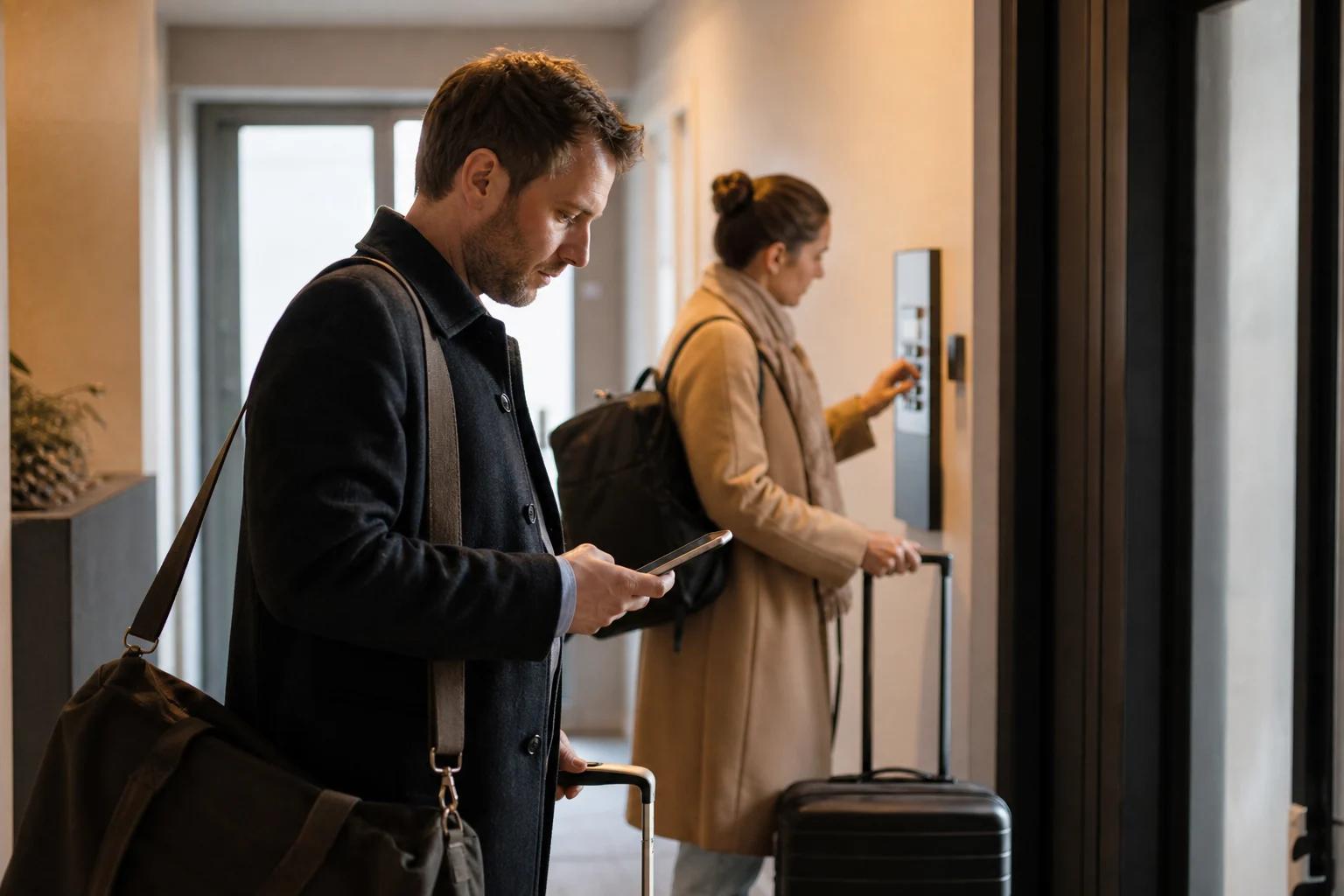
The first hour is often the moment when small uncertainties turn into real delays. That is why it is worth having a fixed routine that does not need to be improvised. A useful sequence is one you can go through again just before you arrive.
Useful sequence directly before check-in
- Check the address and route one last time.
- Open the access details, code, or key note.
- Save the support contact in case questions come up.
- Keep your phone, ID, and booking details close at hand.
- Only then use the actual access.
If you still need a short orientation after arrival, check the entrance area first, then the way to the accommodation unit, and only then your luggage. This avoids having to search for a code, a doorbell, or a side entrance with your suitcase in hand.
Why this routine also helps for longer stays
With a longer booking, the first night is not just an arrival moment, but the start of several days or weeks. If access, orientation, and contact routes work on the first evening, the stay begins in an orderly way. That saves not only time later, but also follow-up questions the next day.
How can you tell whether digital access and self check-in are really practical?
Digital access is only helpful if it is described in a way that you can understand without asking follow-up questions. The technical term alone is not enough. What matters is that the process is understandable and does not first have to be pieced together on site.
Good clues in the listing or message
- When is access activated?
- What exact steps are needed?
- Is there a clear description of what to do if something does not work?
- Does only one person need to use the access, or several?
Especially with later arrivals, it is also important whether the process matches your own travel pace. Anyone arriving in the evening does not need a complicated, multi-step explanation, but a clear process with as few steps as possible. This applies regardless of whether the accommodation is in a hotel, a serviced apartment, or another commercial property.
What do you do if the access does not work?
A good backup plan answers the most important question before the trip: Who can I reach if something does not work? Save the contact not only in an email, but also directly in your phone. If a system fails, it is often too late to start looking for a message at the door.
It is also helpful not to plan the follow-up question only once you have already arrived. Check in advance which information support will probably need in the event of a problem: booking name, arrival time, address, and a short description of the issue. That way you can react more quickly and clearly in an emergency.
A usable backup plan includes at least
- a reachable contact,
- the booking details in readable form,
- an alternative access option,
- and a plan for where you can briefly wait if necessary.
The goal is not to eliminate every problem. The goal is not to end up under additional time pressure if something is unclear.
How can you find your way faster on the day of arrival?
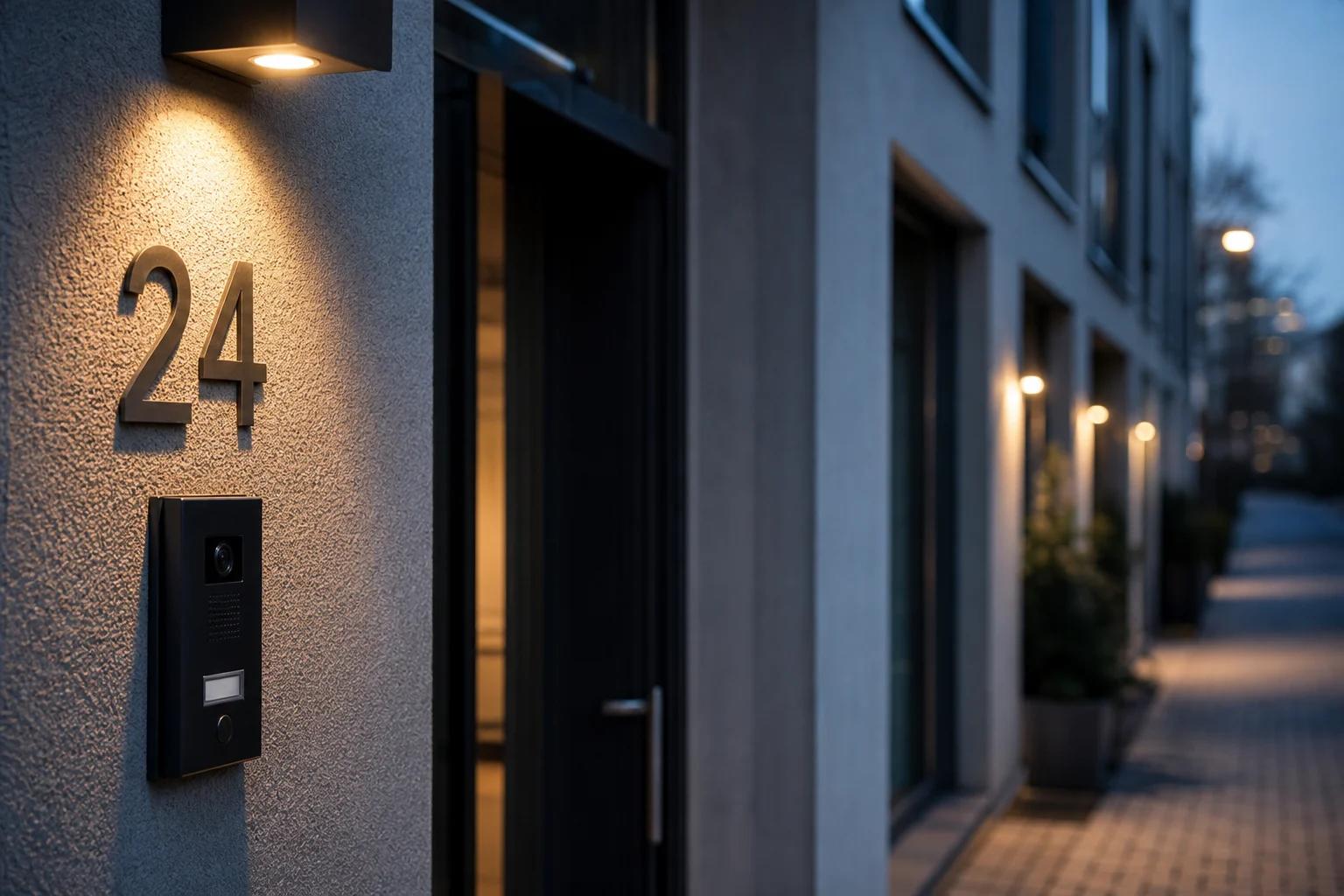
Late arrivals are often exhausting because the final part of the journey becomes hard to follow. That is why it is worth checking not only the overall route, but the last few meters separately. Look in advance at how to get from the stop, the parking area, or the main road to the accommodation and how to recognize the correct entrance.
These details are especially useful
- visible house number and clear building name
- notes on side or rear entrances
- landmarks nearby
- information about lighting or visibility in the evening
- possible special features when walking with luggage
The more precise this information is, the less energy is lost on searching and asking questions upon arrival. This is especially important if you need to leave early the next morning or simply want to arrive after a long day of work.
How myroom24 helps when selecting suitable long-stay accommodation
myroom24 is an online booking platform on which commercial accommodation providers offer accommodation for private and business users. The selection includes rooms, apartments, and houses in commercial accommodation properties such as hotels, hostels, serviced apartments, and holiday apartments. For long stays, 28 to 179 nights are intended.
For late arrivals, it is especially relevant that you can filter available long-stay accommodation by criteria such as price, location, and facilities. This allows the search to be narrowed so that the location fits the late arrival and you do not only think about the process after booking. If an accommodation is marked as instant book, it can be booked without prior approval from the host, subject to availability. That can be helpful when the decision has to be made quickly and the arrival still needs to be prepared.
Which criteria help in the final comparison before booking?
Before deciding, it is worth doing a quick check against three questions: Does the access fit the time of your arrival? Is the accommodation described in a way that lets you find the entrance without guessing? And do the location, facilities, and transparent overall view of the booking match your stay?
The type of accommodation should also not be viewed in isolation. A hotel can be suitable for a longer stay if the specific arrival situation, the services, and the location fit the trip. A serviced apartment can also make sense if the process is clearly described. What matters is not a blanket judgment, but the combination of travel route, orientation, communication, and a comprehensible booking framework.
The final quick check before you click
- Can I understand the access without asking a question?
- Do I have the support contact ready?
- Can I still reach the entrance safely late at night?
- Does the accommodation fit the planned period?
- Is the booking information complete enough for the first evening?
If you can answer these points with yes, the likelihood is higher that the first night will start without detours.
What is the next sensible step?
Review the available options and compare the arrival instructions with the location and facilities on myroom24 accommodation.
Frequently asked questions
Which three details should be clear before booking for a late arrival?
Access, the exact address with entrance, and a reachable contact for questions should be clearly described in advance.
What should I have ready offline if I am arriving in the evening?
The booking confirmation, address, access note, and support contact should be stored so they are easy to find on the smartphone.
How do I tell whether self check-in is practical for my arrival?
If the process is explained step by step, activation fits the timing, and there is a clear solution if something goes wrong.
What helps if I do not immediately find the correct entrance after arrival?
Check the house number, entrance description, landmarks, and notes on side or rear entrances in advance.