Temporary accommodation for field service and service teams: criteria for deployment, travel, and costs

What does accommodation for mobile teams on assignment really need to deliver?
For temporary accommodation for field service and service teams, the label does not matter first, but rather the workflow around the working day. The key question is: Does the accommodation fit the journey, shift times, material transport, rest periods, and self-organization?
Anyone who looks only at the room category often overlooks the practical bottlenecks. A team may not need the same solution as an individual business traveler, but rather a place where clothing, documents, equipment, and personal items can function without constant rearranging. That is exactly where the comparison should start.
Which preliminary decisions should be fixed before comparing offers?
Before you review offers, a short internal clarification is worthwhile. The cleaner the requirements are, the easier it is to see whether accommodation really works in deployment or only looks suitable on paper.
How many people use which areas together?
Not only the number of people is relevant, but also the question of how closely the team works together. Do all team members share the same living area, or are separate retreat spaces needed? The more precisely this is decided in advance, the better room layout and team dynamics can be aligned.
Which materials travel with the team and where are they stored?
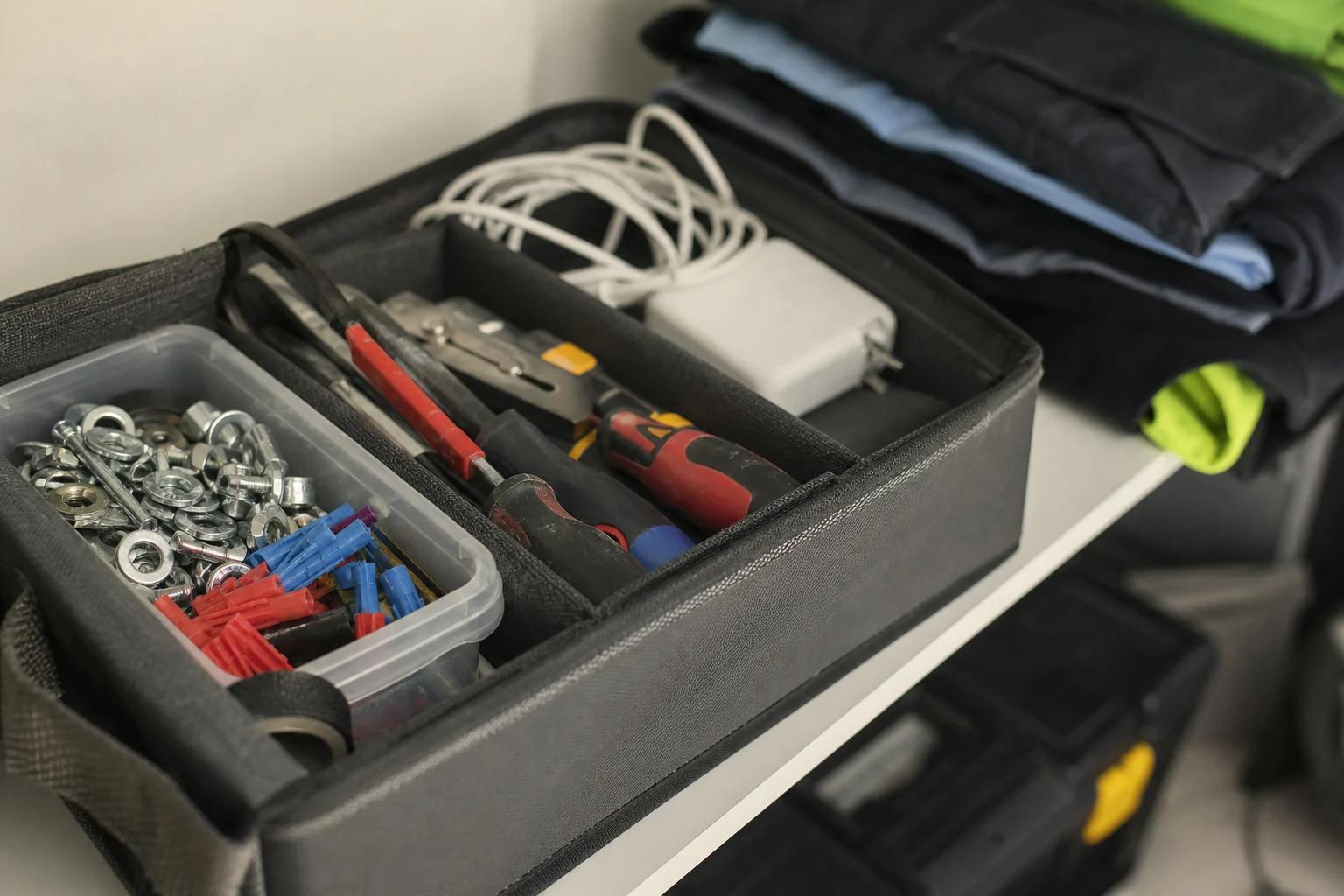
For mobile work teams, material logistics are often a separate planning point. If tools, spare parts, documents, or work clothing are being transported, it should be clear in advance where these items can be stored safely and in an organized way. It is also useful to ask whether a fixed storage place is needed directly in the accommodation or whether the material must be taken back into the vehicle every day.
How should billing be handled internally?
Before booking, clarify who the invoice recipient is, which cost center applies, and whether one project needs to be cleanly separated from another. This is especially important when several assignments are running in parallel or when different teams use the same accommodation one after another. Clear allocation in advance saves follow-up questions in accounting later.
Which amenities concretely support the daily routine?
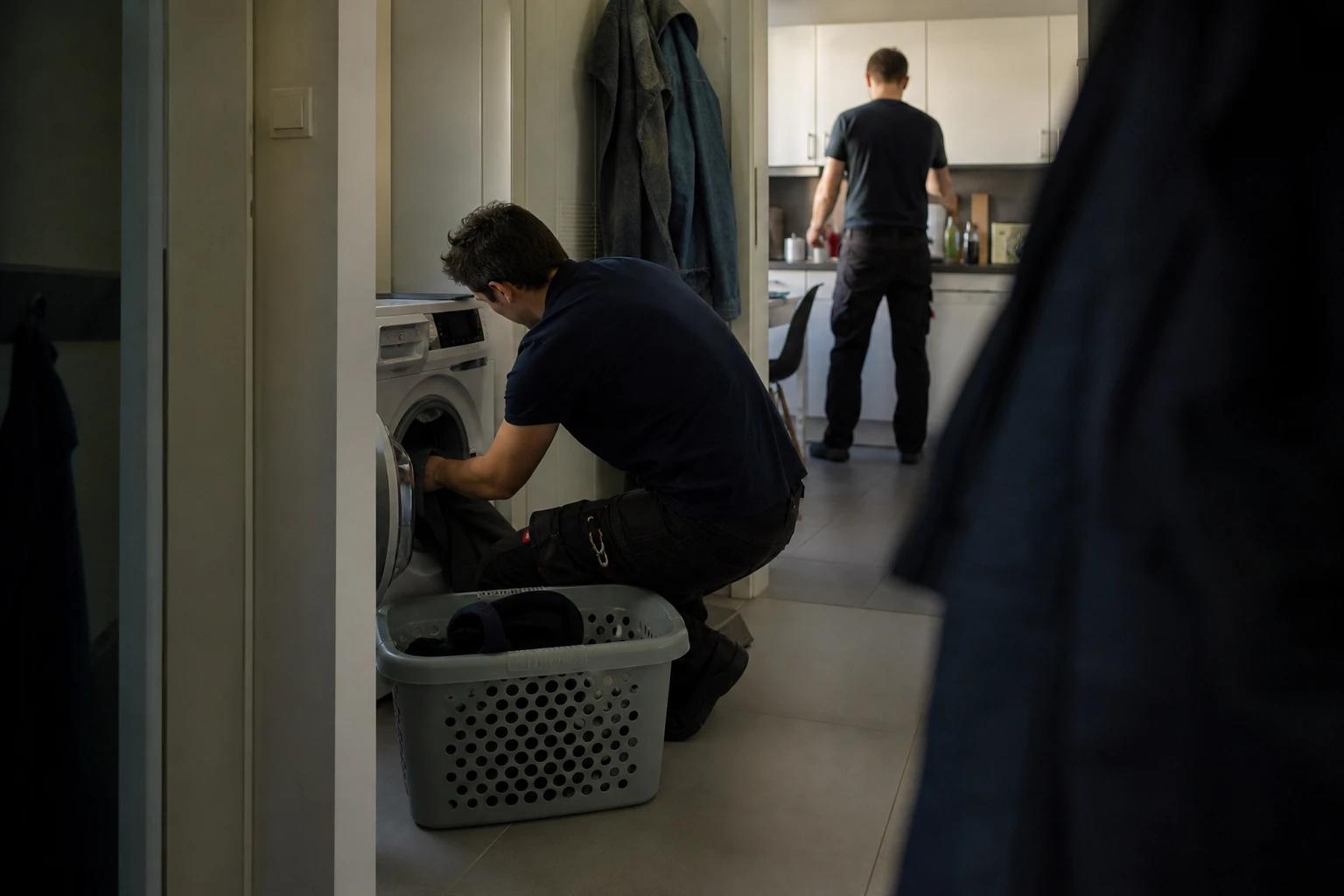
What matters is not the longest possible list of amenities, but rather which points really cost time and coordination during deployment. These items should therefore be checked particularly carefully.
Kitchen: when self-catering is part of the plan
If meals are not to be organized externally every day, a kitchen quickly becomes a central criterion. The question is then not only whether a kitchen is available, but whether cooking, cooling, and storing can work together in a practical way in daily life. For teams with changing deployment locations, this can significantly simplify the routine because no separate organization is needed for every meal.
Laundry option: when work clothing changes regularly
As soon as clothing needs to be changed more often during deployment, a laundry option becomes a concrete decision factor. This is especially true when the stay lasts several weeks or when two shifts require different clothing. Plan early whether a machine directly in the accommodation is important or whether laundry should be organized differently.
Storage, rest, and space: so nothing has to be reorganized all the time
For service teams, a clear place for personal items and work documents is often more important than extra features. When several people return at different times, fixed storage surfaces and sufficient rest areas help ensure that nobody has to rearrange everything in the evening. Especially during longer assignments, this makes a noticeable difference in everyday life.
Access and parking: when vehicles are part of the daily work routine
Check not only the address, but also the actual access for vehicles transporting tools or material. If several vehicles arrive at the same time or equipment has to be moved from the vehicle into the accommodation, an access route that is easy to reach often matters more than a particularly short detour on the map.
How do you compare apartment, serviced apartment, apartment hotel, and hotel objectively?
Serviced apartments and apartment hotels are just as suitable for long stays as an apartment. The decision should therefore not depend on the label, but on space, services, location, and the degree of self-organization.
Apartment
An apartment is especially suitable when the team stays in one place for a longer period and wants to manage as much as possible independently. In that case, peace, personal routines, and a clear private setting are the focus. For assignments with little change and a lot of self-organization, this can be a very suitable solution.
Serviced apartment and apartment hotel
A serviced apartment or apartment hotel is interesting when living and organizational relief are meant to come together. For mobile teams, this form is often useful when the stay is planned for a longer period, but not every task should have to be handled independently. The comparison of the concrete amenities and the question of which services actually simplify the routine remains important.
Hotel
A hotel does not have to be excluded for longer stays. If the location, services, and daily routines fit the assignment well, it can also be a suitable option. In that case, compare especially carefully whether room layout, work routes, and transparent total costs fit the project and whether the daily organization remains truly practical for the team.
How myroom24 structures the search for mobile teams
With myroom24, deployment planners can specify the destination and length of stay and filter available long-stay accommodation by criteria such as price, location, and amenities. This is useful when the work location is fixed and the search should not stop at a general accommodation type.
myroom24 covers long stays from 28 to 179 nights. This means the framework is clearly geared toward medium and longer assignments for which the period is defined relatively precisely in advance. The offering includes rooms, apartments, and houses in commercial accommodation facilities such as hotels, hostels, serviced apartments, and holiday apartments.
Depending on the need, accommodations marked as instant booking can be booked without prior approval from the host if available. For team planning, that means: first define the period clearly, then narrow down the location and amenities in a targeted way, and only then choose the right accommodation.
What should be defined organizationally after booking?
After booking comes the part that often makes the biggest difference in everyday life. Now it is about whether the accommodation functions in an orderly way during the ongoing assignment or whether improvisation is constantly required.
Which cleaning rhythm makes sense for the team?
Clarify how often cleaning takes place and how that fits with shift times, tool storage, and personal luggage. A suitable rhythm prevents surfaces from being unnecessarily blocked between arrival, the end of work, and the next assignment. Especially with shared use, it is important that everyone knows which areas must remain clear regularly.
Where are consumables, spare parts, and personal items stored?
Define which items are used jointly and what each employee keeps for themselves. This applies not only to larger work equipment, but also to small parts, documents, or work clothing. If these rules are clearly set in advance, there will be fewer follow-up questions and less time spent searching in day-to-day operations.
How does internal processing work after the stay?
The booking is only fully completed when the invoice, cost center, and project allocation can be tracked. Also check who finally collects the documents and whether several assignments need to be documented separately. This keeps the accommodation administratively traceable, even if the team is already working at the next location afterwards.
Which decision fits which deployment pattern?
A fixed location for several weeks
When the team stays in one place, things like laundry, a kitchen, and a quiet routine become more important. In that case, it is worth choosing accommodation that does not constantly interrupt the daily routine and leaves enough space for both personal and professional items.
Multiple deployment locations in one region
With changing destinations within a region, the location should primarily suit the most frequent trips. Here, it is not the theoretically central position that matters, but the route that is repeated most often in everyday life. The question of how material is moved between the vehicle and the accommodation can then be more important than extra comfort features.
Shift work with staggered return times
If employees return at different times, clarity around rest areas, storage, and shared spaces is especially important. In this case, accommodation is convincing when it can handle the transition between end of work, sleep, and the next shift without constant coordination.
If you are now preparing the assignment in concrete terms, take a look at the myroom24 accommodation and narrow down the location, period, and suitable amenities for the planned team stay.
Frequently asked questions
What information should be fixed before making an inquiry if tools or spare parts are traveling with the team?
State what is being transported, how much storage space is needed, and whether a fixed storage place in the accommodation is necessary. That makes it easier to check whether the on-site workflow fits.
How do you keep billing clean when several projects use the same accommodation?
Separate the invoice recipient, cost center, and project allocation in advance. If the assignments run one after another, the documentation should also be clearly separated.
What is most important when shared kitchen and laundry facilities are used in shift work?
Fixed rules are essential: Who uses which areas and when, where are items stored, and how is enough order maintained for the next shift? Without these agreements, everyday life quickly becomes confusing.
When can a hotel still be a suitable choice for longer assignments?
When the location, services, and daily routines fit the team well. The key then is comparing room layout, work routes, and transparent total costs.