Accommodation for Interim Managers on a Temporary Basis: What Executives Should Consider During Longer Assignments
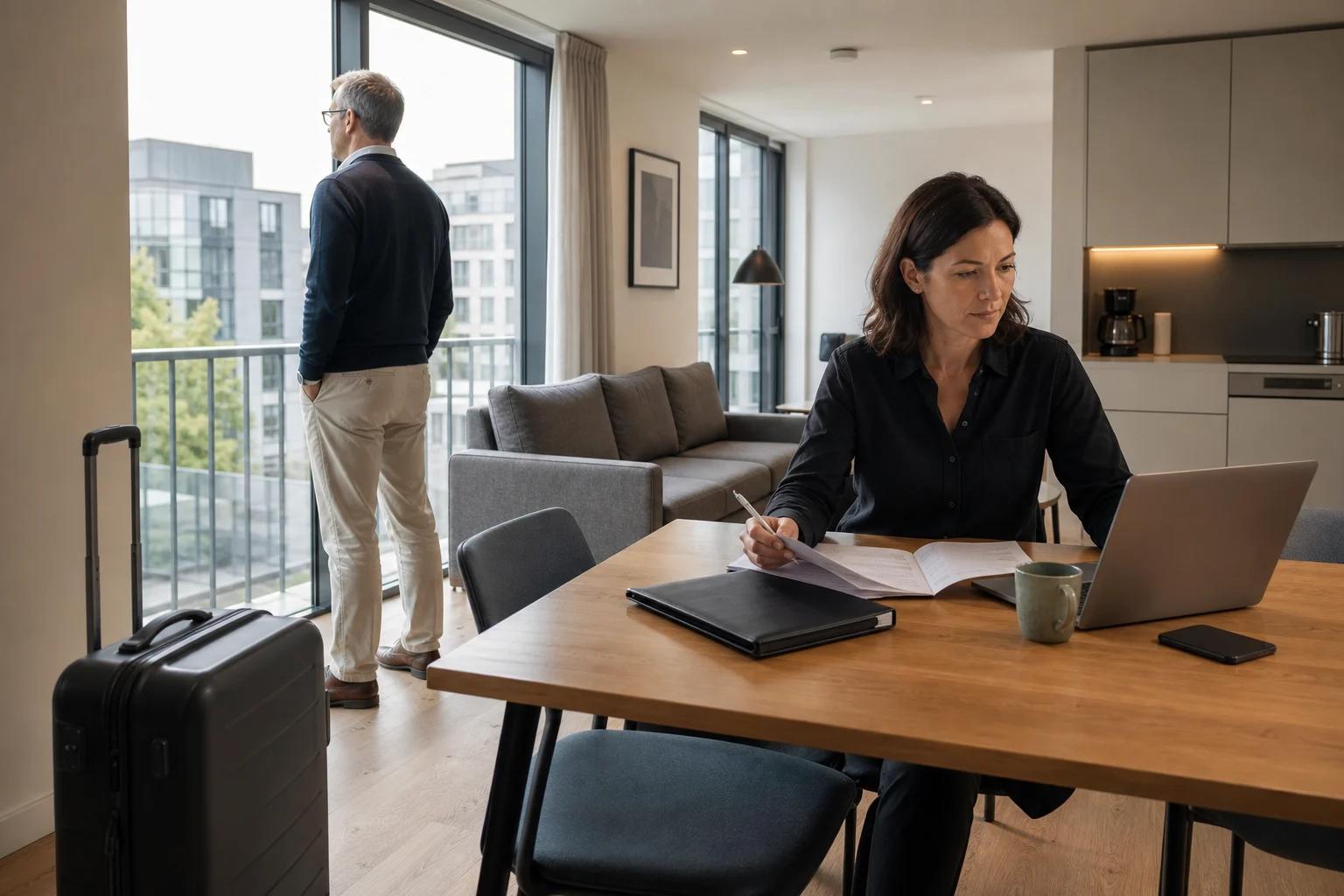
What questions should be answered before starting the search?
For an interim assignment, accommodation is not a secondary issue. It affects whether meetings can be prepared, confidential discussions remain practical, and internal coordination runs without constant interruptions. That is why an accommodation for interim managers on a temporary basis should not be chosen first by photos or individual features, but by the actual assignment profile.
It helps to organize the requirements into three levels before the search: What work needs to be done, how often is presence on site required, and which people internally decide on booking and approval? Anyone who answers these questions clearly avoids later corrections, because in practice the accommodation still does not fit the project rhythm.
Especially for temporary leadership roles, a brief check with the assistant or office management is also worthwhile: Who collects the facts, who checks the invoice, and who approves changes? This coordination not only saves time, it also prevents a suitable option from being left aside because responsibilities are unclear.
How do you assess location, arrival, and parking for a real weekly rhythm?
A good address is not automatically the best address for an interim assignment. What matters is how the location affects everyday life: Which routes recur, how early do meetings start, and how often are locations changed? It is precisely this total of journeys that makes accommodation practical or cumbersome in day-to-day use.
Which routes really recur?
Check not only the route to headquarters, but also the distance to branch locations, client visits, or external meeting venues. If several addresses are visited regularly, a seemingly central location can still be impractical because it only covers part of the week well.
How does the start of the day affect the location?
An early meeting changes the assessment significantly. Then it is less important how attractive an area looks and more important whether the commute works reliably and without unnecessary detours. The same applies to late returns: If the day often runs long, the accommodation should be located so that the way back does not become an additional burden.
How can you tell whether arrival and parking have been considered?
Anyone arriving by car should clarify in advance whether a parking space is needed and how direct access to the accommodation is. Anyone using train, taxi, and walking needs above all short, clear routes from the arrival point to the accommodation and on to the place of work. Such details are often more important than a slightly shorter route on the map.
What does a location check beyond the map provide?
A brief reality check is useful: Does the address work for the first day of work when luggage, documents, and a tight schedule all come together? If the first day already seems complicated, the accommodation is usually no easier later in the project. This is exactly where a merely good location differs from a functioning one.
What equipment supports real working days?

For a management on temporary basis accommodation scenario, it is not enough for a table to be present. What matters is whether the environment supports longer work, coordination, and rest periods without constant rearranging. So the question is not: “Is there a workspace?”, but: “Can you work reliably there for several weeks?”
Is the work area practical to use?
A functional work area should be able to hold documents, a laptop, and notes at the same time. If every meeting first has to be prepared because the table is simultaneously a dining, storage, and work surface, that costs time every day. A clear surface with enough order is therefore often more important than decorative furnishings.
How important are quiet and confidentiality?
Interim managers often conduct confidential phone calls or video meetings. It should therefore be checked whether such conversations are possible without constant disruption. If the work area is located in the middle of an open-plan living space, that is not automatically a reason to rule it out, but it must match the actual need for calls.
What is especially important when spaces are shared?
If kitchen, living area, or other spaces are shared, data protection becomes more important. It should then be clear where documents may be kept, whether confidential papers can be stored securely, and whether conversations can be held in peace. Especially with leadership responsibility, this question is often more relevant than additional decoration or attractive design.
Why is separating living and working more than comfort?
A clear separation helps not only with work, but also with switching off after long days. Anyone still revising presentations in the evening needs a structure that does not leave documents permanently in the way. The better the work zone and the rest zone are separated, the more likely the stay will remain manageable over several weeks.
What organizational questions should be clarified before booking?
During longer assignments, the biggest friction often does not come from the accommodation itself, but from unclear processes. This is especially true when executives, assistants, departments, and finance are all involved. The clearer the responsibilities are before booking, the fewer questions will arise later on site.
Who provides the information for the booking?
A clear division of roles is useful: The executive or project team describes the need, the assistant collects the key details, and finance checks the invoice and cost center. This keeps the booking traceable without each department having to request the same information again.
Which details must be stated on the invoice?
Before booking, it should be defined in whose name the invoice should be issued and who will answer internal questions. The period should also be stated clearly so there is no later uncertainty about the start, end, or responsibility. Such simple points prevent unnecessary back-and-forth after arrival.
How is a possible extension prepared?
For projects with an open end, it is important to know the decision path in advance. Who requests an extension, who reviews it, and who approves it? If this sequence is fixed, there is no need to reorganize things from scratch during the assignment if the duration changes.
When is a clear change process especially valuable?
Above all when the assignment location was confirmed at short notice or appointments may still shift. A good accommodation is then usable not only because of its rooms, but also because of how it is handled organizationally. Anyone who can initiate changes in a structured way avoids having to search again under time pressure.
How do hotel, serviced apartment, and classic flat differ in concrete terms?

For a corporate housing executive, there is no single correct format. What matters is which type of accommodation best reflects the way the assignment is carried out. So compare not in general terms, but using the same criteria: location, work area, quiet, organizational clarity, and the effort involved in coordination and extension.
When can a hotel be suitable?
A hotel can make sense when clear service processes, short decision paths, and a standardized procedure are important. This is especially interesting when the assignment involves many meetings, changing daily schedules, or little time for organizational detail work. You should then pay particular attention to whether workspace, quiet, and location suit the specific project day-to-day.
When are serviced apartments or apartment hotels a good direction to assess?
This format can be suitable when work and living are to come together in one unit while still maintaining a structured framework. Anyone staying on site for several weeks often looks closely at whether the work area is practical and whether the stay remains manageable organizationally. This also applies when the accommodation is meant to feel more like a small work base than a classic hotel room.
When is it worth considering a classic flat?
A flat can be an option when the assignment is designed for a longer period and internal rental or booking processes can be well prepared. In that case, service becomes less central and the question becomes whether the structure of the stay fits the project duration. Here too, the rule is: do not compare in general terms, but assess the concrete combination of location, working possibility, and organizational effort.
How do you compare the options without blanket judgments?
A simple comparison logic is useful: Which format offers the right quiet for conversations, which provides the most usable workspace, and which has the clearest handling for invoices and extensions? If you line up these three points, you get an objective comparison without prematurely ruling out hotels, apartments, or flats.
How myroom24 helps in the search
myroom24 is an online booking platform on which commercial accommodation providers offer accommodation for private and business users. The range includes rooms, apartments, and houses in commercial accommodation properties such as hotels, hostels, serviced apartments, and holiday flats.
For temporary management assignments, it is particularly relevant that myroom24 offers long stays of 28 to 179 nights. This makes it possible to search specifically for a period that fits clearly defined projects and temporary leadership tasks.
myroom24 also offers the option to specify the destination and length of stay and to filter available long-stay accommodation by criteria such as price, location, and amenities. Accommodation marked as instant book can, where available, be booked without prior approval from the host. This is especially helpful when the assignment has already been coordinated and the right accommodation should be secured without an additional step.
How to finalize the decision in practical terms
If two or three options seem similarly good, a brief decision note with four columns helps: assignment location, work area, organizational clarification, and extension options. This allows companies and executives to see at a glance which accommodation best supports the real working day.
If you now want to narrow down the suitable options, start with the myroom24 accommodations and compare duration, location, and amenities based on your specific assignment.
Frequently asked questions
How should I proceed if the assignment switches between headquarters and a branch location?
Orient yourself to the location with the most frequent appointments and also check the routes to the other addresses. What matters is the sum of the regular journeys, not just one route.
What information should an assistant or office management collect before booking?
Assignment duration, invoice recipient, cost center, approving person, and the person responsible for change coordination. This keeps the booking traceable internally.
How do I check quiet and data protection if I am working in a shared accommodation?
Look for a clear work zone and whether confidential conversations are possible without constant interruption. Open table solutions are often not enough for that.
When is a hotel still a sensible option for a longer interim assignment?
When fixed service processes, frequent changes of appointments, or a very clear handling process are more important than a separate living character. In that case, compare workspace, location, and organizational effort.