Temporary Living with Self-Check-in and Late Arrival: Checklist for the First Evening
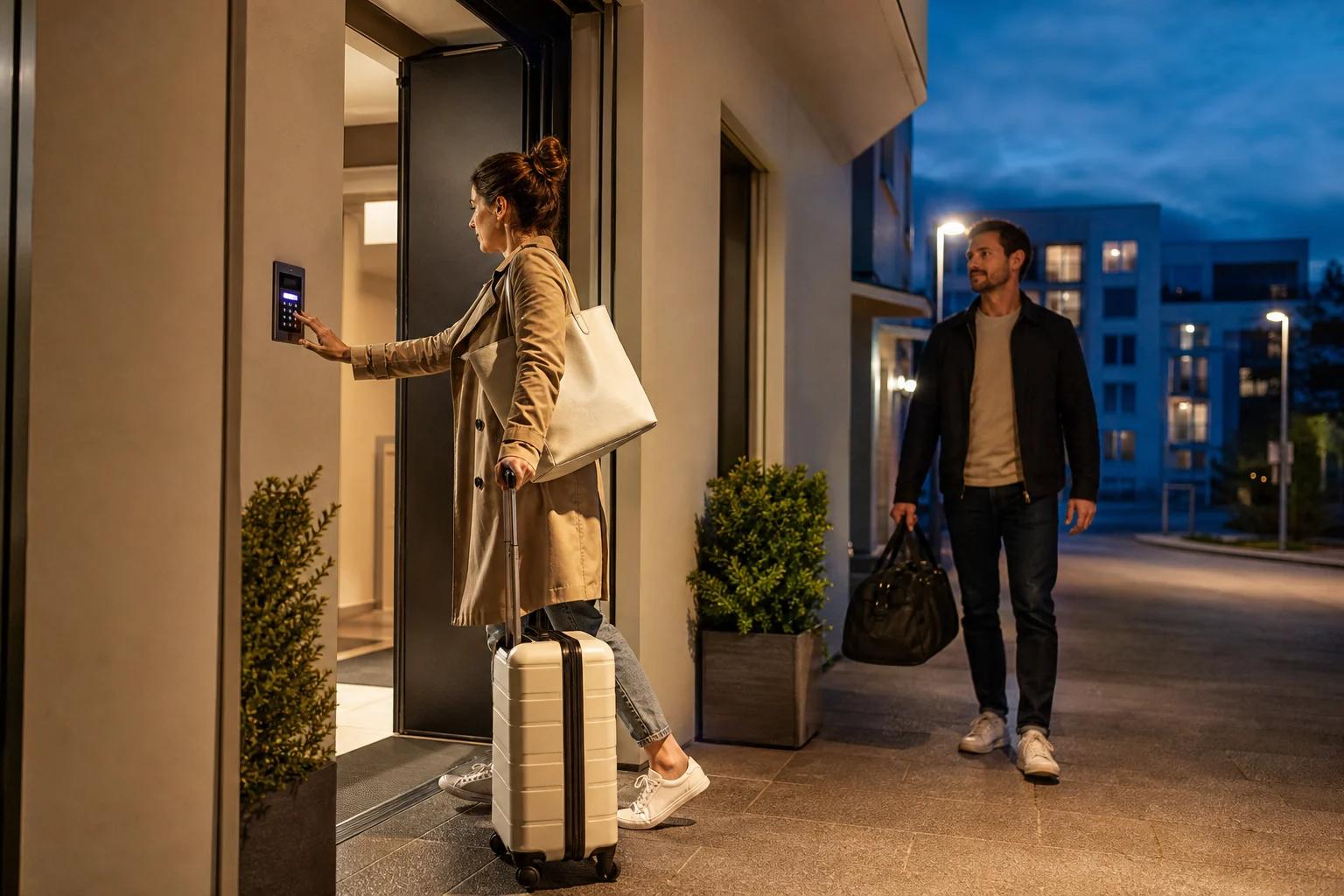
What should be clearly arranged before arrival?
Anyone planning temporary living with self-check-in and late arrival needs more than just an address and a time. What matters is that the entire process is described in advance in a way that you can still understand it if you only arrive after work, after a delay, or with little time on site.
Before departure, it should be confirmed in writing:
- how access works,
- who hands over the key or code,
- until when the regular contact is reachable,
- which number applies outside the usual hours,
- where parking or a short stop is possible,
- and what has already been arranged for the first night.
This is especially important for a self-check-in longstay, because arrival can often be delayed not just by minutes but by hours. In that case, it helps if the message does more than mention check-in and instead explains the sequence: arrive, use access, drop off luggage, get the first orientation, and only then sort out the rest. The less you have to improvise on site, the calmer the start will be.
If multiple people are arriving, the confirmation should also say whether everyone uses the same access or whether individual steps are handled separately. That may sound trivial, but it prevents follow-up questions exactly when no one wants to spend a long time calling or searching for messages.
How do you secure access when no one is on site anymore?
In a late arrival apartment situation, the most important point is not the time but the reliability of access. A digital access solution only works properly if it is clear when you receive the information, where you enter it, and what the next option is if something does not work.
A sensible preparation looks like this:
- Save access data immediately after receiving it.
- Store the address and house number offline as well.
- Read the description of the entrance, doorbell, or access point in full.
- Check whether you only need a smartphone or whether additional steps are required.
- Note an alternative route in case the code or key is not available.
Especially with contactless check-in, this alternative route is the real safety factor. If the code does not work, it should already be clear whether another contact is responsible, whether a key box serves as an alternative, or whether there is another described access point. What matters is not that problems never occur, but that you do not have to start looking for a solution only once you are standing outside.
Which support information is crucial after office hours?

Late arrival often also means that the person who organized things during the day is no longer reachable. That is why you should not only have a general contact in advance, but also clarify responsibilities after office hours.
It helps to divide this into three levels:
- Regular contact for questions before arrival,
- Contact for the day of arrival in case of minor delays,
- Emergency contact for problems with access or handover.
It is also important that you know which channel support is available through. Is a message enough, is a call intended, or is there a fixed process for late questions? If you know this in advance, you avoid misunderstandings at the entrance and can respond more specifically even if you are delayed.
If your arrival is delayed, clear responsibility is especially valuable. Then you do not first have to figure out who should be informed, but can go directly to the contact intended for that purpose. This is particularly helpful for business trips or project starts, when time windows are tight and arrival cannot be planned completely.
How do several people organize themselves best?
With several travelers, the main problem is rarely access itself, but scattered information. Anyone planning a group, a team, or staggered arrival times should deliberately simplify coordination.
This sequence has proven effective:
- one person collects all arrival information,
- a clear meeting point is defined in advance,
- access is shared only with the people who really need it,
- luggage and the key or code topic are considered separately,
- and whoever arrives earlier checks the described access first.
Especially when someone is already on site and others are still on the way, a short status update in the shared chat helps: arrived, access worked, meeting point confirmed. This avoids duplicate work and unnecessary follow-up questions. This is especially useful for teams, because not everyone reads the same information at the same time.
What should be ready for the first night and the next morning?

The first night goes smoothly if you do not have to gather the most important things only after moving in. This applies not only to bed and bathroom, but above all to what you need directly after arrival and the next morning.
So keep the following within easy reach:
- booking documents or confirmation,
- access data and emergency contact,
- ID or other necessary documents,
- charger and power bank,
- as well as the notes on the route, entrance, and room access.
If you are traveling with luggage, it is also worth taking a quick look at the route from the entrance to the accommodation: Are there stairs, an elevator, or a longer corridor? Such details often determine whether you have to look around again with several bags or can arrive directly. The question of where to find light switches, heating, or Wi-Fi information should also not remain open until late in the evening.
How myroom24 helps with the selection
myroom24 is an online booking platform on which commercial accommodation providers offer accommodations for private and business users. For this type of arrival, what matters most is that you specify the destination and length of stay and can filter available long-stay accommodations by criteria such as price, location, and amenities.
That is useful if you are not just looking for accommodation, but also want to think through arrival at the same time: Is the location suitable for a late arrival? Do the amenities fit your process? And is the accommodation described in a way that lets you assess the most important steps before booking?
Important for planning: the long-stay options offered via myroom24 cover 28 to 179 nights. If an accommodation is marked as instant booking, it can be booked without prior approval from the host, subject to availability. The offer also includes rooms, apartments, and houses in commercial accommodation facilities such as hotels, hostels, serviced apartments, and holiday apartments.
For the selection, this does not mean that one type of accommodation is generally better or worse. What matters instead is whether the combination of location, amenities, and booking process fits your arrival situation. That is exactly where myroom24 can help, because you can tailor the search to the actual need from the very beginning.
Which final check is worth doing on the day of arrival?
Shortly before departure, a brief but targeted check is often enough. The goal is not more organization, but less uncertainty in the final stretch.
Before leaving, check once more:
- Is the phone charged and are the access data available offline?
- Do you have the exact arrival address including the entrance point?
- Do you know where you can stop briefly or park if arriving later?
- Is it clear how to get from the parking area or arrival point to the access point?
- Have you saved the emergency contact separately?
Anyone traveling with luggage should also define the order of the last steps: arrive first, then secure the luggage, then use the access. This small sequence may seem inconspicuous, but it saves unnecessary rush exactly in the late hour. If you already know before setting off what comes after the door, the first evening stays manageable.
Conclusion: Clear arrival information matters more than spontaneous follow-up questions
With a late arrival, it is not the rush on site that matters, but the quality of preparation. Access, backup solution, support channel, parking, and the process for the first night should be described so clearly that you can start without follow-up questions even after office hours. If you want to compare suitable options, visit the myroom24 accommodation and check arrival, location, and amenities together with the length of stay.
Frequently asked questions
What information should I have in writing before a late arrival?
The access method, responsibility for the key or code, the support channel outside regular hours, parking notes, and the first steps after arrival should all be clearly documented.
What is important if the digital access does not work immediately?
Save the intended emergency contact and backup solution in advance so you can use them quickly even without searching online.
How do I coordinate a late arrival with several people?
One person should collect the information, there should be a fixed meeting point, and it should be clear who checks and shares the access first.
Which last piece of information is often missing when arriving late?
Often the exact route from the parking area or arrival point to the door is missing. Especially with luggage, this saves time and follow-up questions later.