Compare a Serviced Apartment with Coworking and Community Space: When It Pays Off for Longstay
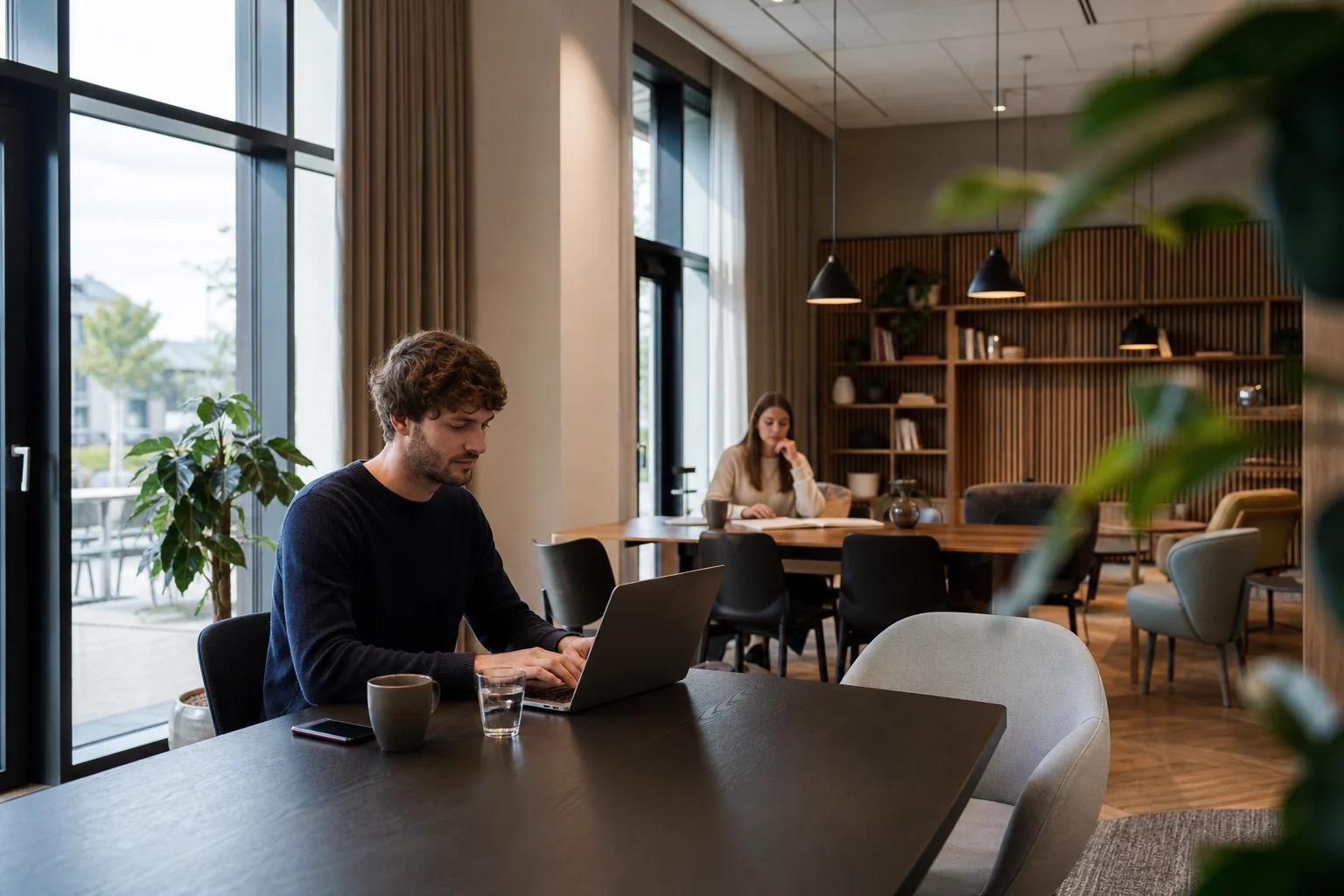
What is this comparison really about?
When you compare a serviced apartment with coworking and a community space, looking at the accommodation type alone is not enough. For longer stays, what matters most is whether the environment fits your actual daily routine: working in a focused way, taking short breaks, making calls, eating, switching off, and starting again the next day. That is exactly what you should measure the offers against, not against catchphrases that sound good in the description.
The main difference is usually not between “good” and “bad,” but between different usage profiles. An apartment with a community area is interesting if you want to deliberately switch between privacy and exchange during your stay. A simple room can be just as sensible if you only sit at your laptop occasionally and mainly need a clear, quiet place to sleep and work. The decisive factor is therefore not the marketing formula, but how much structure your day on site really requires.
Which usage situation needs which room layout?

To keep the comparison from staying abstract, it helps to assign it according to your work rhythm. This makes it easier to see whether the added value of a coworking or community area is practical for you or just looks appealing.
If you have long focus phases every day
Then you should check whether there is a usable workspace in the apartment itself or whether the community area is actually intended as a work surface. Focused work requires more than a table: you need space for a laptop, documents, and power supply, as well as a place where you do not have to keep rearranging things. If you work for several hours at a time, a room with a clear function becomes more important than a cosy look.
If you regularly have calls or meetings
Then the key question is not whether an area looks open and friendly, but whether you can speak there without disturbance. A lounge area longstay may suit short interruptions, emails, or informal conversations. But if you have frequent video or phone appointments, there needs to be a clear separation between the living area and the work area. The more often you speak live with others, the more important peace becomes over décor.
If you only work occasionally
If you only complete individual tasks on site, you often do not need a large coworking setup. In that case, a simple room with a functional workspace may be enough, as long as sleeping and working do not get in each other’s way. In this situation, it is usually more important that you can use the space without friction than that additional community areas are available. For short work phases, clarity matters, not size.
How do you recognize a usable community area?
Photos often convey atmosphere, but not necessarily everyday practicality. That is why it is worth looking at the description itself. A truly usable community area is not just nicely furnished, but described in a way that makes its function understandable.
When comparing, pay attention to these signals:
- The room is described as a workplace, coworking area, or a mixed form, not just as a “lounge.”
- It is clear whether longer sitting with a laptop, documents, and drinks is possible.
- The description shows whether the area is used more quietly or more actively.
- There are indications of zones where working and staying do not constantly blend together.
- The images show more than a decorative seating group, namely a space with genuine usability.
Warning signs are just as important. If a listing only shows atmosphere but gives no clear statement about use, you should take a closer look. This is especially true when the term “coworking” appears only as a keyword without explaining workspaces, quiet, or concrete usability. A photo series of sofas and plants alone is also no proof that you can work there in concentration for several hours.
What role do room feel and acoustics play?
A larger room is not automatically better. For longer stays, it is often more decisive how conversations, footsteps, and other noises affect everyday life. If you make frequent calls, a quiet environment matters more than a particularly open area. If, on the other hand, you only read, plan, or answer emails in between, a simpler community area can also be enough. So the question is not: “How modern does the room look?” but: “How usable is it over several weeks?”.
How do you check Wi-Fi, quiet, and digital processes before booking?
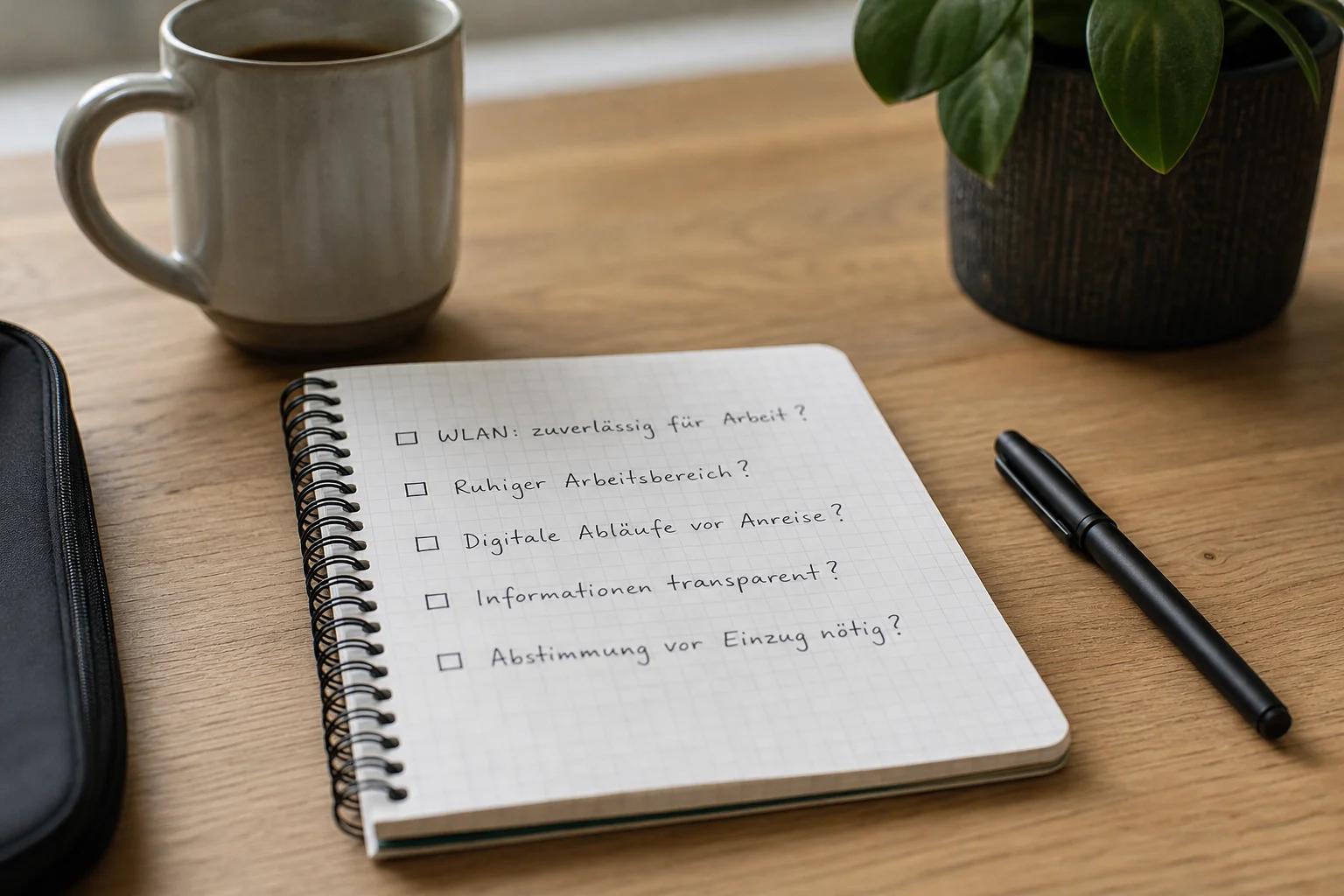
If you work for a longer period, you should not only look at whether Wi-Fi is available, but at the reliability of the entire work environment. What matters is whether the accommodation is described in a way that makes digital work realistically planable.
These check questions help:
- Is it clear whether the Wi-Fi is intended for your day-to-day work or only mentioned in general?
- Can you see whether there is an area in the accommodation where you can work online without disturbance?
- Are check-in, communication, or necessary steps before arrival described transparently?
- Do you have to gather a lot of information yourself in advance, or are the processes explained clearly?
- Is it clear how much coordination is needed before moving in?
Transparency matters especially for digital processes. A clear process is not only convenient, it also helps you plan the stay properly. If you are staying for several weeks, you want to know before arrival which information is needed, which steps are still open, and whether the on-site use fits your work rhythm. The less uncertainty remains, the easier it is to organize the stay in a structured way.
How myroom24 helps with this topic
myroom24 is an online booking platform on which commercial accommodation providers offer accommodations for private and business users. This is useful for this comparison because you can specify your destination and length of stay and filter available longstay accommodations by criteria such as price, location, and amenities.
For longstay, it is also important: the long-term stays offered via myroom24 cover 28 to 179 nights. This allows you to tailor the search to longer stays in which the work area, privacy, and organizational processes should be considered together.
The offering includes rooms, apartments, and houses in commercial accommodation properties such as hotels, hostels, serviced apartments, and holiday apartments. If an accommodation is marked as instant booking, it can be booked without prior approval from the host, subject to availability. This is helpful if you have already finalized your plans and want to secure a suitable offer directly.
Which decision is ultimately the most useful?
If several offers seem similar, it does not help to simply collect more features. It is better to make the decision in a fixed order.
- Do I really need a work area on site that I can use for several hours?
- Are calls, quiet conversations, or video appointments a central part of my everyday life?
- Do I need to clearly separate working and living?
- Are the details about the room, quiet, and process clear enough that I can plan the stay without guessing?
An example: anyone who has three to four fixed workdays per week with conversations should weigh quiet and separation more heavily than a pleasant lounge look. If, on the other hand, you only write emails in the evening and are on the move a lot during the day, you need more of a simple, reliable setup than a large community area. That is exactly why the comparison is worthwhile: not every modern description delivers the same benefit in everyday life.
If you want to start selecting directly, take a look at myroom24 accommodations and narrow the search by length of stay, location, and amenities.
Frequently asked questions
What should I do if a listing only mentions “coworking” but gives no details?
Ask whether there are real workspaces, whether quiet work is possible, and whether the area is also intended for longer use.
How can I tell that the community area is not enough for calls?
If no quieter zone is visible and the description points more to staying or meeting people than to focused work.
What is the most important information before booking when offers are unclear?
Whether you can work and make calls without disturbance during your typical working hours.
What should I check particularly critically when there are only a few photos?
Whether the description really explains the use of the work or community area, or only shows a pleasant atmosphere.