Temporary Housing for Digital Booking, Contactless Check-in, and Late Arrival: What Should Be Clarified Before Move-In
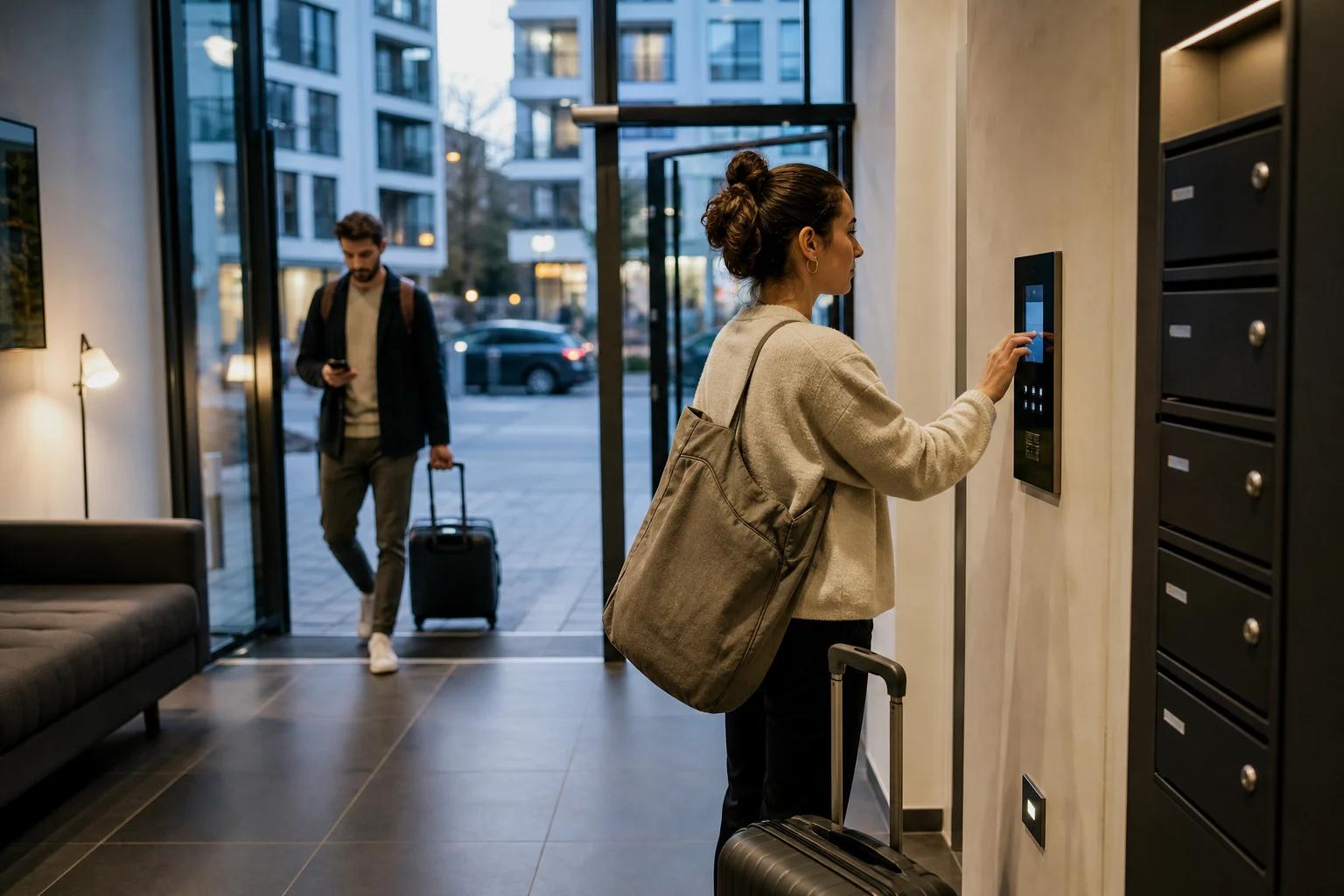
If you are looking for temporary housing for digital booking, contactless check-in, and late arrival, you should review the arrival process just as carefully as the accommodation itself. Especially for a stay of several weeks or months, it is not only the furnishings that matter, but also whether access, documents, and contact persons are clearly arranged in advance. If you want to keep the first evening predictable, you therefore need clear answers to very specific questions: How do you get into the building, which details are available before arrival, and what happens if your arrival is delayed?
Which documents should be fully available before arrival?
For a smooth start, it is not the number of documents that matters, but their completeness. Before departure, it makes sense to gather all the information that will later be needed for identification, access, and follow-up questions. In practice, this mainly includes the booking confirmation, the accommodation address, the name under which the booking was made, and the move-in instructions.
It is also helpful to have the most important details available offline. If you arrive late, you may not have reliable reception or may not be able to search through emails right away. A saved confirmation or a screenshot of the key details then shortens the way at the arrival location.
Before you leave, check these points in particular:
- Is the name in the booking spelled completely and correctly?
- Do the stay period and address match the travel plan?
- Are access instructions stored in a way that is available without internet access?
- Is there a phone number or another contact channel for questions?
- Is it clear whether approval or confirmation is still needed before move-in?
If there is any uncertainty about one of these points, it should be clarified before departure. This is especially true if move-in takes place in the evening or after a long day of travel.
How do the access types differ with digital booking?
Not every contactless access works the same way. For planning, it is important whether entry is organized via a code, an app, a key safe, or another release method. Each option has different requirements for preparation and punctuality.
With code access, the key issue is when the code is sent and whether it remains available even without mobile reception. With app or link solutions, it is important that the device is charged and the required data is ready in time. A key safe, on the other hand, needs a clear description of its location so you do not have to search for it at the front door. If access is handed over in person, arrival times must be coordinated particularly carefully.
For this reason, it is not the technology itself that matters, but the clarity of the process. Anyone using access without a reception desk should know in advance:
- What is the first step after arrival?
- Which information must be entered or shown first on site?
- Is there an order that must be followed exactly?
- What is the alternative if the first access route does not work?
The clearer these points are documented, the lower the risk of delays in the first minutes after arrival.
What needs to be agreed in advance for late arrival?
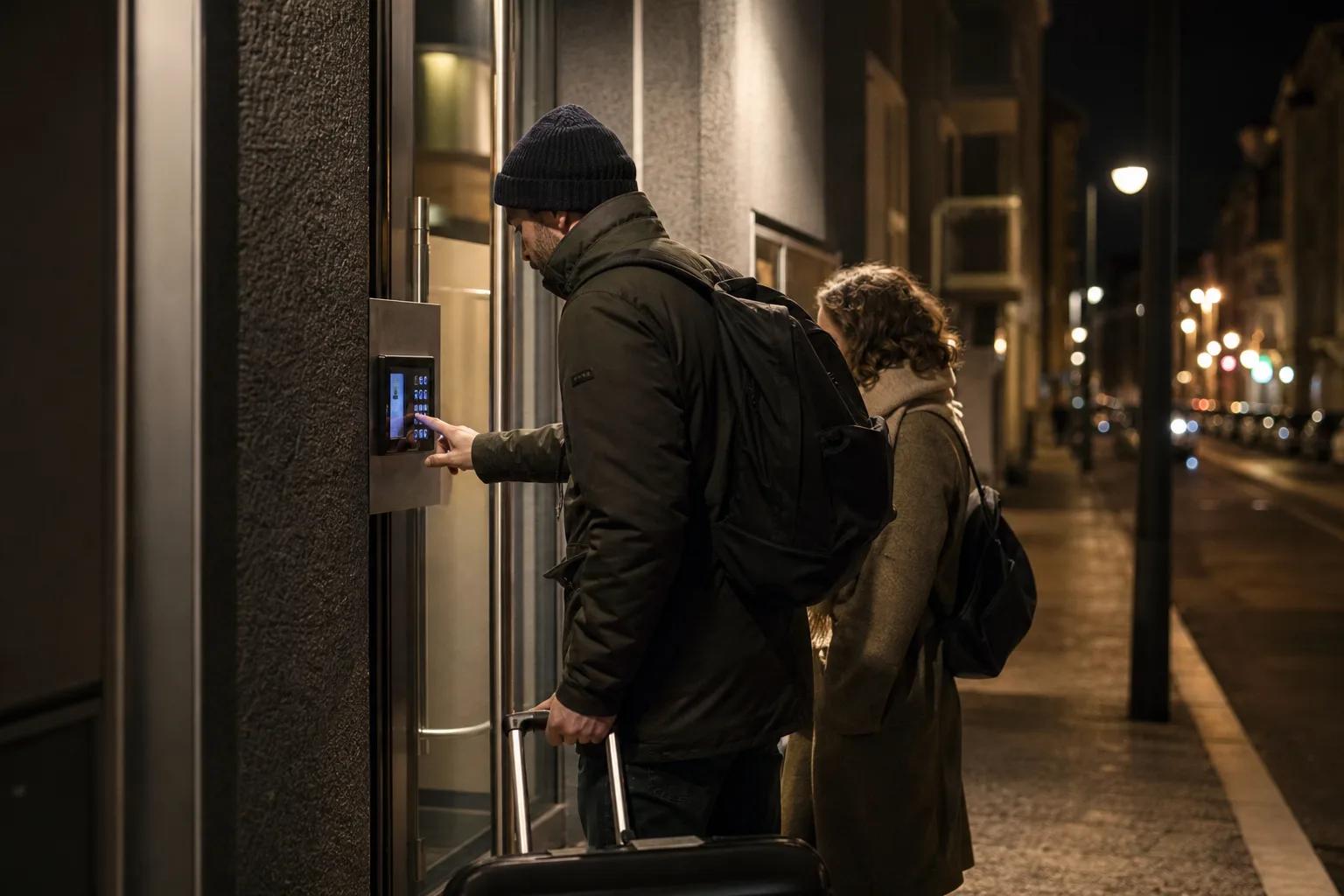
Late arrival is mainly unproblematic when it is not improvised. What matters is that the expected arrival time fits the access rules. Anyone arriving later than planned should not have to find out at the door whether entry is still possible.
It makes sense to coordinate the arrival with the accommodation before departure. This involves three specific questions: Until what time is access intended? How should a delay be reported? And who confirms that the new time has been received?
A helpful message before arrival usually contains only what is necessary: the booking name, the expected new arrival time, and the note that access should please be taken into account accordingly. This keeps communication short and clear.
Especially for late arrivals, it is also worth taking a look at the surroundings: Are the building, entrance, and house number easy to identify during the day, or is a precise route description needed? At night, a clear address is often more important than additional information about the furnishings.
Which service hours are important for the first hours after move-in?
For the start, it is not only important that support exists at all, but also when it can be reached. The first hours after move-in are the phase in which small uncertainties are most disruptive: access does not work as expected, information is missing, or a door can only be opened with precise instructions. That is why it should be understandable before booking how help can be requested.
When looking at service hours, pay attention to three levels:
- Time window for questions: Are there recognizable times when replies can be expected?
- Responsibility: Is there a fixed contact person or only a general contact channel?
- Fallback route: What happens if the first contact channel does not respond immediately?
These questions are especially important when arrival is in the evening or outside normal office hours. In that case, it is not enough for an email address to be listed somewhere. The path to a solution must be specific enough to work under time pressure as well.
How does myroom24 help with planning a predictable start?
myroom24 is an online booking platform on which commercial accommodation providers offer accommodation for private and business users. For guests who want to organize their arrival process in advance, it is first relevant that the destination and length of stay can be specified and that available long-stay accommodations can be filtered by criteria such as price, location, and furnishings.
This is useful when searching for clear arrival conditions because the selection can be structured not only by location but also by the planned time frame. On myroom24, long-term stays from 28 to 179 nights are offered. In addition, accommodations marked as instant booking can be booked without prior approval from the host when available.
This allows the preselection to be compared with your own travel plan: first set the period, then check the location, and then compare the accommodation details with the planned arrival window. myroom24 does not replace coordination on site, but it can help focus the search on offers whose framework conditions already appear transparent before booking.
Checklist for arrival, key handover, support, and the first night
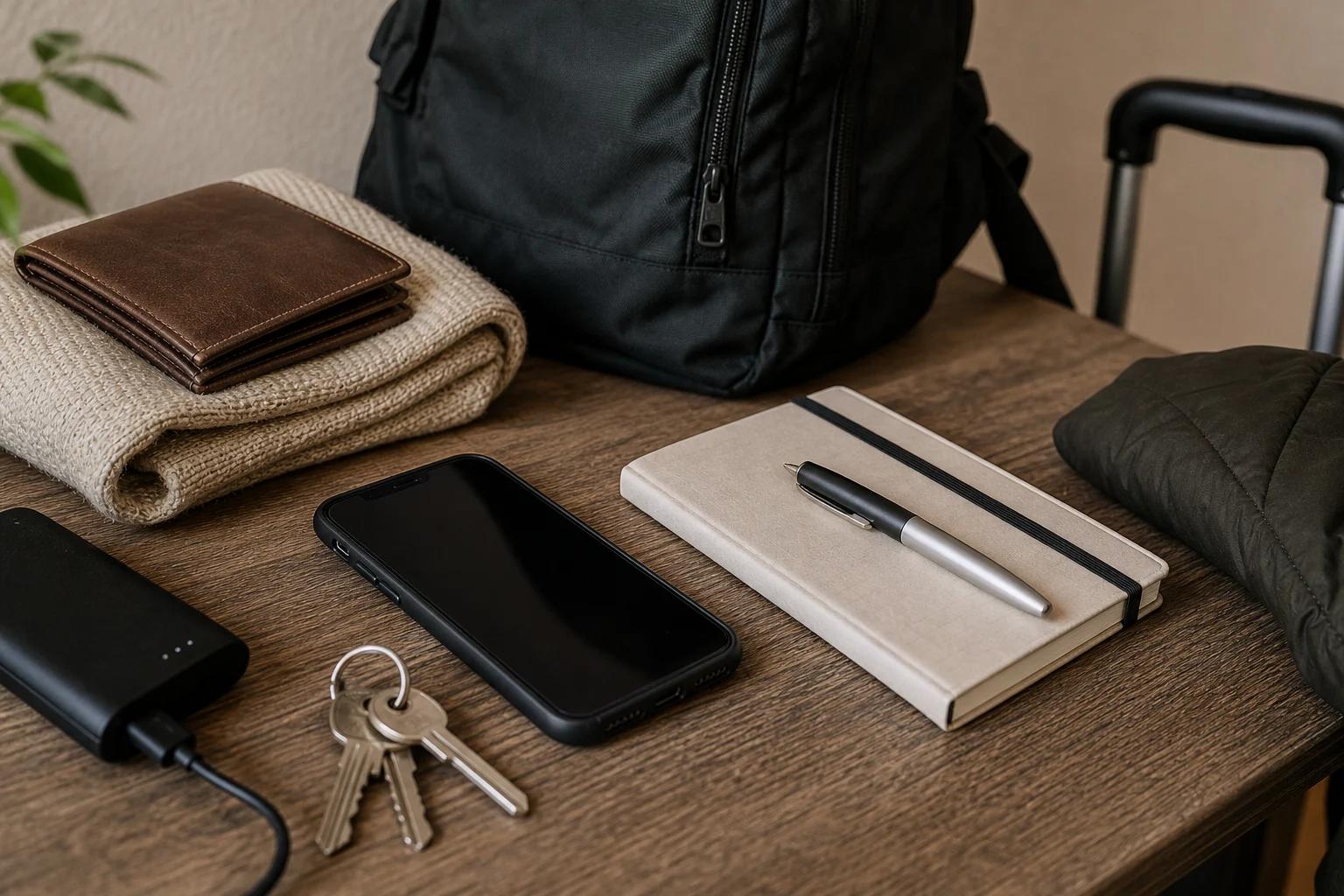
The best preparation is a short, practical sequence. If you go through the first steps once, you avoid later follow-up questions at the door.
Before departure
- Save booking details, address, and contact channel offline
- Check whether all access information is complete
- Check the battery level of your phone and, if used, any app
- Match the planned arrival time with the intended access
Upon arrival
- Check the entrance area, house number, and access point carefully
- Follow the agreed access method in the correct order
- Do not let additional signs or alternative entrances distract you if a clear route was specified
- If anything is unclear, use the agreed contact channel immediately
If something does not work
- Calmly check the last confirmed details
- Have the booking number and name ready
- Use the contact channel designated for questions
- Report only the missing information instead of describing the entire process again
For the first night
- Check whether all instructions for the bed, towels, or other provided items are already available
- Make sure Wi-Fi, lighting, heating, or other basic functions are explained if they are relevant for the start
- Place luggage so that it does not block access
- Only then plan the next steps for the following day
This sequence is intentionally brief. It is especially helpful when arrival is late and there is no time for lengthy follow-up questions after the journey.
When is the process truly reliable before booking?
A process is reliable when access, service window, and arrival time match. If one of these elements is missing, unnecessary pressure often arises at the door. So if you only remember one question before booking, let it be this: Is the start described in a way that I can still handle it late in the evening without any guesswork?
If you want to narrow down your selection further, start here: myroom24 accommodation.
Frequently asked questions
Which information should I have in writing and ready before a late arrival?
The most important items are the booking confirmation, address, booking name, access instructions, and a reachable contact channel. This allows you to react quickly if there are delays.
How can I tell whether access without a reception desk is described well enough?
The process should be explained in a clear sequence: when access is released, how entry works, and what the next step is if there is a problem.
What should I do if my arrival is delayed while I am on the way?
Report the new time early via the agreed contact channel and state the booking name as well as the updated arrival time. This keeps access predictable.
Which checkpoints are especially important for a stay of 28 to 179 nights?
What matters are clear access, a comprehensible support route, and accommodation whose location, furnishings, and length of stay can be reviewed before booking.