Temporary Housing for Students on a Practical Semester with Lab or Clinic Proximity: What Matters for 28+ Nights
What Is Really at Stake During a Practical Semester
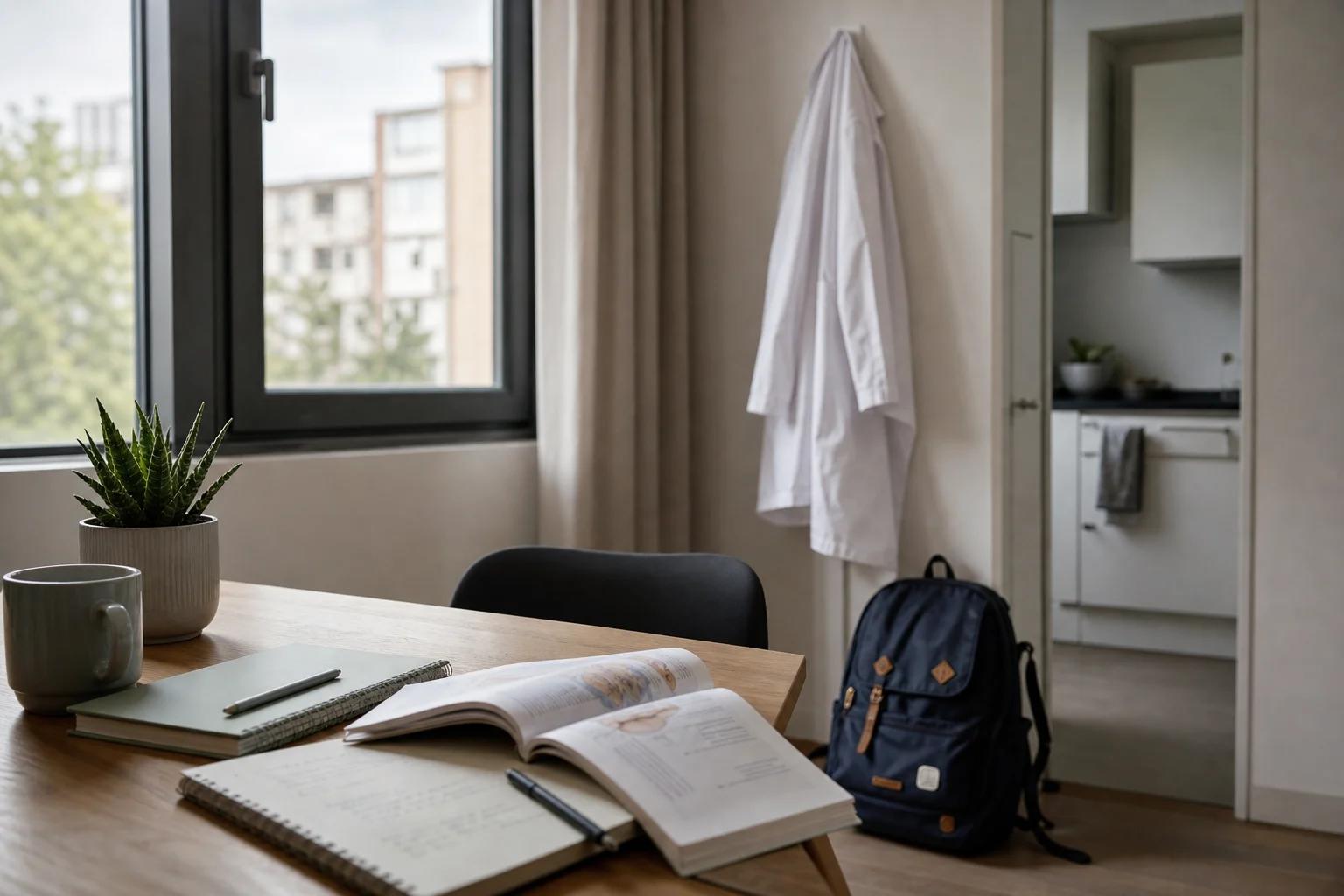
When it comes to temporary housing for students on a practical semester with lab or clinic proximity, it is not just about having a place to sleep for a few weeks. The accommodation has to fit a daily routine that often switches between fixed shifts, spontaneous study sessions, meals in between, and doing laundry. That is exactly why it is worth starting the search not with the question “How close is the accommodation?” but with “Which daily routines does it need to support?”
Anyone looking for practical semester accommodation usually needs a solution that works in the morning, does not add extra strain after long days, and offers enough structure for several weeks or months. The practical value therefore does not come from a single feature, but from the combination of distance, quiet, amenities, and the planned period of stay.
Which Question Your Shift Schedule Should Answer First
The shift schedule often decides which accommodation makes sense before any listing does. It determines whether you mainly need to secure early starts, long days, or changing hours.
If You Need to Be in the Lab or Clinic Early
Then you should first check how reliable the route is for typical start times. A quick look at the map is not enough. What matters is whether you can still arrive on time and without complicated transfers even when you are not leaving at an ideal time of day.
An accommodation is only practical if the morning does not begin with stress before the actual work even starts. That also includes whether you can still make a coffee, pack your materials, or take care of small things in peace before you leave, without the schedule immediately falling apart.
If Work Times and Study Times Overlap
In practice phases with changing hours, the accommodation becomes the space in between several tasks. In that case, it is less important whether the location looks “central” on the map, and more important whether you can reliably get to study blocks, writing tasks, or rest after a full day.
An accommodation is useful in such phases when it does not constantly tie your fixed appointments to extra travel. Anyone who has to organize new departure times, return routes, or transfers every day quickly loses time that was actually meant for sleep, preparation, or follow-up work.
If Shifts or Assignments Can Change at Short Notice
Then you need a plan B above all. So do not only check the ideal case, but also whether the route still works if you have to leave earlier or come back later than expected. This is exactly where it becomes clear whether a location only works in theory or is truly reliable in everyday life.
How to Assess the Location Beyond Pure Distance

For clinic proximity students, distance is only one part of the decision. Much more important is what the location triggers in everyday use: extra walking, noise, detours, or unnecessary rush.
When comparing options, pay attention to concrete everyday questions:
- How easy is the return journey after a long day when you no longer want to plan carefully?
- Are there shopping options so you do not have to cross the city for every small thing?
- Can you get around at off-peak times without the way home becoming a complicated extra task?
- Is the area geared more toward quiet, or should you expect a lot of traffic, visitor activity, or changing noise levels?
- Does the location still work if you need to study, sleep, or start early again the next morning right after your shift?
These questions help you turn an anonymous address into a real everyday situation. That is especially useful for medical or research-related assignments, because “close” and “practical” do not always mean the same thing.
Which Amenities Really Matter Over Weeks or Months
Anyone looking for accommodation for an internship or a similar stay for several weeks should not treat amenities as a comfort issue, but as part of daily organization. The longer the stay, the more important the things become that repeat and otherwise cost time every day.
Self-Catering Without Constant Improvisation
If you have irregular hours, the ability to cook is often more important than fixed meal times. Accommodation with a sensibly usable cooking option helps you adapt meals to your routine. This is especially relevant if you do not want to have to look for a suitable meal solution after shifts.
A Place to Work, Read, and Sort Things Out
During practical phases, it is not only the workday itself that matters, but also the follow-up: sorting documents, writing reports, reading specialist literature, or planning the next assignment. That requires more than an improvised corner. A clear work surface makes it easier to separate sleeping from working.
Storage Space and Order for Several Weeks
If you are staying for several weeks or months, storage space quickly becomes a practical issue. Suitcases on the floor, clothes on chairs, and documents on the bed are not a good long-term solution. An accommodation therefore becomes more pleasant when it offers enough space for luggage, clothes, and everyday items during longer stays.
Laundry as Part of the Weekly Rhythm
Especially with changing shifts, laundry management is not a side issue. If washing and drying are inconvenient, another free evening can quickly be lost to it. An accommodation is therefore especially helpful when this process does not have to be organized from scratch every time.
Quiet for Switching Off
After an intense day, it is not the size but the usability that matters. An accommodation can look very attractive: if it does not offer a clear quiet area, resting becomes difficult. For longer practical phases, it is therefore important whether you can keep sleeping, studying, and everyday life reasonably separate.
How to Compare Types of Accommodation Fairly

For a longer stay, it is not the category itself that matters, but the question of how well it reflects your routine. Hotels, serviced apartments, apartment hotels, holiday apartments, or other commercial accommodation can all be suitable if the amenities, services, and location are right.
A useful comparison therefore looks at concrete differences:
- Hotels: Check whether the room, quiet, and daily routine fit your study and shift rhythm.
- Serviced apartments: Here it is important how much independence you need and which services you actually want to use.
- Apartment hotels: These can be useful if you are looking for a combination of a residential feel and service-oriented routines.
- Holiday apartments or apartments: They are suitable if you want to organize things as independently as possible and need a home-like form of accommodation.
- Rooms in commercial properties: Pay special attention here to privacy, routes within the building, and whether the living situation remains pleasant even during longer stays.
Important: An apartment is not automatically better, and a hotel is not automatically the worse choice. What matters is whether the specific accommodation sensibly supports everyday life with lab, clinic, or university appointments.
How myroom24 Helps With This Search
myroom24 is an online booking platform on which commercial accommodation providers offer accommodation for private and business users. That is helpful if you are not just looking for an address, but specifically for a period of time and suitable conditions.
For your practical semester, it is particularly relevant that myroom24 covers long stays of 28 to 179 nights. This allows you to narrow the search to the period that fits your block or research phase.
In addition, on myroom24 you can specify your destination and length of stay and filter available accommodation by criteria such as price, location, and amenities. This makes comparison easier when you want to check several options side by side. Accommodation marked as instant booking can be booked without prior approval from the host, subject to availability.
Which Booking Steps Should Still Be Open Before You Confirm
Before you commit, you should compare the accommodation with your real weekly routine. The most important questions then are no longer general, but specific:
- Does the period fit your practical block in full?
- Does the route work at the times when you will actually be on the move?
- Is there an easy way to cook, shower, sleep, and start fresh the next day after a shift or lab time?
- Is the location chosen so that you do not have to plan extra trips for every small errand?
- Will the accommodation remain practical even when your week includes several changing appointments?
If you check these points one by one, a general listing becomes a reliable decision. For your concrete search, you can go to myroom24 accommodation and compare period, location, and amenities with your practical semester.
Frequently asked questions
What should I check first if my shifts start early?
Check whether the route is really reliable for typical start times and whether you still have enough buffer in the morning for preparation and travel.
How do I assess a location if I need quiet after long days?
Pay attention to the surroundings, the return journey late in the day, and whether you can unwind directly after your shift without extra travel.
Which amenities are especially important for several weeks during a practical semester?
Useful features include a cooking option, a proper work surface, storage space, a manageable laundry routine, and a clear quiet area.
How can I compare types of accommodation fairly without focusing only on the name?
Compare the concrete amenities, services, location, and the everyday routine that the accommodation actually makes possible for clinic, lab, or university appointments.
How do I know whether the period fits my practical semester?
The planned stay should fall entirely within the range of 28 to 179 nights and cover the full practical block.