Temporary housing for shift workers with changing rest periods
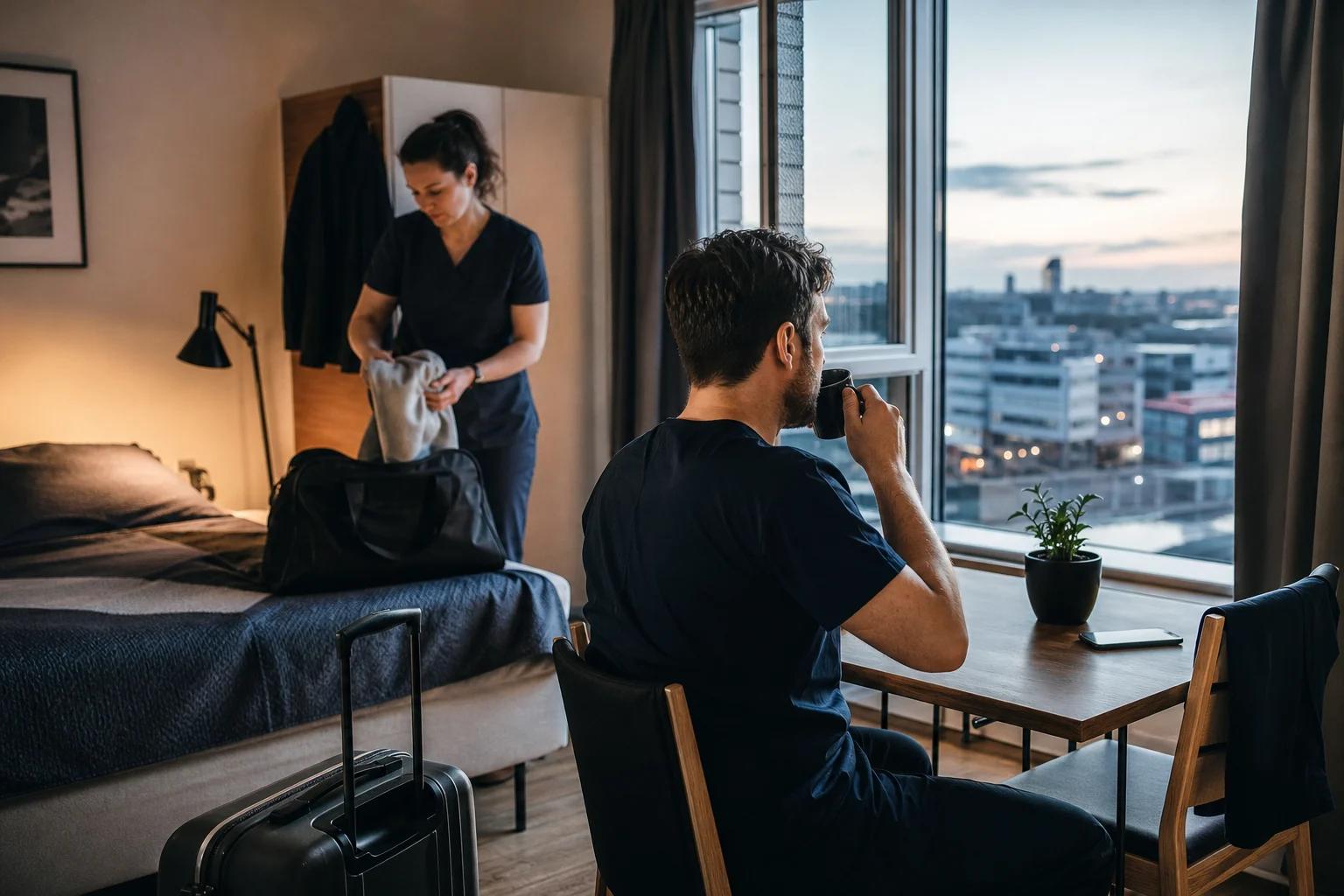
Which accommodation is suitable for changing rest periods?
Anyone looking for temporary housing for shift workers with changing rest periods needs more than just a furnished address. What matters is whether the accommodation fits changing sleeping and working times: early starts, late returns, daytime sleep after night shifts, and days off that do not fit into a fixed office routine.
For this situation, it is worth looking at the accommodation differently than for a classic city break or a purely short-term interim solution. The key question is: Can everyday life be reconciled with the shift schedule without creating new friction every week?
It helps to assess the accommodation not just as a room, but as a work environment away from the workplace. A good choice is often one where travel, rest, self-catering, and accessibility align. The clearer these points are in advance, the less you will need to improvise later.
The type of accommodation also matters: for longer stays, depending on your needs, rooms, apartments, and houses in commercial accommodation facilities may be suitable, such as hotels, hostels, serviced apartments, or holiday apartments. Not every type meets the same requirements, but all can be useful if location, amenities, and access match your shift pattern.
Location: Which routes work at different times of day?
For shift work, the best location is not automatically the best-known or most central address. What matters more is whether you can reliably make your commute at the actual times you travel. A short distance is of little use if the connection becomes impractical at the start or end of a shift.
Therefore, check not only the distance, but also accessibility in your real situation:
- Is there a public transport connection at the times you leave or return?
- Is the route still easy to plan in the early morning or late evening?
- How many transfers are needed if you are tired after a shift?
- Is walking realistic even in the dark or in bad weather?
For people with changing shifts, it is often more sensible to choose a reliable connection over a "nice" location. An accommodation on an uncomplicated route can be far more valuable in everyday life than an address that seems close on paper but is awkward in practice.
How can you tell whether real rest is possible during the day?

Anyone who has to sleep after a night shift needs more than a bed; they need an environment that allows rest. The most important question is therefore: Which sources of disturbance could interrupt sleep?
Pay attention to clues about the surroundings and the position of the room in the building. Accommodation on a busy street, in an entertainment district, or at a heavily used transport hub can place different demands on you than a quieter environment. In addition, the room’s location matters: courtyard-facing, street-facing, proximity to the elevator or corridor can make a difference in daily life.
It is helpful to ask specific questions in advance:
- Is the room more toward the quiet side or the street side?
- Are there known sources of noise in the building, such as public traffic or frequent arrivals and departures?
- How is the building organized when sleeping during the day?
- Are there rules or processes that reduce disturbances during rest periods?
Especially with changing rest periods, it is not about absolute silence, but about reliable conditions. The more precisely you know the room’s location and the typical noise level, the better you can judge whether the accommodation suits early, late, or night shifts.
Access and arrival: What is needed for late returns or changing working hours?
Shift work often makes arrival times less predictable than classic office hours. That is why access to the accommodation should be simple enough that you are not dependent on a narrow time window.
Before booking, you should clarify:
- How exactly does check-in work?
- Is there a clear arrangement for late arrivals?
- Is self-access possible or is a personal handover needed?
- Are codes, keys, or contacts organized in a way that fits your shift end?
The fewer steps the arrival process has, the easier it is to end a long working day. This is especially important if a shift changes at short notice or if you only arrive at unusual times after a night shift. A clear, previously known procedure matters more here than spontaneous arrangements at the last minute.
Which amenities make everyday life in shift work practical?
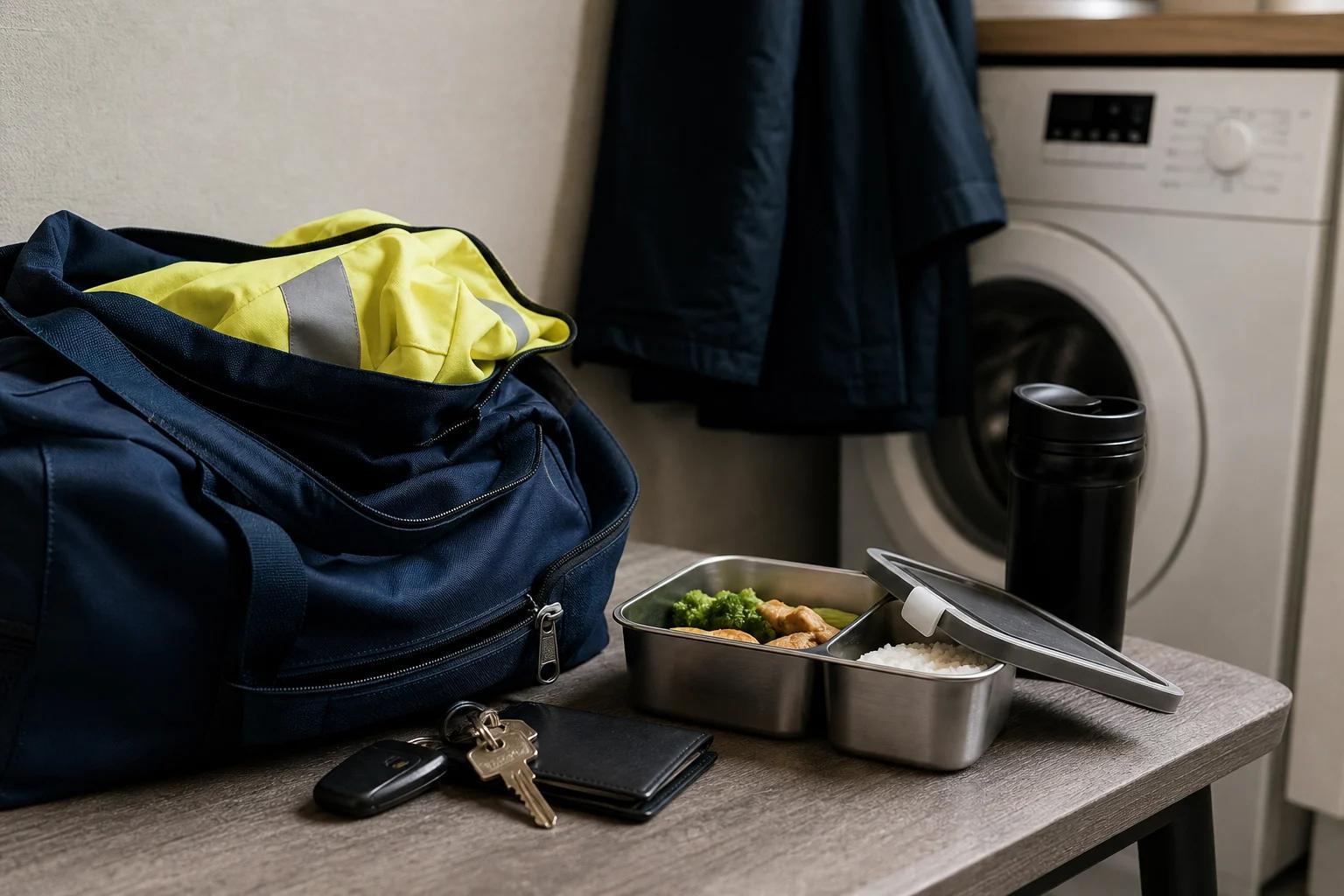
For changing rest periods, the small everyday functions are often more important than decorative extras. What matters is whether you can remain independent enough in the accommodation to organize food, laundry, and short work phases yourself.
Pay attention to these points:
- Kitchen or cooking option: Can you prepare meals independently of fixed meal times?
- Laundry option: Can work clothes be cared for regularly without having to plan complicated routes?
- Workspace: Is there a place for a laptop, documents, or coordinating shifts?
- Storage space: Is there enough room for clothing, equipment, and personal belongings?
For shift work, not only the presence of this equipment matters, but also its practical usability. A kitchen only really helps if it is easy to use in everyday life. A workspace is only useful if it does not conflict with rest periods. And a laundry option is only helpful if it fits into the shift plan in terms of time and organization.
How myroom24 can help with the search for shift work
myroom24 is an online booking platform where commercial accommodation providers offer accommodation for private and business users. For shift workers, this is especially useful when the search process should be clearly structured: you enter your destination and length of stay and can filter available long-term accommodation by criteria such as price, location, and amenities.
This is particularly practical if you want to compare several options for the same assignment and do not want to check each offer individually. In the longstay segment, stays offered through myroom24 are intended for 28 to 179 nights. This exact range suits assignments where a clearly defined working period is planned, but no permanent housing solution is needed.
If an offer is marked as instant booking, it can be booked without prior approval from the host, subject to availability. This does not replace checking the content, but it can simplify the booking process if the accommodation suits your needs.
What companies should standardize for shift teams
If accommodation is being organized for several employees, a consistent review framework makes sense. Otherwise, offers are quickly judged by different standards, even though they are all supposed to fulfill the same task.
For companies, a short, fixed checklist has proven effective:
- Which shift models are common or frequently changing?
- At which times must arrival and return travel work?
- How important is the route to the place of work in relation to the room location?
- Which amenities are essential: kitchen, laundry option, workspace?
- What rest requirements apply to the accommodation?
- Should booking be more flexible or clearly organized in advance?
With such a standard, accommodations can be compared more effectively because appearance is not the only factor that counts. This is helpful when several people are housed in 24/7 operations and the business depends on reliable processes.
Which decision is ultimately reliable?
When choosing between several offers, do not compare everything at once; instead, always compare the same key questions in the same order: location, quiet, access, amenities, and public transport connection. This helps you identify more quickly which offer fits your actual shift schedule.
A good practical test is simple: imagine a typical week with early, late, and night shifts. Which accommodation still works when you have to sleep, arrive, and leave at different times? The better choice is usually not the most eye-catching one, but the one that supports your routine without requiring extra coordination.
If you want to review suitable options, start with the myroom24 accommodation and filter specifically by location, amenities, and the period that matches your shift pattern.
Frequently asked questions
How can I tell whether accommodation is suitable for daytime sleep after a night shift?
The decisive factors are the room’s location, expected noise sources in the building, and the surroundings. Ask in advance about the quieter side of the building and typical disturbances.
What should be clearly agreed before a late arrival?
Clarify the exact check-in process, key or code handover, and whether self-access is possible. This helps avoid delays after the shift ends.
How can companies compare accommodation for changing shifts in a consistent way?
With a fixed checklist for location, quiet, access, amenities, and connections. Then all offers are assessed using the same criteria.
What still needs to be checked in an instant booking for shift work?
Even with instant booking, you should still check whether arrival, room location, and amenities fit your shift schedule. The booking type does not replace the content check.
Which accommodation features are most important for rotating shifts?
The most important features are reliable routes at working times, a quiet sleeping environment, clear access, and amenities that let you organize food and laundry yourself.