Temporary housing for an extended family visit: how parents and grandparents can stay comfortably

When is temporary housing for an extended family visit a good idea?
As soon as parents, grandparents, or other relatives are staying not just for a few days, but for several weeks or even months, the question changes: is this still just about sleeping over, or does the accommodation need to support everyday life? This is exactly where temporary housing for an extended family visit becomes relevant.
For accommodation for visiting relatives, what matters most is whether shared routines are possible. That includes not only sleeping and arriving, but also breakfast, privacy, storage, and movement throughout the day. The more people living together, the more important it becomes that the accommodation does not require constant improvisation.
Another point is how independent the visitors want to be. Some families want parents or grandparents to keep their daily rhythm as independently as possible. Others deliberately want to spend a lot of time together. Both can work, but the right accommodation looks different in each case.
What is the practical difference between an apartment, a guest flat, a serviced apartment, and a hotel?
The type of accommodation should fit the family situation, not just the length of stay. A furnished apartment for a parents’ visit is especially suitable if you want to cook together, sit together, and move in and out of each other’s way throughout the day. A guest flat for temporary stays is often a good choice when visitors need their own area with more independence than a single room offers.
Serviced apartments and apartment hotels can also be a good option for longer visits. Depending on the offer, they combine a residential feel with additional services. A hotel can also be suitable if short distances, clear routines, or extra services are the priority. So the key question is not the category alone, but this: which combination of space, amenities, services, and location fits this visit?
A direct comparison based on real usage situations is helpful:
- Apartment or flat: suitable if you want to cook for yourselves, organize laundry, and structure the day more freely.
- Serviced apartment or apartment hotel: suitable if you want more independence than a room provides, but appreciate certain services.
- Hotel: suitable if you value a clearly organized stay and feel comfortable with a more compact layout.
- Guest room in a private setting: suitable if the visit is short and only uses a small amount of space in daily life.
The important thing is to honestly ask how much shared time and how much privacy is really needed. Many spontaneous solutions fail exactly there.
Which layout suits which family situation?

Not every family needs the same kind of space. For two grandparents traveling together, a clear separation between sleeping and living areas can be more important than a large overall floor plan. For a parents’ visit with occasional visits from children or grandchildren, on the other hand, a shared living area with comfortable seating is often helpful.
Thinking practically, priorities differ depending on the situation:
If two people are traveling together
Then it is usually less important that the accommodation feels especially large. What matters more is whether sleeping and daytime space can be clearly separated. That makes different bedtimes, early rising, or rest periods easier to manage.
If several generations are staying together temporarily
Then the accommodation should offer not only sleeping places, but also areas where people are not constantly in each other’s way. An open one-room layout can work for short visits, but it quickly feels cramped during longer stays when several people are there for most of the day.
If older relatives arrive with little luggage
Then the space does not need to be huge, but it should be easy to use. Short distances within the accommodation, easily reachable storage, and a clear layout are often more important than square meters alone.
For an apartment for grandparents, it is therefore worth looking closely at the layout: is there a real bedroom, a separate living area, or at least clear zones that do not interfere with each other in everyday life?
What amenities are really helpful for a longer family visit?
The most important amenities are not equally important for every family. The best choice comes from everyday situations, not just from the list of available extras.
If you want to cook or eat together
Then the kitchen comes first. It is especially helpful if breakfast, tea, small meals, or simple dinners should stay flexible. That not only saves trips, but also gives the day a calmer rhythm.
If different sleep rhythms overlap
Then separate sleeping options, or at least clearly defined sleeping areas, are more important than overall size alone. This applies, for example, to families where one person gets up very early while others want to sleep longer.
If contact with family or organization matters
Then Wi-Fi is relevant. It helps with messages, video calls, timetables, appointment coordination, or arrangements with other relatives. For longer visits, this is often not an extra, but part of normal use.
If the stay lasts several weeks
Then a washing machine quickly becomes a practical factor. It reduces the amount of luggage and makes it easier to keep the stay structured over a longer period.
If the visitors should be able to get around independently
Then good transport connections matter. Anyone who wants to organize doctor’s appointments, shopping, or visits on their own benefits from short distances to public transport or easily accessible connections.
Not every accommodation has to cover every point perfectly. What matters is which 3 requirements are truly relevant every day for this specific family visit. That usually makes it clear whether an apartment, serviced apartment, hotel, or guest room is the better fit.
How does myroom24 help in the search for suitable accommodation?
myroom24 is an online booking platform where commercial accommodation providers offer stays for private and business users. For families with a longer visit, this can be useful because different types of accommodation can be compared in one place.
The offer includes rooms, apartments, and houses in commercial accommodation facilities such as hotels, hostels, serviced apartments, and holiday apartments. Depending on your needs, you can check whether a more compact room, an apartment with more independence, or another type of living arrangement is the right fit.
On myroom24, you can specify your destination and length of stay and filter available long-term accommodations by criteria such as price, location, and amenities. This makes the search more manageable if, for example, you are specifically looking for accommodation with a kitchen, a certain location, or a suitable layout.
Important for planning: the long-term stays offered via myroom24 cover 28 to 179 nights. This means the search is designed for stays that are clearly longer than a normal short trip and where the living situation has to work over several weeks.
Which questions should the family clarify together before booking?
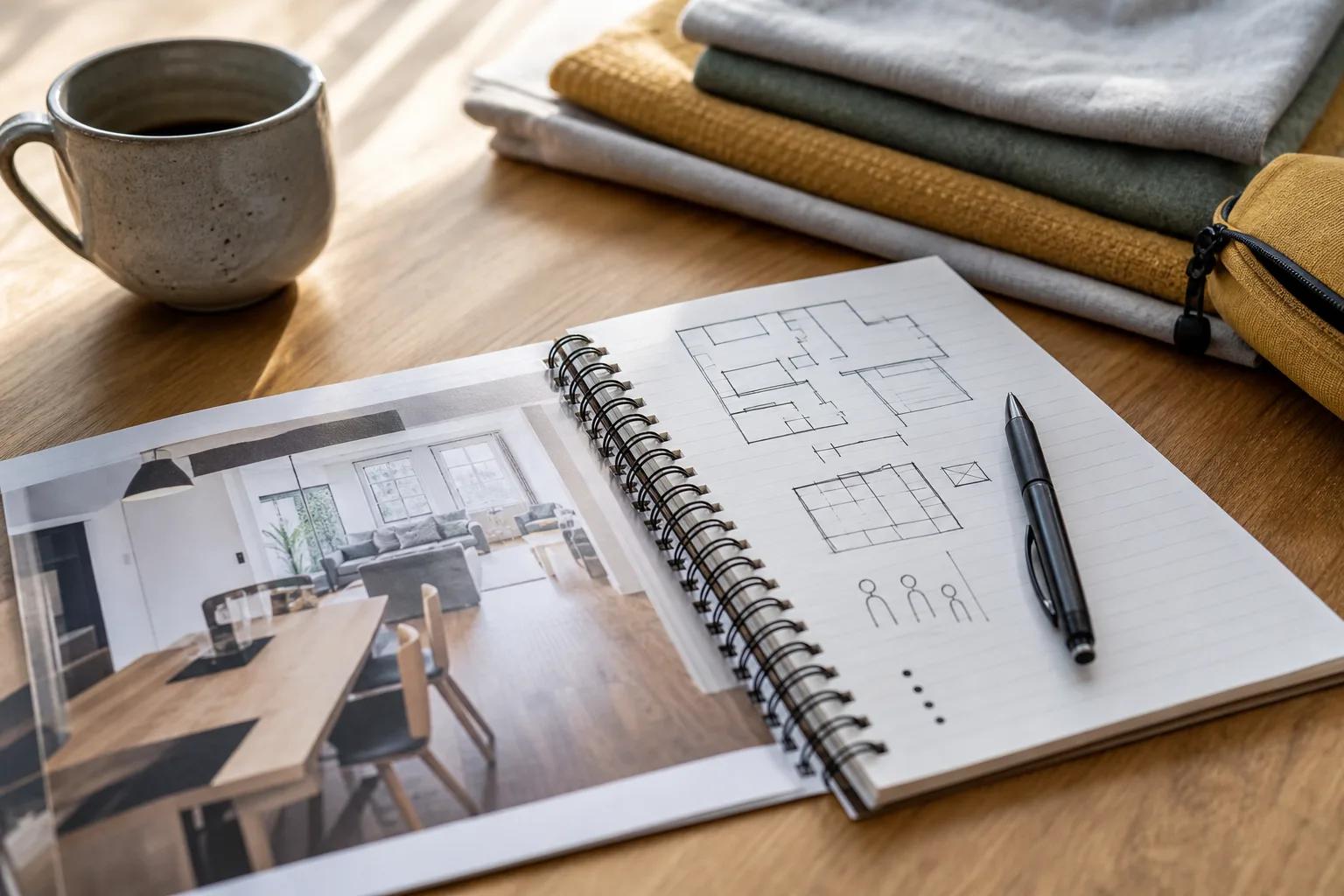
Before booking, it helps to compare the actual needs briefly. The focus is not on wishes in general, but on the concrete situation on site.
Questions you should clarify together:
- Who needs how much privacy?
- Should everyone sleep in one room, or are separate sleeping areas needed?
- Will you cook together, or mostly just have breakfast?
- Does the accommodation need to be barrier-friendly or especially easy to access?
- How independently should the visitors be able to get around?
- How much luggage, clothing, or bags will the family bring?
These questions are especially helpful when several generations are involved. An accommodation can look spacious in photos and still be impractical in everyday life if sleeping, eating, and rest times do not match.
What really matters in the final decision
The best choice usually does not come from a single criterion, but from clear prioritization. Someone who is only visiting the family briefly and spends little time in the accommodation can plan differently from someone staying for several weeks and really living there.
A simple decision path can look like this:
- Set non-negotiable points: for example, a kitchen, separate sleeping options, or good transport connections.
- Check the layout: does the accommodation fit the number of people and their daily rhythms?
- Assess location and accessibility: are routes to appointments, visits, or transport practical?
- Compare the overall situation: it is not just the accommodation itself that matters, but also how well it supports the planned stay in practice.
If you want to narrow down the right setting for a longer visit from parents or grandparents, take a look at the myroom24 accommodation and compare the options by length of stay, location, and amenities.
Frequently asked questions
When is an apartment more suitable than a single room for a family visit?
As soon as several people are living together, need separate sleeping areas, or want to cook for themselves, an apartment is usually more practical than a single room.
How can I tell whether parents or grandparents need separate sleeping options?
If different bedtimes, different needs for rest, or privacy are important, sleeping areas should be clearly separated.
What role does the location play during a longer visit from older relatives?
A good location becomes especially important when appointments, visits, or routes should be organized without many transfers and with little walking distance.
What should the family definitely agree on before booking?
Above all: privacy, sleeping arrangements, kitchen use, mobility, and the amount of luggage. From that, you can tell which type of accommodation will really work in everyday life.