Trial Living Before Moving: How to Test a City and Neighborhood Properly
Why trial living before moving can make sense
A move changes more than an address. People moving to a new city often decide at the same time about commuting, everyday life, social surroundings, mobility and how it feels to live there. That is exactly why a short viewing appointment is often not enough to judge reliably whether a place really fits.
Trial living before moving: how to test a city and neighborhood properly means getting to know the new surroundings in real everyday life. Instead of taking only impressions from a viewing, you experience the city and neighborhood over several weeks in a realistic rhythm: in the morning to work or to your home office, shopping during the day, checking routes in the evening, testing leisure options at the weekend. This turns a gut feeling into a much better basis for decision-making.
This is especially useful for people changing jobs, returnees, families and expats who still want to clarify uncertainties before a permanent move. Anyone torn between several neighborhoods can also compare more effectively what really convinces in everyday life.
What is actually tested during trial living
Trial living is not only about the accommodation itself, but about the interaction between accommodation, surroundings and routines. Anyone who wants to test a neighborhood should therefore look at several levels:
1. Everyday routes
Check how well you can get from the accommodation to the most important destinations. These include your workplace, nursery or school, supermarket, doctor, train station or stops. What matters is not only the distance on the map, but also the actual effort involved by public transport, bicycle or car.
2. The atmosphere in the neighborhood
A neighborhood can look attractive on a map but feel different in everyday life. Pay attention to noise levels, foot traffic, green spaces, safe walking routes, lighting in the evening and whether you feel comfortable at different times of day.
3. Local amenities
For longer stays, it is important how well daily life works without major detours. Are shopping options within reach? How easy is it to get to pharmacies, parcel lockers, restaurants or leisure facilities? This can be decisive, especially when moving with a family or when mobility is limited.
4. How the accommodation feels
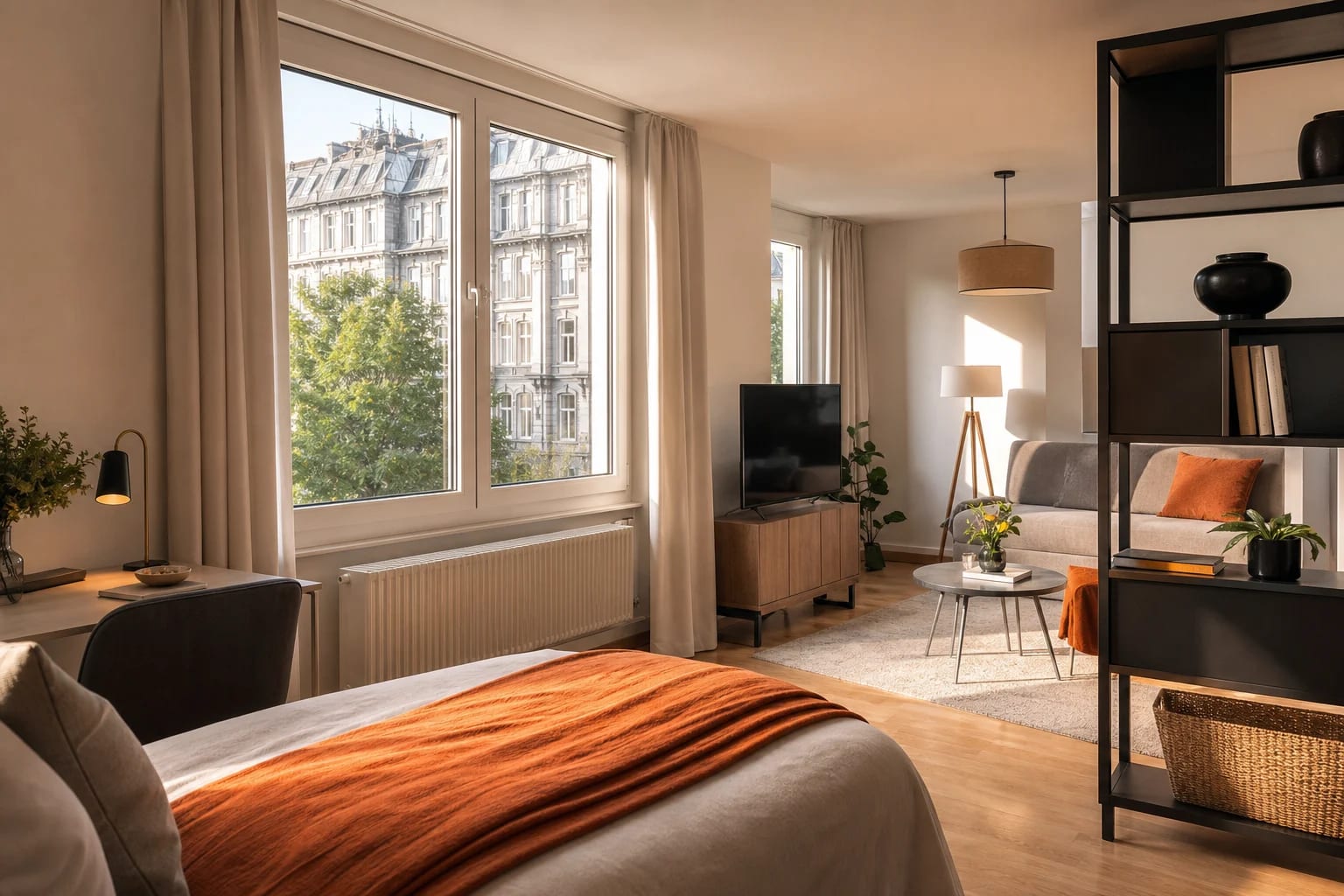
The accommodation itself should also be suitable for daily life. For real trial living, a longer furnished stay is usually more useful than a purely short-term stopgap. Only after some time does it become clear whether the layout, furnishings and quietness work in everyday life.
Typical length of stay for trial living

Anyone who wants to seriously test a city and neighborhood usually needs more than a weekend. A longer stay is often more helpful because it reflects several everyday situations: weekdays, commuting times, errands, leisure time and possibly also an initial impression of the area’s weekend rhythm.
If you are looking for accommodation, think in terms of stay periods rather than individual overnight stays. A longer furnished stay is especially useful if you still want to make a decision before the final move or are planning several on-site viewings.
Practical checklist for making the decision
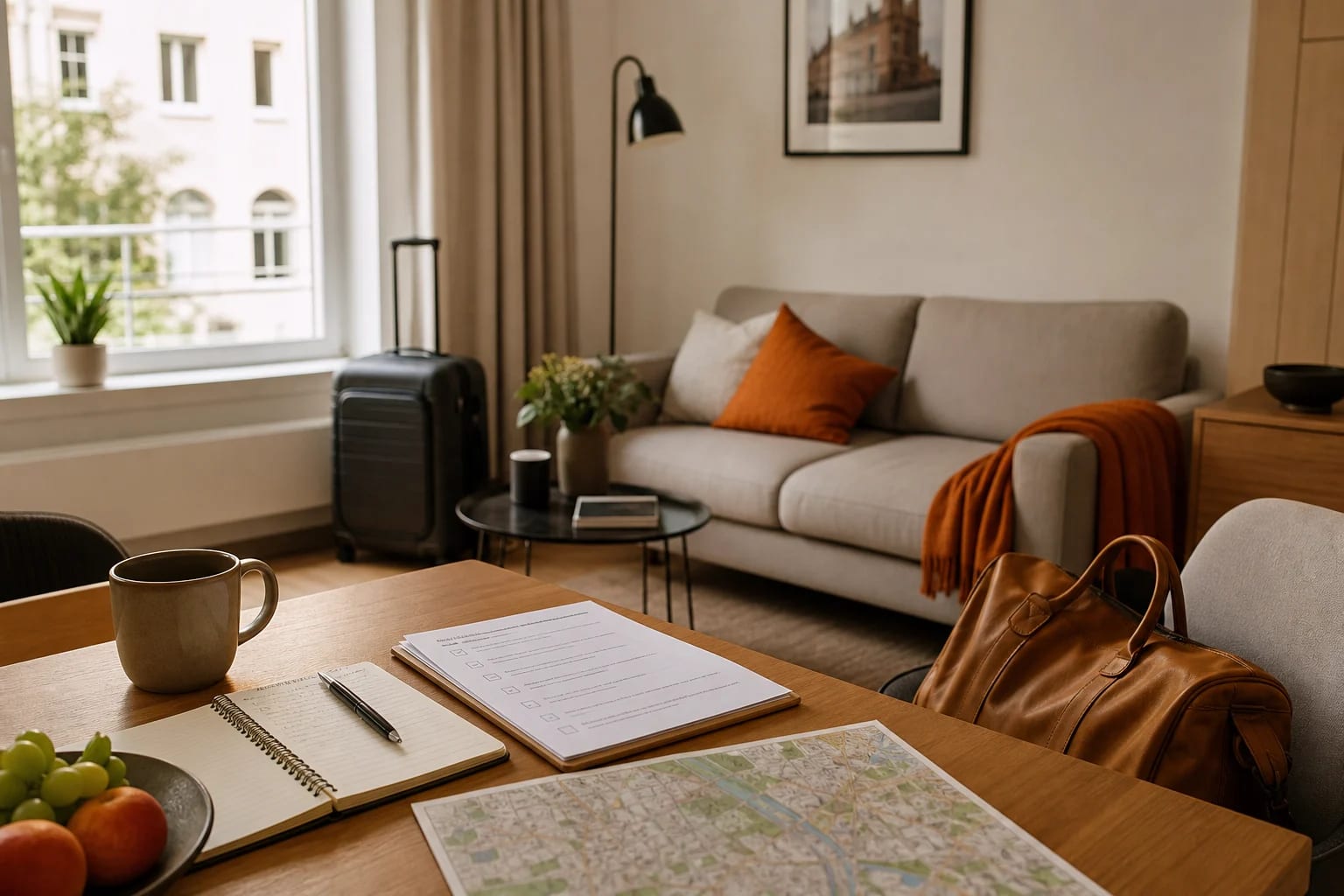
Use a simple but consistent checklist for your trial living. This helps avoid ending up with only a general feeling in the end.
Before arrival
- Which neighborhoods are even worth considering?
- What matters more to you: short routes, quiet, family-friendliness or transport links?
- Which destinations must be easy to reach in everyday life?
- Which questions should you clarify on site?
On site in the neighborhood
- How long does the route to work, school, nursery or the station really take?
- Does the route still feel pleasant in the evening?
- Are there sources of noise such as traffic, nightlife or construction sites?
- Are supermarkets, pharmacies and other places for daily needs easy to reach?
- How do you experience the neighborhood at different times of day?
- Does the area feel lively, quiet, mixed or strongly one-sided?
In the accommodation
- Is the furnished accommodation suitable for the planned period?
- Is the equipment sufficient for everyday life and home office work?
- Does the layout suit your needs?
- Do you have enough peace and quiet to work and relax normally?
How myroom24 helps with a longer test stay
If you want to test not only the city but also your concrete everyday life before moving, myroom24 can help you find suitable accommodation. The platform is an online booking platform where commercial accommodation providers offer lodging for private and business users.
For trial living, it is especially important that the search can be geared toward longer stays. On myroom24, long-term stays from 28 to 179 nights can be searched. Available accommodations can also be filtered by destination and length of stay as well as by criteria such as price, location and facilities.
This is helpful if you are not looking for just any temporary solution, but planning a structured stay to test a city or neighborhood. The range includes rooms, apartments and houses in commercial accommodation facilities such as hotels, hostels, serviced apartments and holiday apartments. Depending on your needs, this can provide a suitable setting for a longer furnished stay.
It is also practical that accommodations marked as instant booking can be booked without prior approval from the host if available. That can make organization easier if the test stay is meant to start soon. Through myroom24 accommodation you can align the search process with your destination and length of stay.
Decision criteria: what to consider after trial living
After the stay, the real question arises: would I actually settle here? Three levels can help.
Does the city fit my life?
Think about whether the city suits your professional and private everyday life. Do routes, infrastructure and the overall feeling of life match your expectations?
Does the neighborhood fit my routine?
A central location can be tiring in everyday life, while a quiet neighborhood may be inconvenient for commuting. What matters is whether the neighborhood supports your daily routine.
Does the accommodation fit the transition phase?
Especially before moving, it is important how well the accommodation fits into everyday life. If you have several appointments on site or first need orientation, a well-planned longer stay is usually more sensible than a hectic start.
Common mistakes when trial living
A typical mistake is focusing only on the first impression. Another is evaluating the apartment in isolation without considering the surrounding area. It is also problematic to stay too briefly or to treat the stay only as a stopgap instead of actively testing everyday life.
A clearer plan is more helpful: which goals do you want to check before moving? Which routes will you travel yourself? Which neighborhoods are you comparing? And which everyday questions must be answered in the end?
Conclusion: test first, then decide
Trial living makes the most sense when you do not just want to see a city and neighborhood, but experience them in everyday life. A longer furnished stay gives you the chance to assess routes, amenities, atmosphere and how it feels to live there realistically. This turns a planned move into an informed decision.
If you are still looking for suitable accommodation for that, start with a targeted search by destination and length of stay at myroom24 accommodation.
Frequently asked questions
How long should trial living before moving last?
For a realistic picture, a longer stay is usually more helpful than just a weekend, because it lets you experience everyday life, routes and the surroundings under different conditions.
What should I pay special attention to when testing a neighborhood before moving?
Important points are routes to work, school or nursery, public transport connections, everyday amenities, quietness, sense of safety and how the accommodation feels at different times of day.
Is trial living only suitable for singles?
No. It can also make sense for families, returnees, people changing jobs and expats if orientation or a comparison between neighborhoods is still needed before the permanent move.
What kind of accommodation is suitable for a trial apartment?
For a longer test stay, furnished accommodation is often practical because it reflects everyday life before the move more realistically than a purely short-term solution.